
OBF: Sloan attendees get geeked by analytics

The nerds got their revenge in the 1980s.
These days, nerds are kings.
Chicks used to “dig the long ball.”
Well, size still matters in 2025.
But only on a spreadsheet.
John W. Henry pushed Red Sox Nation to the brink of revolution before signing Alex Bregman. Well done. Still, that deal is more complicated than the Bay State’s budget.
And if the Celtics don’t attempt at least 50 three-pointers a game, Lucky goes to bed without his supper.
Analytics rule.
In this Revenge of the Nerds sequel, the millionaire jocks work for the billionaire nerds. And the nerds even play host to the best parties.
You’ll never catch Michael Rubin donning special threads to visit Rob Gronkowski’s house.
But Gronk went full Carte Blanche when he paid homage to Rubin at his annual A+ List, all-white-in-dress-only July 4 soiree last year.
Gronk was joined at the hip by Tom Brady.
Rubin is the co-founder and CEO of Fanatics. The company dominates all that is sports merchandise. It has cornered the baseball card market and operates a sportsbook licensed in the commonwealth and several other states.
Fanatics is a co-sponsor of the 19th Sloan Analytics Summit, to be held Friday and Saturday in Boston at the Hynes Center.
The event bills itself as “a forum for professionals and students to discuss cutting-edge trends in analytics and business to foster innovation in the global sports industry.”
Among the speakers of note: Jonathan Kraft, Alex Rodriguez, and DraftKings co-founder Jason Robins.
The conference was co-founded by Jessica Gelman, CEO of Kraft Analytics Group.
Analytics are integral at One Patriot Place — especially when it comes to spending money, or not spending money.
Robert and Jonathan Kraft have yet to alight the cash that was supposed to be burned last year. Their team planes feature ashtrays between the seats but lack Wi-Fi.
Pan-Am, Eastern, and Piedmont Airlines would be proud.
No sport finds itself more captivated by the numbers than baseball.
WAR is no longer the province of Ted Williams or Yogi Berra. Everyone is a veteran.
On Baseball-Reference.com, there are 33 data fields for each player’s batting stats and 24 different fields for a player’s fielding stats. Pitchers have 36. Those are just the “standard” categories.
Stuff like ERA and batting average is for toddlers.
If you don’t know Raffy Devers’ rOBA and Rbat+, you might as well sit in a corner with Wally and play “Sweet Caroline” on your Fisher-Price xylophone.
Sick of the Celtics jacking up too many threes?
Analytics!
Among the panels being offered at the Sloan conference on Saturday is this gem: “Have the Nerds Ruined Basketball? A Conversation on Competitiveness, Three-Pointers, and Rule Changes.”
The panelists include Celtics VP of Basketball Operations Mike Zarren, 76ers President of Basketball Operations Daryl Morey, and NBA Executive Vice President of Basketball Strategy & Analytics Evan Wasch.
The panel will “explore whether the NBA is at a ‘crisis’ point” due to the “three-point shot dominating team strategies.”
The quick answer is “yes.”
Long before Bill James (he’ll be there, too) gave us “SABRmetrics,” the original “numbers guys” were setting point spreads and translating racing forms into big-money wagers.
Analytics has deep roots in sports betting and handicapping. Oddsmakers were forced to put a number on everything. Information has always been the currency of the kingdom.
For years, oddsmakers found it via out-of-town newspapers and team insiders on the payroll. This newspaper and others published pages of racing charts from long-ago places like Suffolk Downs, Rockingham, and Wonderland.
Decades before you were able to get live in-game odds updates on your favorite sports betting app, illegal bookmakers nationwide subscribed to the “Minneapolis Line.” It was the standard for betting odds across sports. Local bookmakers set their numbers accordingly.
Of course, the real price on the Red Sox was always higher in Boston than it was in New York.
Gamblers like Billy Walters created football power rankings using dozens of data points when determining which side to back. And bookmakers used similar information when determining which number to set.
Betting is omnipresent in sports — good and bad. Leagues make millions in licensing fees and sponsorship deals, all of which are used when computing a salary cap or luxury tax threshold.
The Jontay Porter narrative is evolving into potentially one of the greatest all-time point-shaving sagas in sports history. But scandals have long predated legalized sports betting.
The National League almost shut down due to players betting on games — in 1877.
And just 17 stops on the Green Line from the Hynes Center, the Boston College point-shaving scandal found itself immortalized in “Goodfellas.”
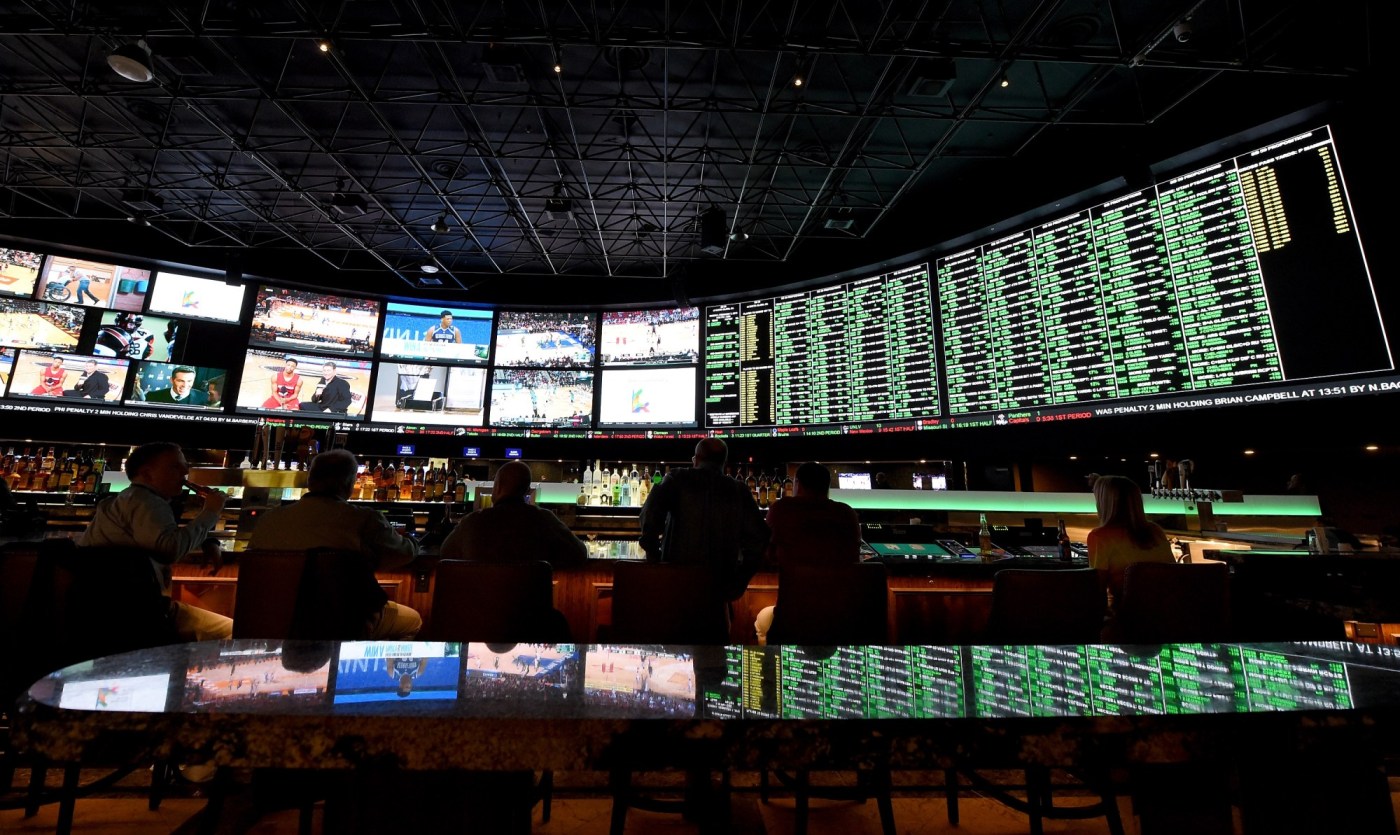
This year’s Sloan Conference is paying homage to the inexorable ties between analytics and sports betting.
In addition to Fanatics and DraftKings, Sloan’s other sponsors include FanDuel, ESPN (of ESPNBet fame), and DFS site PrizePicks. DraftKings and FanDuel own about two-thirds of the sports betting market share in the United States.
One panel will discuss “Anomalies and Uncertainties in Sports Betting.”
NFL favorites won a record 72.1% of the time this season. That wreaked havoc on the bottom line of multiple sports betting companies in the fourth quarter of 2024.
This panel “will explore strategies for identifying and addressing situations when actual results deviate from model expectations.”
Or, as Oscar Madison so famously noted: “There’s no such thing as a sure thing. That’s why they call it gambling.”
Even in the era of analytics.
When Bill Speros isn’t writing for the Herald, he is a Senior Betting Analyst for Bookies.com. He can be reached at bsperos1@gmail.com.


More Stories
Hounded by photographers for years, Bardot identified with the animals she later set out to save
By ANGELA CHARLTON and ELAINE GANLEY. PARIS (AP) — Brigitte Bardot felt each pop of the flashbulb like the impact...
States crack down on aggressive driving
By Shalina Chatlani, Stateline.org NEW YORK — On a frigid December morning along busy Broadway in the Astoria neighborhood of...
States crack down on aggressive driving
By Shalina Chatlani, Stateline.org NEW YORK — On a frigid December morning along busy Broadway in the Astoria neighborhood of...
Real World Economics: Tales of economic growth speak volumes
Edward Lotterman There are thinkers throughout history who offer grand overarching explanations of economic growth. Karl Marx was an economic...
Rising electric bills lead to state scrutiny — but little relief for residents
By Kevin Hardy, Stateline.org The last time the Maine Public Utilities Commission considered an electricity price hike, the proposal received...
Rising electric bills lead to state scrutiny — but little relief for residents
By Kevin Hardy, Stateline.org The last time the Maine Public Utilities Commission considered an electricity price hike, the proposal received...