
Supreme Court makes it harder for EPA to police sewage discharges

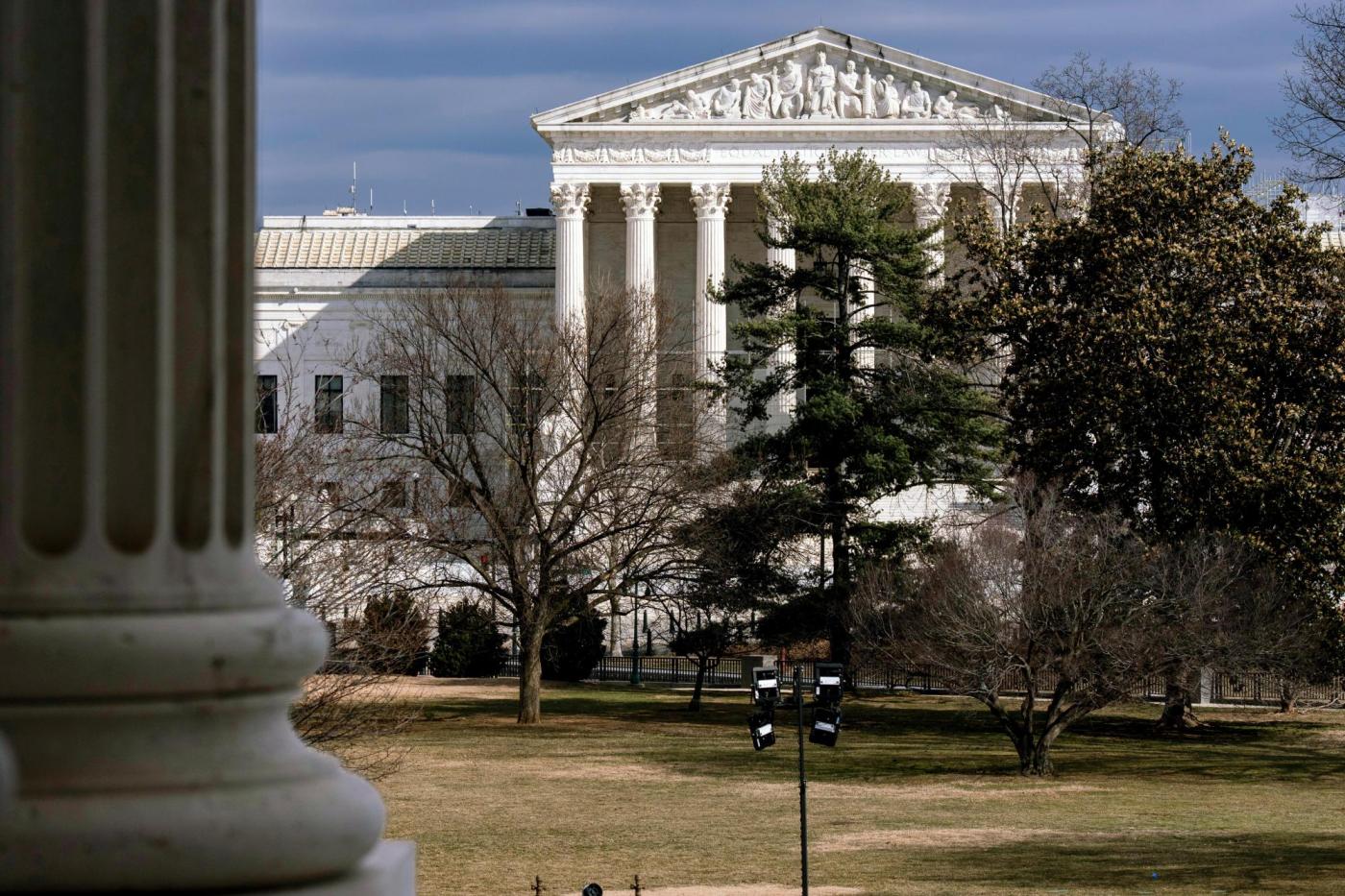
WASHINGTON (AP) — A divided Supreme Court on Tuesday made it harder for environmental regulators to limit water pollution, ruling for San Francisco in a case about the discharge of raw sewage that sometimes occurs during heavy rains.
Related Articles
Here’s what tariffs are and how they work
West Texans, Mennonites at center of measles outbreak choose medical freedom over vaccine mandates
Powerful US storms bring threats ranging from critical fire weather to blizzard conditions
Carl Dean, Dolly Parton’s husband of nearly 60 years who inspired ‘Jolene,’ dies at 82
2 leaders of a group suspected of smuggling 20,000 immigrants are arrested in Los Angeles
By a 5-4 vote, the court’s conservative majority ruled that the Environmental Protection Agency overstepped its authority under the Clean Water Act with water pollution permits that contain vague requirements for maintaining water quality.
The decision is the latest in which conservative justices have reined in pollution control efforts.
Justice Samuel Alito wrote for the court that EPA can’t make cities and counties responsible for maintaining the quality of the water, the Pacific Ocean in this case, into which wastewater is discharged.
One conservative justice, Amy Coney Barrett, joined the court’s three liberals in dissent.
The case produced an unusual alliance of the liberal northern California city, energy companies and business groups.

More Stories
Boston fashionista Suhail Kwatra, busted in $400,000 alleged fraud scheme, sues Saks
A former Saks Fifth Avenue wardrobe stylist who was busted after allegedly stealing more than $400,000 is suing Saks for...
Jett the former St. Paul police horse ‘fought hard’ but has died, owner says
In what has been called a “heartbreaking” loss, Jett, the former St. Paul police horse, has died. “In true police...
CIA turncoat Aldrich Ames, who sold US secrets to the Soviets, dies in prison at 84
WASHINGTON (AP) — CIA turncoat Aldrich Ames, who betrayed Western intelligence assets to the Soviet Union and Russia in one...
CIA turncoat Aldrich Ames, who sold US secrets to the Soviets, dies in prison at 84
WASHINGTON (AP) — CIA turncoat Aldrich Ames, who betrayed Western intelligence assets to the Soviet Union and Russia in one...
These numbers tell the story of the Los Angeles wildfires, one year later
LOS ANGELES (AP) — A year after twin infernos tore across opposite ends of Los Angeles County, the scars are...
These numbers tell the story of the Los Angeles wildfires, one year later
LOS ANGELES (AP) — A year after twin infernos tore across opposite ends of Los Angeles County, the scars are...