
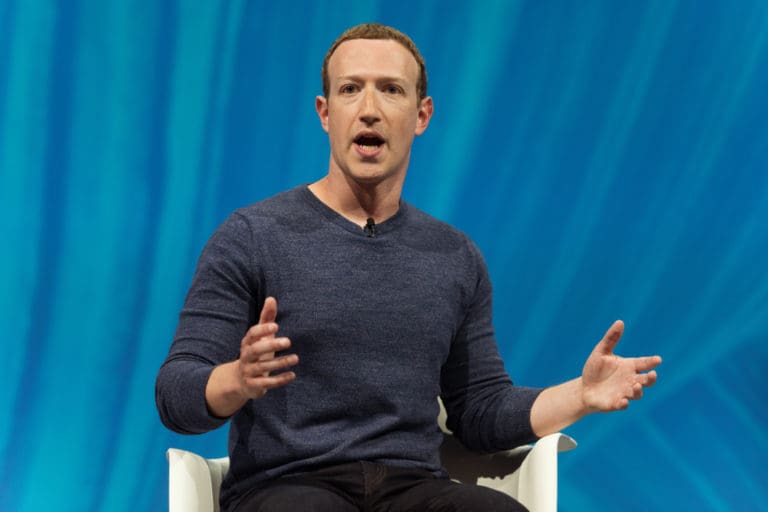
Meta ordered to pay $25bn for misleading public over Facebook data

A judge in New Mexico yesterday ordered Meta, the owner of Facebook, Instagram and WhatsApp, to pay $25bn (£18.6bn) after a trial found the company had spent years misleading the public about how it handled Facebook user data.
The penalty, the largest Meta has faced, follows a two-week trial earlier this year. Meta plans to appeal.
“The lies extend beyond Facebook’s data practices as well,” the judge said, adding that they went to “the heart of Facebook’s core business practices”.
CJ Mahoney, Meta’s chief legal officer, said the ruling made it “all but impossible to do business in the state of New Mexico”. He said the company’s appeal would be successful.
New Mexico’s lawsuit stemmed from Meta’s role, when it still traded as Facebook, in the Cambridge Analytica scandal. The political consultancy used data from millions of Facebook users, including in work related to the 2016 US presidential election.
Lawyers for the state sued over statements Meta executives had made over the years that user data was never shared with or accessed by third parties without a user’s permission, when in reality it had been.
They argued that the state’s entire population, roughly two million people, was affected by the way Meta represented its control of user data. A jury found that Meta had violated state laws more than 40 million times.
New Mexico also accused Meta of intentionally misleading the public about how it benefited from content that included hate speech and how its rules against such content were enforced. The jury found the company had intentionally misled the public on those claims too.
Meta disputed the accusations. “At its core, this lawsuit seeks to impose a tax on speech to enforce new rules for what people can say online,” Mahoney said.
“For too long, powerful technology companies have operated as though their size and influence put them beyond the reach of the law,” Raúl Torrez, New Mexico’s attorney general, said yesterday. “Today’s result makes clear that no corporation is too powerful to be held accountable.”
The state had sought up to $40bn. Meta had argued that any penalty above $3.4bn would be unconstitutional.
Judge Francis Mathew wrote in his order that Meta’s violations of the law and its misrepresentations about how Facebook data was shared were “willful” and spanned “more than 11 years”, from 2010 to 2021. He wrote that communications between senior executives, including Mark Zuckerberg, were “designed to mislead the public”.
The full penalty, based on thousands of violations of state law, was calculated at $219bn. Judge Mathew reduced it to $25bn.
The ruling follows a $5bn penalty imposed by the US Federal Trade Commission in 2019 over Facebook’s privacy practices.
Earlier this year the state secured almost $1bn from Meta for misleading the public about the safety of its platforms for children. The judge in that case compared Meta to an industrial polluter of the air, with its form of pollution being “the psychological harm and sexual exploitation of children”.
In the UK, Meta has separately challenged Ofcom in the High Court over the method the regulator uses to calculate fees and fines under the Online Safety Act.
The penalty comes as Meta increases its investment in artificial intelligence. Zuckerberg told financial analysts that Muse, the company’s consumer AI tool, was already used by 10 million people.
“Growing Muse to serve billions of people is both our mission and our strategy,” he said.
Meta expects to spend at least $135bn this year, mostly on AI projects, and up to $145bn, extending the AI spending plans that unsettled investors earlier this year.
The company reported negative cash flow of more than $2bn, which a BBC review of its past financial documents found appears to be a first for Meta since it listed on the stock market 14 years ago.
Revenue for July to September rose 26 per cent year on year to $64.5bn, and profits tripled to $9.8bn.
Susan Li, Meta’s chief financial officer, announced a stock split under which existing shareholders will receive one new share of non-voting stock. Li said the company could use “more funding flexibility” next year, referring to continuing AI costs.

More Stories
Medical Tourism for Eye Surgery: How to Evaluate Laser Eye Clinics Abroad
Europe in particular has become a destination for patients seeking refractive procedures such as LASIK, PRK, and other forms of...
Minister says 32 government services offline over PHP security flaw
Thirty-two UK government services are offline and four are partially unavailable while officials address a critical security flaw in the...
Tank and artillery barrels made in UK again after 20-year gap
Large calibre gun barrels for tanks and artillery are being made in the UK for the first time in 20...
Inzynk Enters the UK Market, Challenging the ‘SaaS Tax’
Nordic B2B orchestration platform Inzynk is entering the UK market, directly challenging legacy per-seat Software-as-a-Service (SaaS) models in the enterprise...
4 Best Thermally Broken Roof Hatches for Part L Projects in 2026
For architects, building services engineers and contractors working at RIBA Stage 3 to 4, comparing thermally broken roof hatches on...
The Customer Isn’t Always the Consumer: The Hidden Economy of Buying for Someone Else
A huge number of purchases are made by someone who will never actually use the product themselves. A parent buys...