
BMW Downpipe Guide: Benefits, Performance Gains, and How to Choose the Right One

If you want to improve your BMW’s performance, exhaust sound, and turbocharger response, upgrading the downpipe is one of the modifications worth considering. A high-quality BMW downpipe can reduce exhaust restrictions and help a turbocharged engine operate more efficiently, especially when combined with suitable ECU tuning. Whether you drive a BMW 335i, 340i, M140i, M240i, or another turbocharged model, choosing the right component makes a difference. You can explore a selection of BMW downpipes at TunePoint, including performance solutions for popular BMW engine platforms.
What Is a BMW Downpipe?
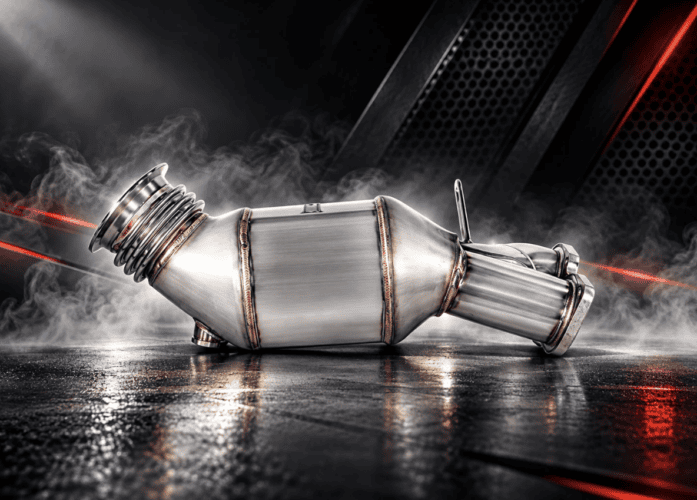
A downpipe is an exhaust component that connects the turbocharger outlet to the remaining exhaust system. Its primary function is to direct hot exhaust gases away from the turbocharger.
On many modern turbocharged BMW engines, the factory downpipe contains a catalytic converter designed to reduce harmful exhaust emissions. While the original component is engineered to balance performance, emissions, durability, and noise, its design can restrict exhaust flow at higher engine loads.
An aftermarket performance downpipe is designed to improve exhaust flow, potentially reducing pressure after the turbocharger.
This modification is particularly popular among BMW enthusiasts who want to optimize the performance of turbocharged engines such as the N54, N55, B48, B58, and S55.
Main Benefits of Upgrading Your BMW Downpipe
1. Improved Exhaust Flow and Turbocharger Response
One of the main reasons to install a performance downpipe is to reduce exhaust restriction after the turbocharger.
With a better-flowing exhaust path, the turbocharger may operate more efficiently, particularly under demanding driving conditions.
Depending on the engine and supporting modifications, this can provide:
Improved exhaust gas flow
More responsive turbocharger operation
Better performance at higher engine loads
Additional potential for ECU tuning
However, the improvement depends on the downpipe design, engine configuration, and existing exhaust system.
2. Increased Horsepower and Torque Potential
Can a BMW downpipe increase horsepower? Yes, but the results vary.
Replacing a restrictive factory downpipe with a high-flow performance component can support increased horsepower and torque. The benefit is often more noticeable when the downpipe is combined with a professionally developed ECU calibration.
For example, drivers modifying BMW B58 and N55 engines frequently include a performance downpipe as part of a broader tuning package.
It is important to understand that installing a downpipe alone does not guarantee a specific horsepower increase. The final results depend on factors such as engine condition, turbocharger setup, fuel quality, software calibration, and supporting modifications.
3. Sportier Exhaust Sound
Another reason BMW owners upgrade their downpipes is to achieve a more engaging exhaust note.
A performance downpipe can change the vehicle’s exhaust characteristics by allowing exhaust gases to flow through a less restrictive path.
Depending on the configuration, drivers may notice a deeper tone, increased exhaust volume, and more pronounced turbocharger sounds.
A catless downpipe generally produces a louder and more aggressive sound than a comparable catted design, although the overall result also depends on the mufflers, resonators, and other exhaust components.
If you want a noticeable but controlled exhaust sound, a high-flow catted downpipe may be worth considering.
4. Additional Potential for Performance Tuning
A BMW performance downpipe is often selected as part of a more comprehensive engine upgrade.
When combined with suitable supporting hardware and ECU calibration, improved exhaust flow can help a turbocharged engine achieve its intended performance targets.
However, tuning compatibility should always be checked before purchasing parts. Not every engine, ECU, or downpipe configuration requires or supports the same calibration.
Catted vs. Catless BMW Downpipe: What’s the Difference?
Choosing between a catted and catless downpipe is one of the most important decisions when upgrading your BMW.
FeatureHigh-Flow Catted DownpipeCatless DownpipeCatalytic converterIncludedRemovedExhaust flowImproved depending on designTypically less restrictionExhaust soundSportier, often more controlledGenerally louderEmissionsCatalyst retains some emissions treatmentSignificantly increased harmful emissionsCheck engine lightPossibleHighly likelyRoad legalityDepends on certification and local regulationsGenerally unsuitable for public-road use
High-Flow Catted BMW Downpipe
A high-flow catted downpipe uses a performance catalytic converter designed to balance exhaust flow and emissions treatment.
For owners who want to improve their exhaust system while retaining catalytic conversion, this can be a more practical option.
However, a high-flow catalytic converter does not automatically make a downpipe street legal. The component must meet applicable regulations and approval requirements for the specific vehicle.
Catless BMW Downpipe
A catless downpipe removes the catalytic converter from that section of the exhaust, reducing restriction.
Although this can benefit certain motorsport-oriented configurations, it also substantially increases harmful exhaust emissions and commonly causes emissions-related diagnostic faults.
Catless downpipes are generally intended for racing or other permitted off-road applications, rather than vehicles driven on public roads.
Choosing the Right Downpipe for Your BMW Engine
Not all BMW downpipes are interchangeable. Even vehicles with the same engine family may have different exhaust connections, emissions equipment, or mounting requirements.
BMW B58 Downpipe
The BMW B58 is a popular turbocharged six-cylinder engine found in models such as the M140i, M240i, 340i, and 440i, as well as various newer BMW vehicles.
A B58 downpipe upgrade is commonly considered by enthusiasts seeking improved exhaust flow and additional tuning potential.
However, downpipes designed for earlier F-Series B58 vehicles are not necessarily compatible with newer G-Series models. Always check the exact engine version, production year, and emissions specification.
BMW N55 Downpipe
The N55 turbocharged six-cylinder engine powers numerous BMW models, including versions of the 335i, 435i, M135i, and M235i.
An N55 performance downpipe can be an important part of a carefully planned exhaust and engine tuning package.
Because the N55 was produced in different configurations, buyers should verify chassis compatibility and the specific turbocharger connection before ordering.
BMW N54 Downpipe
The twin-turbocharged BMW N54 is especially popular among tuning enthusiasts.
Unlike many single-turbo BMW configurations, the N54 typically uses two downpipes, making it essential to choose a compatible set rather than assuming that a single component will fit.
BMW B48 Downpipe
The B48 turbocharged four-cylinder engine is used across numerous BMW models, including versions of the 120i, 125i, 220i, and 330i.
A suitable performance downpipe can improve exhaust flow, but compatibility with the vehicle’s emissions system is particularly important.
Some European BMW models are also equipped with a gasoline particulate filter, known as an OPF or GPF. Modifications must account for this equipment and preserve legally required emissions controls.
Does a BMW Downpipe Require an ECU Tune?
Not every aftermarket downpipe requires an ECU tune for the engine to operate, but compatibility and calibration requirements vary.
Some high-flow catted downpipes can be installed while retaining factory engine software. Others may trigger a check engine light because the vehicle detects a difference in catalytic converter performance.
A performance ECU calibration may be required to achieve the intended power gains from certain exhaust modifications.
Before installation, consult a qualified BMW tuning specialist and confirm that the planned setup meets applicable emissions and road-use requirements.
Disabling emissions monitoring is not a legal substitute for compliant emissions equipment.
How to Choose a Quality BMW Downpipe
When buying a BMW downpipe, consider more than the advertised horsepower potential.
Vehicle compatibility: Check the exact BMW model, production year, engine code, chassis generation, and emissions configuration.
Material quality: Stainless steel is commonly used in performance downpipes because of its corrosion resistance and ability to withstand demanding exhaust temperatures.
Manufacturing quality: Look for precise welds, correctly positioned sensor connections, and properly designed mounting points.
Catalytic converter specification: If choosing a catted downpipe, confirm its catalytic converter design, emissions certification, and compatibility with your intended use.
Manufacturer reputation: Established performance manufacturers can provide valuable fitment information and installation guidance.
Brands such as Wagner Tuning and AIRTEC Motorsport offer performance exhaust components for selected BMW applications.
BMW Downpipe Installation: What Should You Know?
Installing a downpipe involves working near the turbocharger and high-temperature exhaust components.
For this reason, professional installation is recommended, particularly on vehicles where access to the turbocharger outlet is limited.
A proper installation should include checking the exhaust connections, using appropriate replacement gaskets and hardware, securing oxygen sensors correctly, and inspecting the complete system for leaks.
After installation, the vehicle should be checked for exhaust leaks, unusual noises, diagnostic fault codes, and any potential contact between exhaust components and surrounding parts.
Installation time and complexity depend on the specific BMW model, exhaust layout, and condition of the existing hardware.
The post BMW Downpipe Guide: Benefits, Performance Gains, and How to Choose the Right One appeared first on My Car Heaven.


More Stories
Porsche Mission S Revealed as Stunning Mid-Engine Supercar Concept That Will Lead to a New Flagship Above the 911
Porsche has officially pulled the covers off its Mission S concept, and while enthusiasts hoping for a complete rundown of...
2027 Jeep Grand Cherokee Invoice Price, Dealer Cost, and What You Should Pay Near You
The 2027 Jeep Grand Cherokee arrives with a refreshed lineup, two engine options, three new trim levels, and the strongest...
How a Car Wreck Lawyer Strengthens Your Accident Case
Highways like I-10, I-35, and US-281 funnel commuters, commercial trucks, and through-travelers into the same stretches of pavement in San...
Who Is at Fault? Determining Liability in Auto Accidents
McAllen’s location along the U.S.-Mexico border means there is heavy cross-border traffic, commercial vehicles, and congested intersections throughout the city....
How to Quickly Discover Crucial Legal Help After a Car Accident
In Durham, the hours after a car accident are a blur of phone calls, pain, and paperwork, and the clock...
Hyundai Recalls Nearly 95,000 Genesis Sedans Over Fire Risk, Urges Owners to Park Outside
Hyundai Motor America is issuing another serious safety recall, this time affecting 94,622 vehicles in the United States due to...