
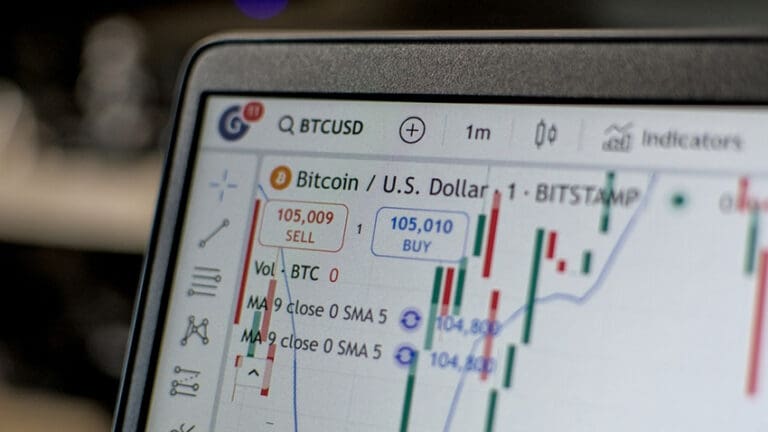
FinTracer Experts on Why Crypto Screening Doesn’t Stay Valid Forever

The paying wallet has since been linked to a mixing service now under active investigation. The money hadn’t moved anywhere in that time. The risk had moved all on its own.
FinTracer, whose work sits in tracing and screening crypto activity for exactly this kind of question, spends a fair amount of time on cases like it, because they don’t fit how most businesses think about crypto risk.
A check is a snapshot, not a promise
Most businesses that do screen incoming crypto treat it as a one-off. Check the wallet before you accept the payment, get a clean result, file it, move on. That is sound practice.
It is also incomplete.
FinTracer experts point out the obvious problem once you say it out loud. A wallet’s history only includes what has happened so far. New intelligence arrives constantly: a mixer identified, an exchange sanctioned, an exploit traced back to its source. None of it retroactively updates the file a business closed six months ago. The file just sits there, unchanged, quietly going out of date.
Why last year’s clean result can go stale
Blockchain investigation is a moving target. Addresses get reclassified as new evidence surfaces, sometimes months or years after the transactions themselves took place.
A wallet that traced clean in a screening a year ago can be tied to something specific this year, and the business that accepted a payment from it back then has no way of knowing that unless it looks again now. This isn’t a flaw in how screening works. It’s what screening is by nature, a check against what’s known right now, not a permanent verdict fixed at the moment it was made.
That’s worth sitting with.
Alt text: A crypto wallet’s risk status changing over time on a timeline
Where this actually bites
The exposure shows up in two ways. First is the practical one. If a wallet a business has already been paid from turns up later in an investigation, exchanges and payment processors reviewing the business’s own activity may want an explanation the business cannot actually give, because it never knew there was one needed. That conversation is considerably harder to have after the fact than it would have been if the flag had surfaced at the time.
Second is the quieter one, and it compounds. A business builds up a client list over time, a dozen counterparties, then fifty, then several hundred, and every one of those relationships was screened, if at all, only at the moment the money moved. None of them have been looked at since.
FinTracer’s team is direct about what that adds up to. A one-off screening approach ages by design, not by accident, and the businesses least aware of that are usually the ones carrying the longest transaction histories to worry about. The older the client list, the more of it was screened under conditions that no longer apply.
What ongoing monitoring changes
This is where continuous monitoring, rather than a single check, does its real work. FinTracer’s real-time monitoring flags wallets that get reclassified after the fact, rather than only ever checking a snapshot at the point of payment.
For a business handling a handful of crypto transactions a year, checking back manually every so often may cover it well enough. For one handling this regularly, manual re-checking becomes impractical fast, and that gap is precisely what an ongoing approach is built to close.
Keep it proportional
None of this calls for re-running every transaction the business has ever taken. Old, small, routine payments rarely justify the effort. What deserves a second look is anything of real size, anything from a counterparty the business deals with repeatedly, or anything flagged elsewhere as worth a closer look, the same proportionate approach that sits behind the UK’s own anti-money laundering registration requirements for firms handling money.
The wider direction of travel matters here too. Regulatory scrutiny of how firms handle money keeps rising, not falling, and “we checked it once, a while back” is a weaker answer with every year that passes.
Treating a crypto risk check as something done once and filed away made sense back when the picture actually stayed fixed. It doesn’t hold up any more.
What was clean when you looked can stop being clean without anyone telling you. FinTracer experts would argue the businesses that fare best are not the ones that looked most carefully the first time. They are the ones that went back and looked again.


More Stories
The 90-Day AI Product Build: How Series A Teams Can Ship Without Overhiring Or Losing Code Ownership
A focused 90-day build offers another path. The goal is not to build an entire platform in one quarter. It...
Best Cloud-Based E-Learning Authoring Tools
Cloud-based e-learning tools remove that step. No installation, no local licence tied to one machine, no waiting for IT to...
Best .NET Application Modernization Companies to Consider in 2026
Moving to modern .NET can help, but the path is rarely a one-click conversion. Dependencies, APIs, hosting, data access, authentication,...
London’s Tanzanian Investment Forum signals new chapter in East African growth story
The Forum is convened by the Tanzanian High Commission in partnership with Invest Africa, a leading business and investment platform...
Manchester City’s contribution reaches beyond the pitch
It also deserves to be assessed through the opportunities it creates, the places it helps reshape and the connections it...
A Conversation With Craig Plescia About Confidence, Risk, and Building Something That Lasts
As the founder and CEO of Plescia Construction & Development, he has spent more than 20 years working in commercial...