
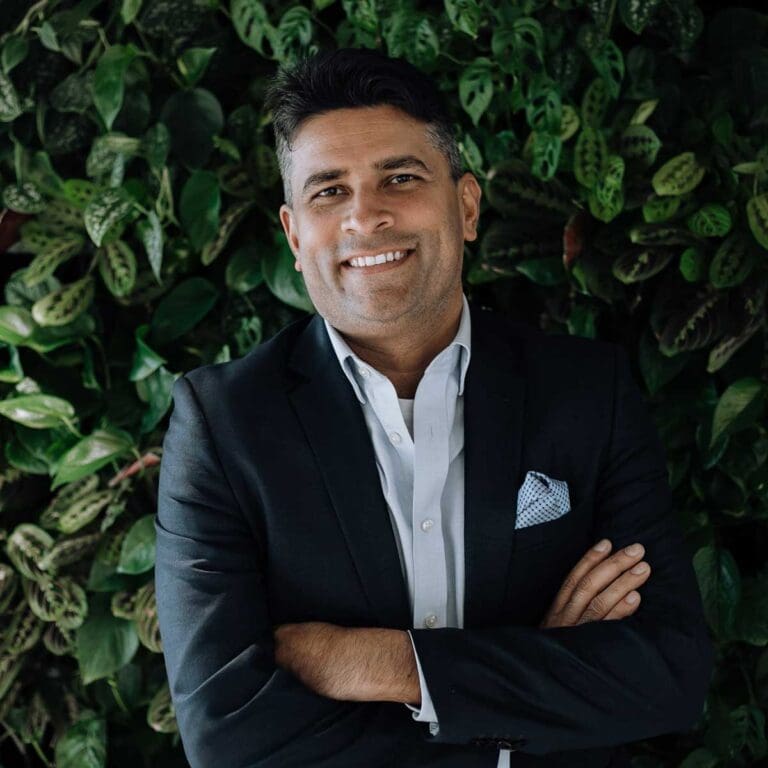
Getting to know you: Anand Verma, founder and CEO, ExpectAI

Dr Anand Verma is the founder and CEO of ExpectAI, the London company he started in 2021 to build AI that helps small and mid-sized businesses cut costs, find funding and lower their emissions.
Its platform, Una, was chosen by Marylebone Cricket Club to track supplier emissions at Lord’s, in a partnership reported on 29 September 2026, nine months after Barclays said it would test the same technology.
A repeat founder whose previous company was acquired by Infosys, he has had former BP chief executive Bernard Looney as his chairman since March 2025. He tells Business Matters why he wants every small firm to have the intelligence of a large one, and what he would do differently.
What do you currently do at ExpectAI?
I am the founder and CEO of ExpectAI. We are building AI to help SMEs become more profitable, productive and sustainable.
I started ExpectAI because smaller businesses rarely have access to the data, expertise and technology available to large companies. Una, our platform, is designed to change that. It helps businesses understand where they can save money, access funding and make better decisions, without adding more complexity to their day.
As CEO, I focus on four things: vision, capital, customers and people, or VCCP. My job is to keep us ambitious, well funded, close to our customers and surrounded by great people.
The bigger ambition is simple: give every SME access to intelligence that, until now, only large organisations could afford. We call this The Superintelligent SME.
What was the inspiration behind your business?
I became obsessed with what I call the “missing middle”.
SMEs are fundamental to our economy and our communities, but they are often expected to solve complex problems with very little time, money or specialist support. A large company can hire consultants, finance teams, data scientists and sustainability experts. An SME owner may be doing all of those jobs themselves. That never felt right to me.
AI creates an opportunity to level that playing field. If we can understand a business properly and bring the right information, funding and next action to the owner at the right time, we can give smaller companies capabilities they have never had before.
We started with energy and cost reduction, but the ambition is much broader: help SMEs make better business decisions and thrive. Imagine giving superintelligence to every SME. Society and the economy would be so much more prosperous.
What does your new partnership with MCC at Lord’s involve?
As a lifelong cricket fan, I have admired MCC for as long as I can remember, and Lord’s has held a special place for me since I was a child. To now have ExpectAI supporting MCC’s sustainability ambitions is something I am incredibly proud of.
The first phase is about suppliers. Una brings supplier information together and tracks Scope 3 emissions across the value chain, so that MCC can move from estimates to data from the suppliers themselves.
No organisation operates in isolation, and Lord’s sits at the centre of a complex ecosystem of suppliers, partners and stakeholders. The next phase of sustainability will be driven by collaboration.
Who do you admire?
I admire different people for different reasons.
Michael Bloomberg built an extraordinary business around information and made it indispensable to its customers. Jeff Bezos’s long-term thinking and customer obsession are principles I come back to often.
I also admire Elon Musk’s willingness to tackle problems that most people would regard as impossible. I find that moonshot mentality, questioning constraints and then executing at speed, very powerful.
There is something to learn from each of them: understand the data, obsess about the customer and do not be afraid to think much bigger than everyone expects.
Looking back, is there anything you would have done differently?
Even though I am a repeat founder and exited entrepreneur, I am still learning a lot. I would have thought globally much earlier.
For an ambitious technology company, I probably would have raised some of our early capital in the US, where there can be a greater appetite for backing big ideas before every part of the model has been proven.
I would also have built an international team earlier. Great talent is everywhere, and having people with different experiences and perspectives changes the quality of your thinking.
The other lesson is speed. You rarely have perfect information when building a company. I would rather make a thoughtful decision, test it with customers and learn quickly than spend months trying to remove every uncertainty.
What defines your way of doing business?
I believe teamwork really does make the dream work. But I am building a different kind of team.
I want a lean team of smart, curious people who understand the vision and take real ownership. For me, attitude matters enormously. Skills can be learned and technology will keep changing, but curiosity, resilience and work ethic are difficult to manufacture.
I have always believed hard work beats talent when talent stops working hard.
AI is changing what small teams can achieve. You no longer need hundreds of people to build something meaningful. But technology is only an amplifier. You still need a clear purpose, great people and customers who genuinely value what you are doing.
What advice would you give to someone starting out?
I would give the same advice to my young self too. There has rarely been a better time to start something.
AI has dramatically lowered the cost of turning an idea into a product, testing it and reaching customers. A small, determined team can now achieve big things that would have required a much larger organisation only a few years ago.
My advice is to become obsessive about the problem you want to solve, not just the technology. I would also encourage them to become AI-native.
It is so important to get close to your customers. Move quickly and break things. Do not let the first “no” stop you.
And try not to be constrained by somebody else’s reference point. If you only look at how existing companies were built, you risk building another version of what already exists.
Lastly, have a clear view of the future you want to create, then work relentlessly backwards from it.


More Stories
Getting to know you: Stephen Norris, founder, Punk Rock Media
Stephen Norris, also known as Steve Duty, is the founder of Punk Rock Media, the Suffolk publishing and speaking business...
Van Insurance in Ireland Is a Business Cost. Here’s How to Keep It Under Control
Businesses searching for cheap van insurance in Ireland should therefore look beyond the cheapest headline quote. Excesses, permitted drivers, business...
Getting to know you: David Dobrin, CEO and co-founder, OriginalVoices
David Dobrin is co-founder and CEO of OriginalVoices, a London technology company that builds Digital Twins of real people so...
Getting to know you: Paul Yaxley, founder, The Fox & Goose
Paul Yaxley is the chef and founder behind The Fox & Goose, a fine dining restaurant and pub in Fressingfield,...
Getting to know you: James Walker, founder, Lightning Oak
James Walker is the founder and director of Lightning Oak, a London practice that advises boards, founders and investors on...
Getting to know you: Dion Price, CEO, Trustonic
Dion Price is CEO of Trustonic, the UK-headquartered company whose device-locking software lets carriers, retailers and financiers sell smartphones on...