
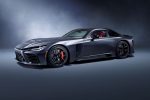
Toyota Is Done With Boring Cars as Celica and MR2 Comebacks Move Closer to Reality

Toyota has spent decades building a reputation around reliability, efficiency and sensible transportation, but the company clearly does not want those qualities to be the only things enthusiasts associate with its badge. Akio Toyoda famously pushed a “no more boring cars” philosophy years ago, and by 2026 that mandate looks less like a catchy slogan and more like a long-term product strategy. The current GR lineup already proves Toyota is willing to build cars for people who care about steering feel, manual transmissions, track days and the simple joy of driving, even when those vehicles will never match the sales volume of a RAV4 or Corolla.
That commitment starts with cars such as the GR86 and GR Corolla. The GR86 remains one of the increasingly rare affordable rear-wheel-drive sports coupes on the market, complete with an available six-speed manual and a naturally aspirated 2.4-liter flat-four producing 228 horsepower. The GR Corolla takes a completely different approach, using a turbocharged 1.6-liter three-cylinder with 300 horsepower and the rally-inspired GR-FOUR all-wheel-drive system. Neither car exists because Toyota needs them to carry the company financially. They exist because a brand that sells millions of practical vehicles can afford to put some passion back into the showroom.
The clearest sign that Toyota is not messing around is the upcoming GR GT. Toyota Gazoo Racing has already revealed the developing flagship with a new 4.0-liter twin-turbo V8, hybrid assistance, rear-wheel drive, a rear-mounted transaxle and a targeted system output of at least 640 horsepower. Toyota is even using its first all-aluminum body frame for the project, along with carbon-fiber components, carbon-ceramic brakes and a heavy focus on aerodynamics. This is not a warmed-over version of an existing coupe. It is a ground-up halo car being developed alongside the GR GT3 race car, and Toyota executives have openly acknowledged that projects like this are not always easy to justify on a spreadsheet. That may be exactly the point. Not to mention, the GR GT is already sold out.
What makes Toyota’s direction even more interesting is what could be coming below the GR GT. The Celica appears to be moving steadily closer to a comeback, with Toyota executives repeatedly hinting that the iconic nameplate is part of the company’s future performance plans. Toyota Executive Vice President Hiroki Nakajima went so far as to describe a future Celica as a personal dream while discussing the company’s desire to support more sports cars. Toyota has also been testing a coupe-shaped rally prototype that has only intensified speculation that the Celica name could once again be tied to serious motorsport involvement. For anyone who remembers the turbocharged, all-wheel-drive Celica GT-Four era, that possibility is particularly enticing.
Then there is the MR2. Unlike the Celica, which is expected to retain a front-engine layout, Toyota has been developing a mid-engine performance project that could eventually become the spiritual successor to the MR2. Gazoo Racing president Tomoya Takahashi has discussed the development of a new mid-engine sports car, though the project remains several years away and final production details are still taking shape. Toyota’s new compact turbocharged four-cylinder engine is widely expected to play an important role in future performance models, potentially giving the company an in-house powertrain that could support everything from rally-inspired machines to a lightweight mid-engine sports car.
That last point matters because Toyota increasingly appears interested in developing its future sports cars with more of its own engineering DNA. The GR86 was created alongside Subaru, while the outgoing GR Supra shared major components with BMW. Both collaborations produced genuinely good cars, but an internally developed Celica or MR2 would let Toyota shape the entire package around Gazoo Racing’s priorities from day one. If Toyota can combine its new engines, motorsport knowledge, chassis engineering and growing willingness to approve niche enthusiast projects, the next generation of GR cars could feel more distinctly Toyota than anything the company has offered in years.
The exciting part is that Toyota seems willing to build these cars even as much of the industry moves in the opposite direction. Sports cars are expensive to develop, difficult to justify and rarely sell in huge numbers, which is precisely why so many manufacturers have abandoned them. Toyota, meanwhile, appears to see them as something bigger than a sales-volume exercise. They give engineers something exciting to develop, strengthen the brand’s connection to motorsports and remind customers that driving can still be fun. If the GR GT is the new flagship and the Celica and MR2 eventually return beneath it, Akio Toyoda’s promise of no more boring cars may end up shaping one of the most interesting sports-car lineups Toyota has ever built.
More Stories
GM Plans Hybrid Chevy Traverse, GMC Acadia, and Buick Enclave SUVs in Major Strategy Shift
General Motors is reportedly preparing to make a significant change to its vehicle lineup by introducing hybrid versions of three...
Who Pays When a Classic or Collector Car Is Wrecked in San Antonio, Texas?
A collector car breaks the arithmetic that ordinary auto claims rely on. The standard process asks what a comparable vehicle...
2027 Jeep Grand Cherokee L Invoice Price, Dealer Cost, and What You Should Pay
The Jeep Grand Cherokee L is the three-row, long-wheelbase version of Jeep’s flagship SUV, seating seven passengers in a body-on-frame...
Porsche Profits Rebound as 911 Sales Surge and Major Turnaround Strategy Begins Paying Off
Porsche is finally showing signs of a much-needed financial recovery after a difficult stretch that saw profits collapse and its...
2027 Dodge Charger Mopar ’27 Celebrates 90 Years With Carbon Fiber Upgrades and Limited Production
Dodge is celebrating 90 years of Mopar with a special edition of its latest Charger muscle car, appropriately named the...
How to Choose the Best Tonneau Cover for Your Truck
Ask pickup owners which upgrade made the biggest difference day to day, and truck bed covers come up fast. A...