
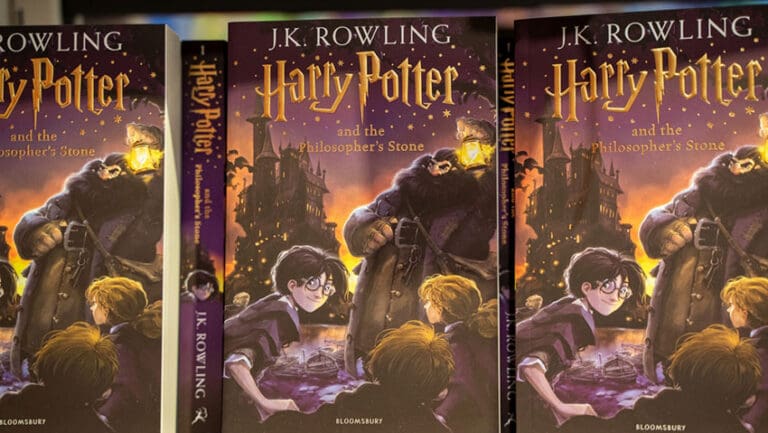
Harry Potter publisher lands £14m in Anthropic AI payout

The publisher of Harry Potter is about to bank a multimillion-pound cheque from an artificial intelligence company, and the reason should give every UK business owner pause for thought.
Bloomsbury, home to JK Rowling as well as the bestselling novelists Sarah J Maas and Susanna Clarke, is a beneficiary of a $1.5bn (£1.12bn) copyright settlement between the AI startup Anthropic and thousands of authors whose protected work was used to train its Claude chatbots.
The publisher said it had 14,087 titles listed within the settlement, with proposed compensation of about $3,000 a title. After a deduction of about 10 per cent for attorney fees and other expenses, Bloomsbury and the affected authors can expect to receive about $19m (£14m), with the proceeds split between them.
The London-based company expects the cash in instalments, potentially starting in the second half of this fiscal year.
For smaller firms, the detail that matters is not the size of Bloomsbury’s windfall but the principle behind it: content has a price, and AI models have been built on it without paying.
Copyright has become a defining battleground of the AI boom. Tools such as Anthropic’s Claude are trained on vast amounts of data scraped from the open web, including copyright-protected novels, articles and images. US AI companies have argued that this is permitted under the doctrine of “fair use”, which allows use of copyrighted work without the owner’s permission in certain circumstances. Creators, from global publishers to one-person studios, increasingly disagree, and want AI companies to seek permission first or at least pay for what they use.
The case began when the novelist Andrea Bartz and two other authors filed suit in 2024. About 91 per cent of the 482,000 works covered have now been claimed. The US district judge Araceli Martínez-Olguín said the settlement provided “meaningful relief” to affected authors and publishers, while the authors’ lead lawyer, Justin Nelson, called it “the largest known copyright recovery in history”.
Anthropic’s deputy general counsel, Aparna Sridhar, said: “We are pleased that more than 91% of authors and publishers covered by the settlement have claimed their share of the payment, and we’re looking forward to bringing this matter to a close.”
It is the first major settlement out of dozens of AI copyright claims still working through the US courts, and a marker for the wider fight now engulfing publishers and AI developers.
For British firms, the settlement lands at a delicate moment. Ministers have stepped back from a broad copyright exception for AI training, choosing instead to let a licensing market develop. More than 90 per cent of respondents to the government’s report on copyright and artificial intelligence backed forcing developers to disclose the sources of their training data.
That leaves a commercial opportunity hiding inside a legal headache. Bloomsbury has already shown the way, announcing an AI licensing deal last year that lets it sell academic works to train generative programmes, with more subject areas now under consideration. Authors are given the chance to “opt in” and are paid royalties if they let their work be used.
The lesson for smaller businesses that produce writing, images, code, video or research is blunt: intellectual property is an asset, not a by-product. Whether a firm ends up defending it in court or licensing it for a fee, knowing what content it owns, and whether it has already been scraped, is fast becoming a basic commercial discipline.
Anthropic, meanwhile, is tightening its grip on UK talent even as it settles the bill for how its models were built. For the businesses whose work trained those models, the message from a California courtroom is finally one they wanted to hear: pay up.


More Stories
Tax experts call for inflation relief if capital gains tax rises
Any rise in capital gains tax (CGT) at the budget on 28 October must be accompanied by “inflation relief” on...
Tesco considers offer for 210-store Majestic Wine chain
Tesco is considering an offer for Majestic Wine Group, the UK’s largest wine retailer, which was put up for sale...
Stellantis UK finance arm sets aside £221m for car loans scandal
The UK motor finance arm of Stellantis, the carmaker behind Vauxhall, Fiat and Jeep, has set aside £221.3m to cover...
Soho Estates returns to £62.3m profit as revenues hit record £45.2m
Soho Estates, the London property group owned by the granddaughters of the late Paul Raymond, returned to a pre-tax profit...
Jeremy Hunt urges Healey not to raise bank surcharge in Budget
Jeremy Hunt, the former Conservative chancellor, has urged John Healey not to raise taxes on banks in the Budget on...
The Role of Peptides in Modern Biomedical Research
Peptides are useful in this work because they allow scientists to investigate specific parts of larger biological systems. Peptides are...