
What Are HID Conversion Kits & Where Can I Buy Them

An HID conversion kit is a plug-and-play set of xenon bulbs, ballasts, and wiring that replaces the halogen bulbs in a car’s headlights, producing roughly three times the light. The best place to buy one is a specialist automotive lighting retailer that can confirm your exact bulb fitment, offer CANbus (error-free) versions, and back the kit with real support, rather than an anonymous marketplace listing.
Halogen headlight technology hasn’t fundamentally changed since the 1960s. A tungsten filament glows inside a small glass capsule, and on a dark, wet B-road, it can feel like you’re driving by candlelight. That’s why so many owners of halogen-equipped cars eventually go looking for an upgrade, and HID (High-Intensity Discharge) conversion kits remain one of the most popular routes, alongside LED bulbs and full headlamp replacements.
We have covered how modern headlight technology improves night driving safety before; this guide zooms in on HID kits specifically, like what they are, how they work, what to look for, where to buy one, and the legal fine print you genuinely need to know before fitting one.
What Is an HID Conversion Kit?
AdobeStock/3dimensi2000
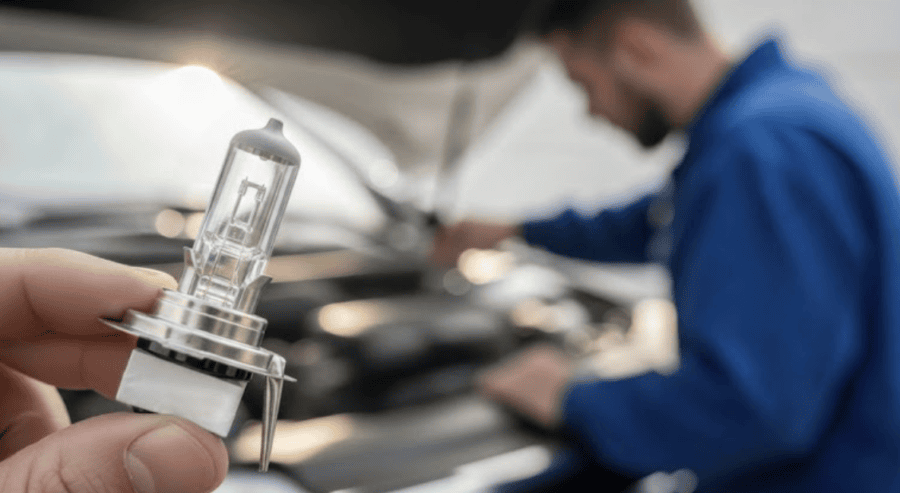
An HID conversion kit is an aftermarket package that lets a vehicle originally fitted with halogen bulbs run xenon HID lighting instead. Rather than replacing the entire headlamp housing, the kit swaps the light source: the halogen bulbs come out, and HID bulbs (sometimes called “burners”) go in, powered by small electronic ballasts that wire into the factory connectors.
A typical kit includes:
Two HID xenon bulbs in your car’s fitment (H1, H4, H7, H11, 9005/9006, and so on)
Two ballasts, which generate the high voltage that the bulbs need to ignite
Igniters, either built into the ballasts or as separate modules
Wiring harnesses and adapters that plug into the original bulb sockets
Mounting brackets or tape for securing the ballasts inside the engine bay
Better kits also offer CANbus decoders, small modules that stop modern cars (particularly European models from around 2006 onwards) from throwing bulb-out warnings or causing the lights to flicker. If you’ve ever chased phantom lighting faults on a German car, you’ll appreciate why that matters, and it’s the same family of electrical gremlins we explored in the most common BMW 5 Series headlight issues.
How Do HID Headlights Actually Work?
Instead of heating a filament, an HID bulb creates light with an electrical arc that jumps between two electrodes inside a capsule filled with xenon gas and metal salts. Striking that arc takes a serious jolt as the ballast briefly generates tens of thousands of volts to ignite the bulb, then settles down to regulate a steady 35 or 55 watts.
The result is dramatic. A standard halogen bulb produces around 1,000–1,400 lumens, whereas a 35W HID bulb typically manages 3,000–3,500 lumens with a whiter, more daylight-like color. HIDs also last far longer, usually 2,000 to 3,000 hours against a halogen’s few hundred, because there’s no fragile filament to burn out or shatter over potholes.
The one quirk you’ll notice is a short warm-up: HIDs take a few seconds to reach full brightness and settle into their final color, which is part of their distinctive character.
HID vs Halogen vs LED: How Do They Compare?
FeatureHalogenHID (Xenon)LEDLight output~1,000–1,400 lm~3,000–3,500 lm (35W)~3,000–4,000 lmColor Temperature~3,200K (warm yellow)4,300K–6,000K5,500K–6,500KBulb lifespan~450–1,000 hours~2,000–3,000 hours20,000+ hoursStart-upInstant2–5-second warm-upInstantExternal ballast/driverNo2–5-second warm-upUsually built inTypical kit price£10–£25 per pair£30–£80 / $40–$100£40–£120 / $50–$150
So which should you choose? LEDs win on lifespan and instant-on convenience, and we’ve made the case for them in our look at H7 LED headlight bulbs. But plenty of enthusiasts still prefer HID for its raw output, long-distance punch, and that signature xenon look, and in reflector housings, a well-aimed 35W HID often produces a more usable beam than a cheap LED with an oversized diode array.
For high-beam-only upgrades, off-road driving lamps, and show builds, HID remains hard to beat in terms of light per pound.
How to Choose the Right HID Kit
Get the bulb fitment right first. Check your owner’s manual, the stamp on your existing bulb, or use the fitment lookup most specialist retailers provide. Ordering an H7 kit for an H11 socket is the most common (and most avoidable) mistake.
35W or 55W? 35W is the standard and matches the output of factory xenon systems, making it the sensible choice for most cars. 55W kits are noticeably brighter but run hotter, shorten bulb life, and increase glare if the beam isn’t well controlled. Think of 55W as an off-road or rally-lamp spec rather than a default.
Pick a sensible color temperature. 4,300K produces the most actual light (it’s what carmakers fit from the factory). 5,000K–6,000K gives a crisp white with a hint of blue and only a small output penalty. Anything from 8,000K upwards looks striking in photos but throws measurably less light on the road, style over substance, unless the car is a dedicated show build.
CANbus if your car needs it. Vehicles with bulb-failure monitoring, most European cars from the mid-2000s onwards, need a CANbus “error and flicker-free” kit to run cleanly. If in doubt, ask the retailer before ordering, as a good one will know.
Ballast quality and warranty. The ballast is the component that fails on cheap kits. Look for sealed, slim aluminum ballasts, as they have a warranty measured in years rather than weeks, and a seller who will actually answer the phone if something goes wrong.
Where to Buy HID Conversion Kits
The short version: buy from a specialist automotive lighting retailer. HID kits are one of those products where the £15 marketplace special and the properly engineered kit look almost identical in the listing photos and behave completely differently after six months of British weather.
1. Specialist Automotive Lighting Retailers (the best option)
Dedicated lighting specialists live and breathe this stuff. They stock kits in every common bulb size, carry the CANbus variants modern cars need, offer genuine color-temperature choices rather than mystery bulbs, and, crucially, can confirm fitment before you spend a penny.
Underground Lighting is a good example of what to look for: a full range of plug-and-play HID conversion kits, including error- and flicker-free CANbus versions for European vehicles, multiple bulb sizes and color options, published buying guides, and real humans available by phone, live chat, or email to sanity-check your order.
That level of support is worth far more than a small saving when you’re troubleshooting a flickering headlight at 10 pm.
2. Online Marketplaces (Amazon, eBay, AliExpress)
Marketplaces are fine if you already know exactly which kit and brand you want. The downsides: listings are flooded with unbranded ballasts, physics-defying “12,000 lumen” claims, and clone bulbs of wildly variable quality. Warranty support often amounts to a seller who vanishes after 90 days. Treat marketplace prices that look too good to be true as exactly that.
3. Local Motor Factors and Auto Parts Chains
Handy for a halogen bulb on a Saturday morning, but very few high-street parts stores stock a proper range of HID kits, and staff rarely have the fitment or CANbus knowledge a conversion needs. Most will simply order online on your behalf, so you may as well go straight to a specialist yourself.
A Quick Checklist Before You Buy
Bulb fitment confirmed against your manual or existing bulb
Honest wattage spec (35W standard / 55W only if you need it)
CANbus version if your car has bulb-out monitoring
Sealed, branded ballasts with a multi-year warranty
A seller with reachable support and a clear returns policy
Are HID Conversion Kits Road Legal?
This is the part many guides skip, and it’s the question you should answer before buying. The honest answer: it depends on where you live and what you drive.
In the UK, the official MOT inspection manual states that halogen headlamp units on vehicles first used on or after 1 April 1986 must not be converted to HID or LED bulbs; a converted lamp is an MOT failure for an incompatible light source. The Department for Transport’s guidance on aftermarket HID headlamps takes the same view: the compliant route to xenon on the road is a complete headlamp unit designed and type-approved for HID, correctly installed. Interestingly, for the classic community, that post-1986 wording means older vehicles sit outside the conversion prohibition, though every car must still present a safe, correctly aimed beam that doesn’t dazzle oncoming traffic.
In the United States, the position is similar: NHTSA has stated in official interpretation letters that kits converting halogen systems to HID cannot comply with the federal lighting standard, FMVSS 108.
So where do all these kits get used? Off-road and green-lane vehicles, track and rally builds, show cars, auxiliary and driving lamps, and markets where regulations differ. If your car will see public roads, check your local rules first, and consider a proper projector retrofit or a complete HID/LED headlamp unit as the road-legal path to better light. Whatever you fit, have the beam aim checked, as bright is only better when it’s pointed at the road, not at other drivers.
Fitting an HID Kit: What to Expect
Most quality kits genuinely are plug-and-play, and a straightforward installation takes 30–60 minutes with basic hand tools.
The routine should be:
Unclip the back of the headlamp
Remove the halogen bulb
Seat the HID bulb without touching the glass (skin oils create hot spots that kill bulbs early)
Mount each ballast somewhere flat, dry, and away from exhaust heat
Connect the harness to the factory socket
And lastly, test both sides before reassembling anything
Afterward, get the beam alignment checked. And once they’re in, look after them.
Can I Fit an HID Kit Myself, or Do I Need a Mechanic?
Most kits are designed for a DIY install, and if you can change a headlight bulb, you can usually fit one in under an hour with nothing more than basic hand tools.
The exceptions are cars with tight, awkward engine bays where the ballast has nowhere sensible to sit, or projector housings that need shrouding modified to control glare properly.
If either applies, or you’re not confident in routing and securing wiring near engine heat, it’s worth having a specialist or mechanic fit it instead.
Will an HID Conversion Affect Insurance or Warranty?
It can, and this is worth checking before you buy rather than after something goes wrong. Modifying your headlights from the factory-fitted spec is a change some insurers want declared, and failing to disclose it can affect a claim later.
It may also affect a new car’s manufacturer warranty if the conversion is judged to have caused or contributed to an issue. A quick call to your insurer and a look at your warranty terms will save you from any nasty surprises.
What Usually Causes an HID Kit to Fail Early?
Cheap, unsealed ballasts are the number one culprit. Moisture and heat get in, and the ballast either dies outright or starts causing flicker and intermittent faults.
The second most common cause is poor mounting, ballasts left dangling near the exhaust manifold, or resting in a spot where water pools.
Touching the bulb glass with bare fingers is the other classic mistake: skin oils create a hot spot on the capsule that shortens bulb life, sometimes dramatically.
Final Thoughts
HID conversion kits earned their reputation the honest way: for cars stuck with dim halogens, a quality 35W xenon kit is still one of the biggest light-per-pound upgrades you can make. The formula for a good outcome is simple: just know your bulb fitment, choose 4,300–6,000K, and go CANbus if your car needs it. Understand the road-use rules where you live, and buy from a specialist retailer who’ll stand behind the kit. Do that, and the difference on the first dark drive will speak for itself.
The post What Are HID Conversion Kits & Where Can I Buy Them appeared first on My Car Heaven.

More Stories
Toyota Recalls Nearly 106,000 Land Cruiser SUVs Over Fuel Leak and Potential Fire Risk
Toyota’s legendary Land Cruiser has built its reputation on durability and reliability, but even one of the toughest SUVs on...
Legendary Mercedes-Benz AMG Hammer Could Make a Comeback as HWA Teases Stunning W124 Revival
Some cars earn legendary status through impressive sales figures, while others become icons simply because they were outrageously fast for...
10 Practical Gifts for Truck Owners Who Work Outdoors
Who actually needs another novelty keychain? For someone whose truck doubles as an office, a toolshed, and a lunchroom, the...
Uzbekistan September 2026: Chevrolet falls to 70.2% share, BYD up to 13.4%
The Chazor Champion is BYD’s best-seller in Uzbekistan. The Uzbek new car market is down -5% year-on-year in September to...
2027 GMC Yukon Invoice Price, Dealer Cost, and What You Should Pay Near You
The 2027 GMC Yukon sits at the upper end of the full-size SUV market, with a lineup that runs from...
2027 Honda Civic Invoice Price, Dealer Cost, and What You Should Pay Near You
The Honda Civic has been America’s best-selling compact car for decades, and the 2027 lineup adds meaningful new content with...