
Next prime minister ‘must back business, not tax it’, warns chambers chief

The next prime minister must back companies rather than tax them if Britain is to lift a “cost of doing business crisis” that is throttling growth, the head of the British Chambers of Commerce will warn this week.
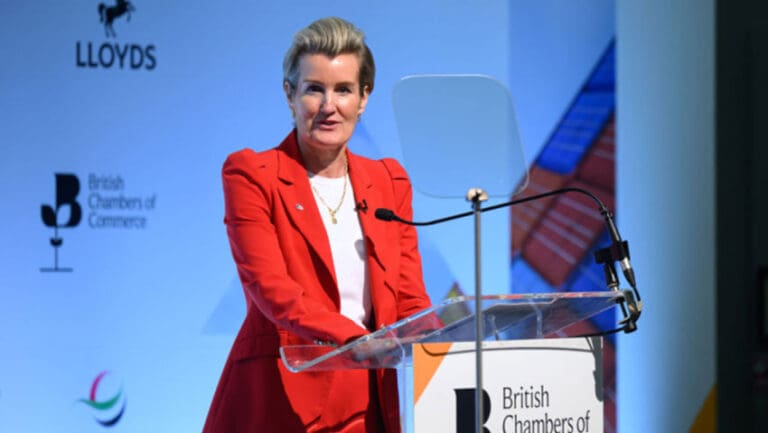
Shevaun Haviland, director-general of one of Britain’s big five business lobby groups, will address political and corporate leaders at the BCC’s annual conference in London on Thursday, against a backdrop of mounting speculation that Andy Burnham will enter No 10 next month following Sir Keir Starmer’s resignation on Monday.
Rachel Reeves, the shadow chancellor Sir Mel Stride and Andy Haldane, the BCC president, are also due to speak, alongside senior figures from Reform UK, the Liberal Democrats and the Green Party. Haldane, the Bank of England’s former chief economist, has been appointed to lead the BCC and is understood to be advising Burnham as the Greater Manchester mayor races to build out a policy platform.
Reeves is expected to tell delegates that the government remains focused on delivering economic stability and certainty, and to restate the growth opportunities she set out in her Mais Lecture in March, including the Oxford-Cambridge technology supercluster.
In her own address, Haviland is expected to warn the next administration that further business taxes “would be a road to ruin” and the “quickest way to destroy the fragile confidence that we have left”.
She will say: “The difficult truth is, whoever leads the UK, the primary challenge remains the same: delivering growth. Despite all our strengths, we are failing to fulfil our potential. Businesses can feel it and voters can feel it too.”
Haviland is expected to single out policy choices over the past decade for making “doing business even tougher”. She will say: “At a time of huge economic shocks and global headwinds, successive UK governments have chosen to pile more and more cost on companies. That is no way to run an economy.”
Her intervention chimes with survey evidence showing business confidence sinking to a two-year low amid tax rises and global trade tensions, a backdrop that has left many firms reluctant to commit to new investment.
Haviland will warn that whoever sits in No 10, or the Treasury, must grasp that a lack of confidence is undermining the country’s ambition, ideas, talent and, ultimately, its growth.
“Weak confidence reduces appetite for risk, which reduces investment, which hampers growth, which knocks confidence further,” she will say. “And this circular crisis of confidence is now shackling ambition, blocking the actions needed to invest, innovate and trade.”
She will add: “Businesses can only deliver growth if the environment they operate in gives them the confidence to act. And that is where political leadership can make all the difference.”
The director-general, who leads an organisation representing tens of thousands of companies through its national network of accredited chambers, will also repeat calls for co-operation between government and unions to stop the Employment Rights Act having a “similar confidence crushing effect”.
Her warning lands amid a chorus from other large business groups. The Confederation of British Industry has cautioned this week that the cost of doing business is nearing a “tipping point”, with its leadership pressing for stability and against further tax rises on firms.
The concern across the sector is consistent: that the cumulative weight of taxation and regulation is eroding the very investment the country needs. Research has previously suggested that Reeves’s tax plans risk driving businesses overseas, a flight that would compound rather than cure Britain’s growth problem.
For Haviland, the message to the incoming prime minister is blunt. Growth will not be legislated or taxed into existence; it has to be earned by giving companies a reason to believe again.


More Stories
Lidl to open more than 50 stores after sales rise to £13bn
Lidl GB increased turnover by 10.8 per cent to £13bn in the financial year ended 28 February 2026, with operating...
Nandy intervenes in BT’s TalkTalk deal, citing risk to life
The government has intervened in BT Group’s acquisition of TalkTalk, with Lisa Nandy, the Secretary of State for Digital, Culture,...
Getting to know you: Professor David Keene MBE, CEO, Aurrigo
Professor David Keene MBE is the founder and chief executive of Aurrigo International plc, the AIM-listed Coventry company that builds...
Getting to know you: Malcolm Seagrave, CEO, Hedgehog Lab
Malcolm Seagrave is chief executive of Hedgehog Lab, the Newcastle upon Tyne digital product studio that designs and builds software...
Tax experts call for inflation relief if capital gains tax rises
Any rise in capital gains tax (CGT) at the budget on 28 October must be accompanied by “inflation relief” on...
Tesco considers offer for 210-store Majestic Wine chain
Tesco is considering an offer for Majestic Wine Group, the UK’s largest wine retailer, which was put up for sale...