
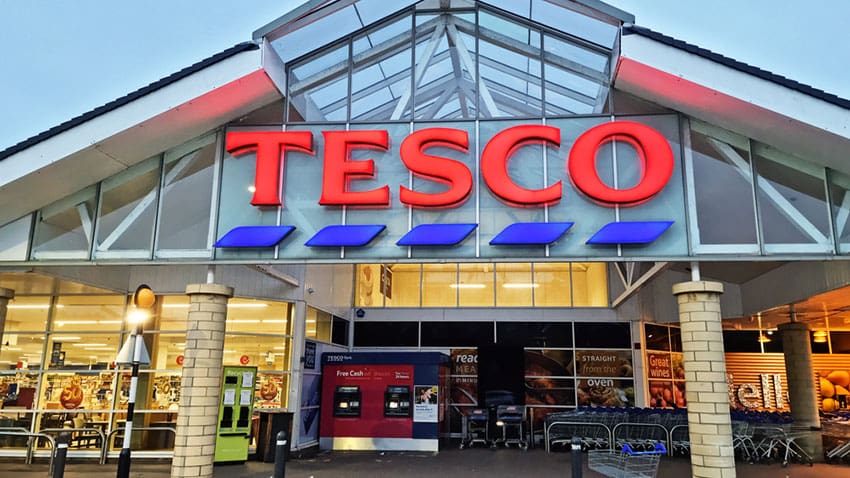
Weather trumps the World Cup at the till, says Tesco as growth cools

A washout spring has done more damage to Britain’s supermarket tills than any World Cup win, according to the boss of Tesco, after the country’s biggest retailer saw UK sales growth more than halve over a quarter blighted by rain and the fallout from the Middle East conflict.
Ken Murphy, chief executive of Tesco, said the grey, wet conditions that dominated much of this spring, set against a long run of sunshine a year earlier, had weighed on shopping habits far more heavily than either the football or the Iran war, even if the latter had created “ongoing uncertainty for many households”.
“The biggest impact on the market would be the weather,” Murphy said, with sunshine encouraging households to “eat together more, celebrate more and spend more on groceries”. On the tournament itself, he was warmer still: “It will be fantastic for the country if [England and Scotland] did well. It would give the country a real lift.”
There were, at least, flashes of the feel-good factor in the numbers. Sales through Tesco’s Whoosh rapid-delivery service jumped 40% around the England-Croatia game on Wednesday night, and climbed even faster in Scotland around Sunday’s win over Haiti. Sales of Irn-Bru, the fizzy drink beloved north of the border, rose by 50%, while canned cocktails surged 185% before the Haiti match. “The weather effect is the big difference,” Murphy insisted.
The retailer’s caution chimes with the wider read on the tournament. Football fans are expected to deliver a £267.7m boost to retail sales ahead of England’s second World Cup match on Tuesday evening, with close to £70m forecast to be spent in pubs and other venues, according to research from GlobalData for VoucherCodes. Industry forecasters have separately pencilled in a far larger windfall across the whole competition, with analysis published by The Grocer pointing to a record £2.9bn boost for UK retailers over the course of the tournament.
Yet the lessons of recent tournaments temper the optimism. Data from Euro 2024, in which England reached the final, suggests the overall sales uplift for supermarkets during a major championship is likely to be marginal. The market research firm Circana said cost-of-living pressures, heavy discounting and more time spent at home meant households were unlikely to spend “much more” than usual on food and drink. It is a pattern Business Matters has tracked before, with pubs, bookmakers and takeaways tipped to capture the lion’s share of the World Cup spend.
Tesco said comparable sales rose 1.8% to £13.4bn in the three months to the end of May, well below both the 4.2% logged in the previous quarter and the 2.3% growth City analysts had pencilled in. The figures were flattered by an 8.9% rise in online sales, with group sales up 1% to £16.8bn.
Murphy said consumer confidence remained low amid worries over the Middle East conflict, which has pushed up petrol prices and threatens to feed through to household energy bills later this year, though he stressed this had not yet translated into any significant change in shopping behaviour.
The chief executive added that growth had also been dampened by slowing grocery inflation, as the price of commodities such as coffee and cocoa eased and many food producers put measures in place to shield themselves from the earlier surge in energy costs. He said he did not expect grocery inflation to climb to the 9% levels suggested by some industry bodies, and that pump prices were “falling as we speak” amid hopes of a lasting peace deal between the US and Iran. The sensitivity of the basket to the seasons is well established, with a record May heatwave having lifted UK retail sales by 3.7% only weeks earlier.
Tesco said it had extended its pledge to match German discounter Aldi on leading lines to more than 2,000 of its smaller Express stores and had launched 520 new products, leaving it “well placed to build on our progress to date”. The renewed emphasis on price echoes the discounting battle the chain flagged heading into Christmas, as household budgets stayed under strain.
Not every corner of the business held up. Sales at Tesco’s Booker wholesale arm fell 3.2%, with takings from independent retailers and catering businesses sliding amid tough conditions on the high street.
Tesco, which holds its annual shareholder meeting later on Thursday, said it still expected to meet profit forecasts for the year, with analysts looking for around £3.25bn. Even so, the shares fell 2.4% in early trading. In April, the retailer warned of a possible dip in annual profits, which would mark the first fall since 2023. Reuters reported that the group’s Irish arm grew like-for-like sales by 3.3% to €967m over the same period, a reminder that the wider group is still expanding.
In the year to 28 February, profits rose 8.5% to £2.4bn as sales grew 4.3% to £66.6bn, including strong growth in the UK.


More Stories
Lidl to open more than 50 stores after sales rise to £13bn
Lidl GB increased turnover by 10.8 per cent to £13bn in the financial year ended 28 February 2026, with operating...
Nandy intervenes in BT’s TalkTalk deal, citing risk to life
The government has intervened in BT Group’s acquisition of TalkTalk, with Lisa Nandy, the Secretary of State for Digital, Culture,...
Getting to know you: Professor David Keene MBE, CEO, Aurrigo
Professor David Keene MBE is the founder and chief executive of Aurrigo International plc, the AIM-listed Coventry company that builds...
Getting to know you: Malcolm Seagrave, CEO, Hedgehog Lab
Malcolm Seagrave is chief executive of Hedgehog Lab, the Newcastle upon Tyne digital product studio that designs and builds software...
Tax experts call for inflation relief if capital gains tax rises
Any rise in capital gains tax (CGT) at the budget on 28 October must be accompanied by “inflation relief” on...
Tesco considers offer for 210-store Majestic Wine chain
Tesco is considering an offer for Majestic Wine Group, the UK’s largest wine retailer, which was put up for sale...