
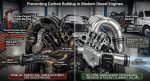
Engine Longevity 101: Preventing Carbon Buildup in Modern Diesel Engines

The legend of the “million-mile diesel” is a cornerstone of automotive lore. For decades, the recipe for a heavy-duty truck was simple: a massive cast-iron block, a mechanical fuel injection pump, and a turbocharger. These older generations of Cummins, Powerstroke, and Duramax engines were famously overbuilt, capable of outlasting the very chassis they were bolted to.
The legend of the “million-mile diesel” is a cornerstone of automotive lore. For decades, the recipe for a heavy-duty truck was simple: a massive cast-iron block, a mechanical fuel injection pump, and a turbocharger. These older generations of Cummins, Powerstroke, and Duramax engines were famously overbuilt, capable of outlasting the very chassis they were bolted to.
However, if you talk to any modern diesel mechanic today, they will tell you that the landscape has drastically changed. While modern diesel engines produce more horsepower and torque than ever before straight from the factory floor, they face a silent, choking adversary that their predecessors never had to deal with: severe carbon buildup.
If you are a truck enthusiast, a fleet manager, or someone who relies on their heavy-duty pickup for towing, understanding how carbon buildup forms and how to prevent it is the single most important factor in extending the life of your truck. In this comprehensive guide, we are going to dive deep into the anatomy of modern diesel engines, the emissions systems that inadvertently cause internal sludge, and the most effective strategies to keep your engine breathing clean and running strong for hundreds of thousands of miles.
The Paradox of Modern Diesel Engines
To understand the problem, we first have to look at the evolution of diesel engineering over the last two decades. As emissions regulations became significantly stricter, automotive manufacturers were forced to develop highly complex exhaust after-treatment systems. The goal was noble: reduce the amount of nitrogen oxides (NOx) and particulate matter (soot) expelled from the tailpipe.
To achieve this, manufacturers implemented a series of systems, most notably the Exhaust Gas Recirculation (EGR) valve, the Diesel Particulate Filter (DPF), and Selective Catalytic Reduction (SCR) systems requiring Diesel Exhaust Fluid (DEF). While these technologies successfully cleaned up the exhaust exiting the tailpipe, they inadvertently created a massive problem inside the engine itself. Instead of expelling all the soot into the atmosphere, modern diesel engines are forced to “swallow” a portion of their own exhaust.
When you combine hot, soot-laden exhaust gas with oil vapors generated by the engine’s crankcase, you create a perfect storm. The result is a thick, tar-like sludge that coats the intake manifold, the valves, and critical sensors. Over time, this carbon buildup strangles the engine, robbing it of power, destroying fuel economy, and eventually leading to catastrophic component failure.
The Primary Culprit: Exhaust Gas Recirculation (EGR)
At the very heart of the carbon buildup epidemic is the Exhaust Gas Recirculation (EGR) system. The EGR system operates on a relatively simple concept: it takes a portion of the hot exhaust gases leaving the engine and routes them back into the intake manifold to be burned a second time. Because exhaust gas contains less oxygen than fresh air, introducing it into the combustion chamber lowers the overall combustion temperature. Lower combustion temperatures result in the production of fewer NOx emissions.
While this looks great on an emissions test, the mechanical reality is a nightmare for engine longevity. Diesel exhaust is inherently dirty. It is full of unburned hydrocarbons and abrasive soot particles. Before this hot exhaust can be reintroduced into the engine, it must pass through an EGR cooler to lower its temperature.
The Downward Spiral of the EGR System
As soot passes through the EGR cooler and into the EGR valve, it begins to accumulate. Slowly but surely, the passages within the cooler become restricted. Once the EGR valve itself becomes caked in dry soot, it can stick open or closed, triggering a cascade of engine codes and throwing the truck into “limp mode.”
Even worse is what happens when an EGR cooler fails. Because the cooler uses engine coolant to lower the temperature of the exhaust gas, a carbon-choked and thermally stressed cooler can crack. When this happens, coolant leaks directly into the exhaust or the intake. If coolant enters the combustion chamber in large enough quantities, it can cause engine hydro-locking, a catastrophic event that bends connecting rods and requires a complete engine rebuild.
For truck owners who use their vehicles strictly for off-road applications, closed-course competition, or farm use where highway emissions regulations do not apply, the most definitive way to prevent this specific type of carbon buildup is by removing the system entirely. By installing high-quality EGR delete kits, off-road enthusiasts can block off the exhaust flow to the intake manifold entirely. This ensures that the engine only breathes fresh, clean, oxygen-dense air.
Specialized aftermarket suppliers like EngineGo have become the go-to source for these heavy-duty block-off plates and bypass systems, allowing competition truck builders to drastically lower their combustion temperatures, improve throttle response, and eliminate the risk of a blown EGR cooler taking out their engine.
The Silent Killer: Crankcase Ventilation (CCV)
While the EGR system introduces dry soot into the intake, soot alone doesn’t create the sticky, black sludge that ruins engines. Dry soot can easily be blown through the combustion chamber. The element that turns that soot into a destructive tar is oil vapor, and that vapor comes from the Crankcase Ventilation (CCV) system.
In every internal combustion engine, a small amount of combustion gas “blows by” the piston rings and pressurizes the oil pan and crankcase. This pressure must be vented to prevent the engine from blowing out its main seals. In older vehicles, this pressure was simply vented out a tube into the atmosphere (often called a “road draft tube”). However, modern environmental standards dictate that these oily crankcase vapors must be routed back into the engine’s intake system to be burned off.
The Deadly Combination: Soot Meets Oil
When the CCV system routes oil-saturated air into the intake tract, it coats the inside of the turbocharger compressor wheel, the intercooler piping, and the intake manifold with a fine layer of motor oil. If you have ever taken apart the intercooler piping on a factory-stock modern diesel, you will find it slick with engine oil.
On its own, this oil vapor is a nuisance that lowers the efficiency of the intercooler. But when this oily film meets the dry soot being pumped in by the EGR system, a chemical reaction occurs. The soot and oil combine to form a thick, baked-on carbon sludge. This sludge clings to the intake valves, severely restricting airflow. Over tens of thousands of miles, the diameter of the intake manifold ports can be reduced by half, forcing the turbocharger to work twice as hard just to push the same amount of air into the cylinders.
To combat this, dedicated off-road and track-truck builders rely on CCV reroute kits. A proper CCV reroute modifies the factory system so that the oily crankcase vapors are either vented to the atmosphere (through a catch can or draft tube) or aggressively filtered before they can reach the turbocharger.
Brands like EngineGo engineer these reroute systems specifically for high-performance Duramax, Cummins, and Powerstroke applications. By implementing a CCV reroute, owners ensure that their intercoolers remain completely dry and their intake manifolds remain free of sludge, allowing the engine to maintain its factory airflow dynamics indefinitely.
Beyond the Hardware: Routine Maintenance for Longevity
While hardware modifications are the gold standard for dedicated competition vehicles, they are not strictly legal for street-driven trucks. If you are operating a daily driver or a commercial fleet vehicle that must retain its factory emissions equipment, you cannot simply delete the EGR or CCV systems. Instead, you must rely on aggressive, proactive maintenance to fight carbon buildup.
1. Frequent Oil Changes with Premium Synthetics
The oil in a modern diesel engine works significantly harder than it did twenty years ago. Because the engine is forced to ingest its own soot, that soot eventually washes past the piston rings and contaminates the engine oil. This abrasive soot acts like liquid sandpaper inside the engine, wearing down main bearings and camshaft lobes.
Do not trust the manufacturer’s extended 10,000-mile oil change intervals. To prevent soot agglomeration in the oil, you should be changing your diesel engine oil every 5,000 to 7,500 miles, utilizing high-quality full synthetic oils that carry the latest API CK-4 rating. These modern oils contain advanced dispersants specifically designed to suspend soot particles and keep them from clumping together.
2. High-Quality Fuel and Fuel Additives
Diesel fuel quality varies wildly across different gas stations. Low-quality diesel has a lower cetane rating, which leads to incomplete combustion. Incomplete combustion creates more soot. To keep your emissions systems from being overwhelmed, always try to purchase fuel from high-volume truck stops where the diesel is fresh.
Furthermore, utilizing a premium diesel fuel additive at every fill-up can drastically reduce carbon buildup. Look for additives that boost the cetane rating (promoting a cleaner, hotter burn) and contain detergents to keep the delicate tips of your fuel injectors free of carbon crust.
3. The “Italian Tune-Up” (Work Your Truck)
Modern diesel engines are designed to work hard. They are engineered to tow heavy trailers up steep grades. One of the absolute worst things you can do for a modern Powerstroke, Cummins, or Duramax is to use it as a grocery-getter. Short trips, extensive idling, and light-load driving do not allow the engine or the exhaust system to reach their optimal operating temperatures. When the engine runs cold, soot production increases exponentially, and the DPF (Diesel Particulate Filter) clogs up rapidly.
To keep the engine clean, it needs to get hot. If your truck spends most of its time commuting empty, make it a point to take it on the highway once a week, put your foot down, and let the engine reach sustained high temperatures. This passive regeneration will help burn the accumulated soot out of the exhaust system and keep the turbocharger’s variable geometry vanes moving freely.
The Financial Logic: Preventative Upgrades vs. Engine Replacement
The automotive industry is undeniably pushing toward electrification. With headlines reporting that major automakers are pausing their next-generation EV truck programs, it is clear that the internal combustion diesel engine is going to be around for a long time. For truck enthusiasts, this means holding onto their current vehicles longer than ever before.
When you consider that the cost of a brand-new, fully loaded heavy-duty diesel truck now routinely exceeds $90,000, and a full engine replacement can cost upwards of $15,000, the logic of preventative maintenance becomes glaringly obvious.
Investing in the longevity of your engine is no longer just a hobby for gearheads; it is a vital financial strategy. Whether that means adopting rigorous 5,000-mile oil change intervals for a street-driven work truck, or sourcing premium aftermarket competition parts from experts like EngineGo for an off-road build, addressing carbon buildup is the ultimate key to survival.
Conclusion
The era of the purely mechanical, indestructible diesel engine may be in the rearview mirror, but that does not mean modern trucks are doomed to early graves. Modern diesels possess incredible strength, featuring forged internals and block designs that are engineering marvels. Their only true weakness is the carbon buildup forced upon them by their own breathing systems.
By understanding the mechanics behind the EGR and CCV systems, and by taking proactive steps to mitigate their side effects through either aggressive maintenance regimens or purposeful off-road hardware modifications, you can ensure your truck beats the odds. Keep the intake air clean, keep the oil fresh, and let the engine work the way it was designed to. If you do, your modern diesel will gladly give you the hundreds of thousands of miles of reliable towing power you paid for.


More Stories
A Simple Pre-Winter Check for Your Tires and Battery
The first cold morning of the season has a way of finding the weak spots in a car. A tire...
Porsche Mission S Hypercar Teased with 8,000-RPM Redline Ahead of October 15 Reveal
Porsche is preparing to make a serious statement in the world of high-performance automobiles, and its upcoming Mission S hypercar...
Chinese Automaker Geely Coming to Canada in 2027 as New Import Rules Open the Door to Affordable EVs
The North American automotive landscape could be in for a significant shakeup as Chinese automotive giant Geely Auto has officially...
Rivian Goes Ghostbusters for Halloween with Ecto-1 Inspired EVs and Spooky Software Update
Rivian is getting into the Halloween spirit in a big way this year, and fans of the iconic Ghostbusters movies...
Keeping the Ram You Love, Updating the Part You Use Every Day
A favorite vehicle earns its place through use. There are the trips you planned for months, the quick runs for...
Is Your Car Ready for Colorado’s Traction Law?
A clear forecast in Denver can turn into a whiteout at the Eisenhower Tunnel. When that happens, the Colorado Department...