
Six must-see travel destinations for 2026

Some of your New Year’s resolutions already may be broken, but if you vowed to travel more in 2026, there is still plenty of time and the oodles of options to explore the world. Update your passport or fill up the gas tank because here are six suggestions in chronological order where big events are happening. Feel free to visit these locales any time of the year, however, for some remarkable memories.
Milan, Italy for the Winter Olympics
The 2026 Winter Olympic Games in the Italian city of Milan and nearby Cortina in the Alps will run Feb. 6-22 while the Winter Paralympic Games run March 6-15. Tickets to see the athletes compete are available on the Olympics official website, with prices ranging from about $60 for a curling competition to more than $550 for a figure skating session. The opening ceremony at Milan’s San Siro Olympic Stadium will include singers Mariah Carey and Andrea Bocelli but will set you back about $300 for the cheapest seat.
That’s about three times more than what my husband and I paid for a Delta flash sale flight to Milan in mid-January to visit the area ahead of the games. We’ve been to Italy several times, but a weeklong Milan to Parma to Bologna itinerary for a foodie tour was new to us. In Milan, we took a hosted tour of the gigantic Milan Cathedral and the world-famous La Scala Opera House with The Tour Guy and saw Leonardo da Vinci’s “The Last Supper” mural in the refectory of the Convent of Santa Maria delle Grazie church another day. We made sure to reserve tickets to the timed viewing on the church’s somewhat confusing (for non-Italian speakers anyway) website – they sell out quickly – but The Tour Guy and other tour operators also offer them as part of a package.
In Bologna, which is sometimes nicknamed “La Grassa” (The Fat) for its cuisine scene, we took a private walking foodie tour with Italy Charme that promises to reveal the secret to why tortellini are shaped like belly buttons, and stopped at Osteria del Sole, which has been serving wine since 1465. We carbo-loaded like the athletes themselves and ate all the pastas and cheeses. The area is known for mortadella, balsamic vinegar and gelato as well.
Bhutan for a colorful festival
I recently returned from a majestic weeklong tour of the tiny Asian country of Bhutan — hiking in the Himalayas, helping prepare meals at a homestay and pampering myself in the name of wellness travel as a hosted guest of Bhutan Spirit Sanctuary, Himalayan Echoes and Bhutan’s official department of tourism. Getting there takes some planning and determination: The remote country bordered by China to the north and India to the south opened its borders to visitors in 1974 and guards against overtourism by requiring a visa and charging a $100-per-day, per-person sustainable development fee that needs to be arranged in advance. Another factor is Bhutan currently supports only one international airport in the city of Paro, about an hour’s drive from the capital of Thimphu. My husband and I flew from our home in Minnesota to Delhi through London on back-to-back overnight flights (not recommended). After less than 24 hours in Delhi, we flew one of two official Bhutanese airlines, Drukair, into one of the world’s scariest – but prettiest – airports tucked into a valley between mountain peaks to start our adventure.
Some must-dos during a visit include the difficult-but-rewarding Tiger’s Nest Monastery hike near Paro, a visit to the 15th century fertility temple of Chimmi Lhakhang and a tour of the centuries-old Punakha Dzong (we did them all). But Bhutan is also famous for its colorful festivals held throughout the year based on location on the 10th day of the month of the lunar Tibetan calendar. The most popular, the Paro Tshechu, is scheduled March 29-April 2 this year.
At these community events, monks and others wear intricate costumes and masks to act out the lore of historical legends. The Paro festival is centered on honoring Guru Rinpoche, who is credited with bringing Buddhism to Bhutan in the eighth century, and crowds gather to see the unscrolling of the thangkha, a 350-year-old Buddhist document. Tourists are invited to attend these multi-sensory celebrations as a way to learn more about the culture and traditions in Bhutan.
Seattle for a FIFA World Cup match
I wrote about my road trip to Bellingham, Washington last summer that included a two-night stay in Seattle. I’d like to return to the area again this summer when Seattle is one of the 16 American, Canadian and Mexican cities hosting the 2026 FIFA World Cup matches of 48 teams from June 11 to July 19. Australia squares off against the United States at Lumen Field in Seattle on June 19, but even the cheapest tickets are reselling for more than $1,000 each and top-tier seats are listed at $33,000 (yikes!).
Not a soccer fan or too rich for your blood? See what else Seattle has to offer, including the iconic Space Needle landmark in the Lower Queen Anne neighborhood that was built for the 1962 World’s Fair, as well as the adjacent Chihuly Garden and Glass exhibit of works by artist Dale Chihuly and the popular Pike Place Market, where the fish mongers famously toss large fish to each other for the perfect Instagram post. Don’t miss Seattle’s impressive aquarium, and schedule a sunset cruise of Elliot Bay for a view of the city from a different perspective. Yes, Seattle is the world headquarters to Starbucks coffee chain, but there are hundreds of independent coffee houses and local roasters if you prefer different java.
Medora, South Dakota for America’s 250th celebration and the opening of a new presidential library
The United States’ semiquincentennial – or 250th anniversary – is this year, and destinations all across the country are celebrating, particularly on the Fourth of July weekend. The website America250.org has a robust listing of hundreds of events and commemorations, searchable by location. We are considering a return visit to Medora, North Dakota for the grand opening celebration of the Theodore Roosevelt Presidential Library on July 4. I was surprised to learn the 26th president didn’t have his own library until now, and the Independence Day opening is sure to be patriotic. We saw a scale model of the impressive building last summer, and I loved how the architecture perfectly fits the area and is focused on environmental sustainability concepts such as zero waste and zero emissions. Native plants will surround the structure, and the building is one of only 34 worldwide projects earning the Living Building Challenge certification.
Why North Dakota? The library’s CEO, Ed O’Keefe, explains that Roosevelt came to Dakota to hunt buffalo in 1883 and invested $14,000 in cattle and a ranch while here. On Valentine’s Day in 1884, both Roosevelt’s wife and mother died – his wife of a kidney disease and his mother of typhoid fever. He returned to the Badlands to mourn and cherished his time in the sprawling open part of the country. In fact, Medora is the entry point for the south part of the 70,446-acre Theodore Roosevelt National Park, the only national park named after a single person. This year is a big one for presidential libraries: The 19.3-acre Barack Obama Presidential Center is expected to open in June in Chicago as well.
Northern Spain for the total solar eclipse
A total solar eclipse on April 9, 2024 in Ellsinore, Mont. (Courtesy of Amy Nelson)
After driving to Lusk, Wyoming in 2017 and Ellsinore, Missouri in 2024 to witness the total solar eclipses, I am hooked on eclipse travel. Seeing the sky darken in the middle of the day and hearing the crickets start to chirp and feeling the temperature drop several degrees as the moon crosses in front of the sun is such a unique experience. It also involves a lot of pre-planning, some flexibility and a bit of luck. I’m hoping to be in the path of totality on Aug. 12 when a total solar eclipse is expected to cross Iceland and parts of Portugal and northern Spain, including Burgos, Leon and Bilboa.
I’m not alone. Several travel companies, including Audley Travel, report that demand for hotels and lodging in places located within the path of totality are already sold out in some locations. I’m hoping to use the same tactics my family and I used in 2017 and again in 2024 and book a spot about an hour or two outside the path of totality. I will arrive a few days before the eclipse and study weather patterns and the predicted cloud cover along the route and then hope to drive to an area within the path of totality to settle in for a spectacular show. I realize there is a lot of risk in not actually witnessing a full eclipse – the traffic could be terrible, the skies could be cloudy or overcast, the cost could be prohibitive. But the payoff is worth it if I luck out. The next total solar eclipse over the United States isn’t until 2044, which is too long of a wait for people like me who crave totality.
India for a tour of the Golden Triangle region
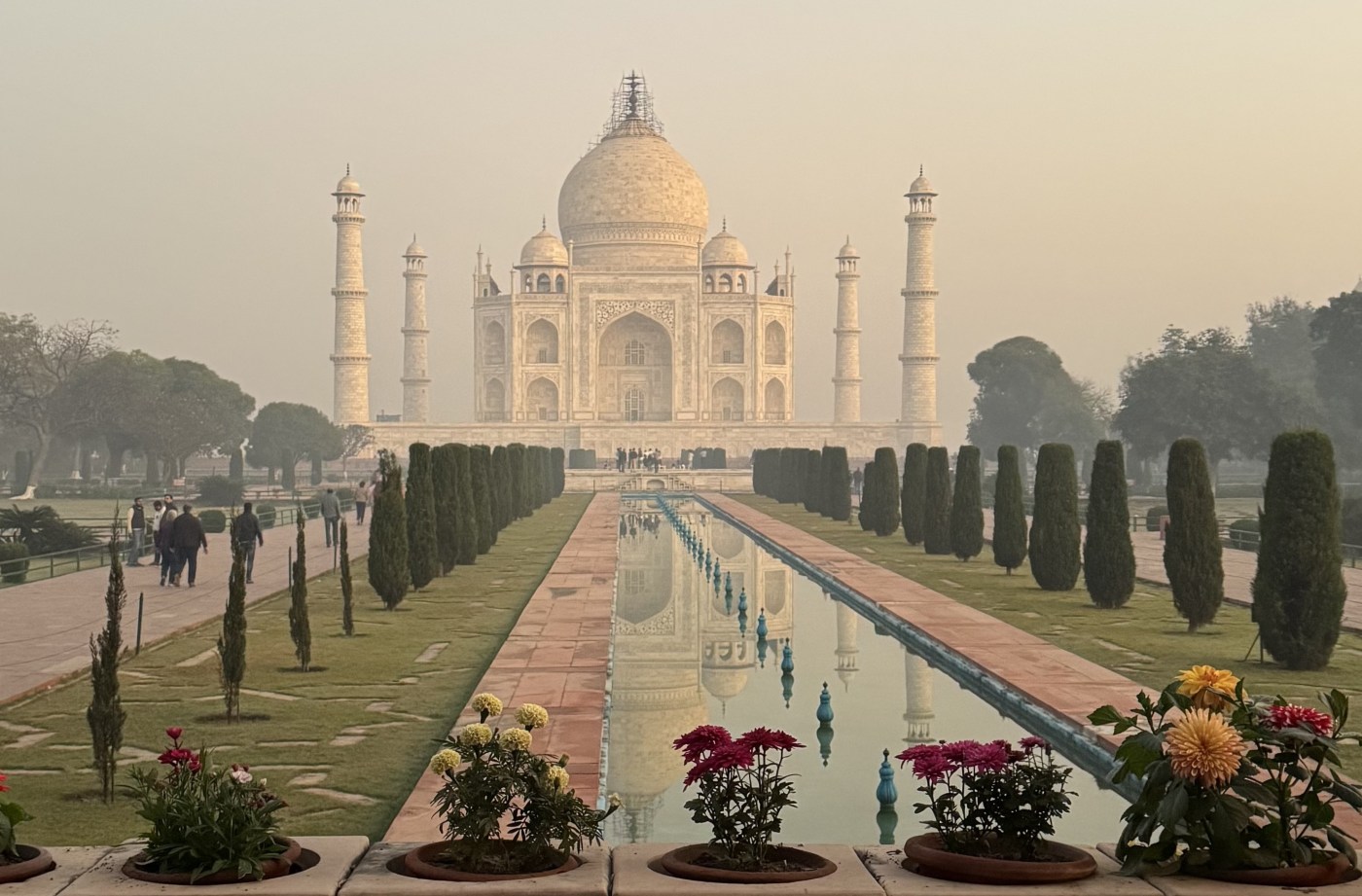
The Taj Mahal in Agra, India. (Courtesy of Amy Nelson)
Visiting the Taj Mahal in India has always been on my list – and I finally was able to check that box a few months ago during a tour of the Golden Triangle region hosted by Audley Travel. For those unfamiliar, India’s Golden Triangle (not to be confused with the drug-producing area in Southeast Asia that includes Myanmar and Thailand) is the approximately 450-mile round-trip route from the Delhi region, south to the city Agra where the Taj Mahal is located and west from there to the desert city of Jaipur. The first leg is about a three-hour drive, while the other two are five to six hours based on Indian traffic. We completed the route over five days, but Audley recommends a 10-day itinerary. While traveling through India any time of the year has its positives and negatives, I included this last because I’d suggest a visit in the winter but before the holidays, when the crowds have thinned out and the temperatures are cooler.
For me, the Taj Mahal was the highlight of the visit – photos of the large reflecting pools showing the enormous white marble mausoleum structure don’t do it justice. You just have to see the 42-acre complex in person, but arrive early. We were in line by 6:30 a.m., and the gates open 30 minutes before sunrise. Having a guide was essential: He explained how the Taj Mahal was commissioned in 1632 by the Mughal emperor Shah Jahan to commemorate his favorite wife, Mumtaz Mahal, who had died the previous year while giving birth to their 14th child. For the rest of our journey across India, it was difficult to not compare the Taj Mahal with the other sites, but many were equally beautiful or culturally significant. It was golden, indeed.
Related Articles
7 epic ski trips you can still plan for this winter
Will unseasonably hot weather dash Southern California’s hopes for a 2026 superbloom?
America’s coolest motels include these spots
Super Bowl LX guide: What to do within 10 miles of Levi’s Stadium
Travel: These new cruise ships will set sail in 2026
More Stories
The next scientific frontier may be inside us, says Nicole Junkermann
As artificial intelligence converges with life sciences at an accelerating pace, the founder of NJF Holdings argues that the most...
Government Plans for the Shipping Industry in 2026
The UK’s position as a leading maritime nation and a key player in achieving its Net Zero obligations will be...
Tony Buzbee on the Clients Who Walk Through the Door and What They Actually Need
Tony Buzbee founded The Buzbee Law Firm in Houston in 2000. The firm takes on personal injury claims, workplace accidents,...
How to Launch a Personal Training Business Fast
Smart entrepreneurs move from initial concept to signing paying clients by following a clear, step-by-step setup framework. Secure Recognised Fitness...
What Can an iPhone Data Recovery Tool Recover? From Photos and Messages to Pages, Numbers, and Keynote
You delete a few old photos, clear some messages, or lose an important work file—and then realize you needed it...
Gallagher brothers confirm 38 Oasis dates for 2027 after $400m reunion run
Oasis have confirmed 38 dates for a global tour in 2027, including a return to Knebworth in Hertfordshire. The announcement...