
Khalid: Shutdown stretches on, aviation staff stretched thin

Airports have long served as barometers of national vitality. After the 2008 financial crisis, bustling terminals in Atlanta and Chicago signaled a country on the mend as passengers reclaimed lost time and businesses reconnected.
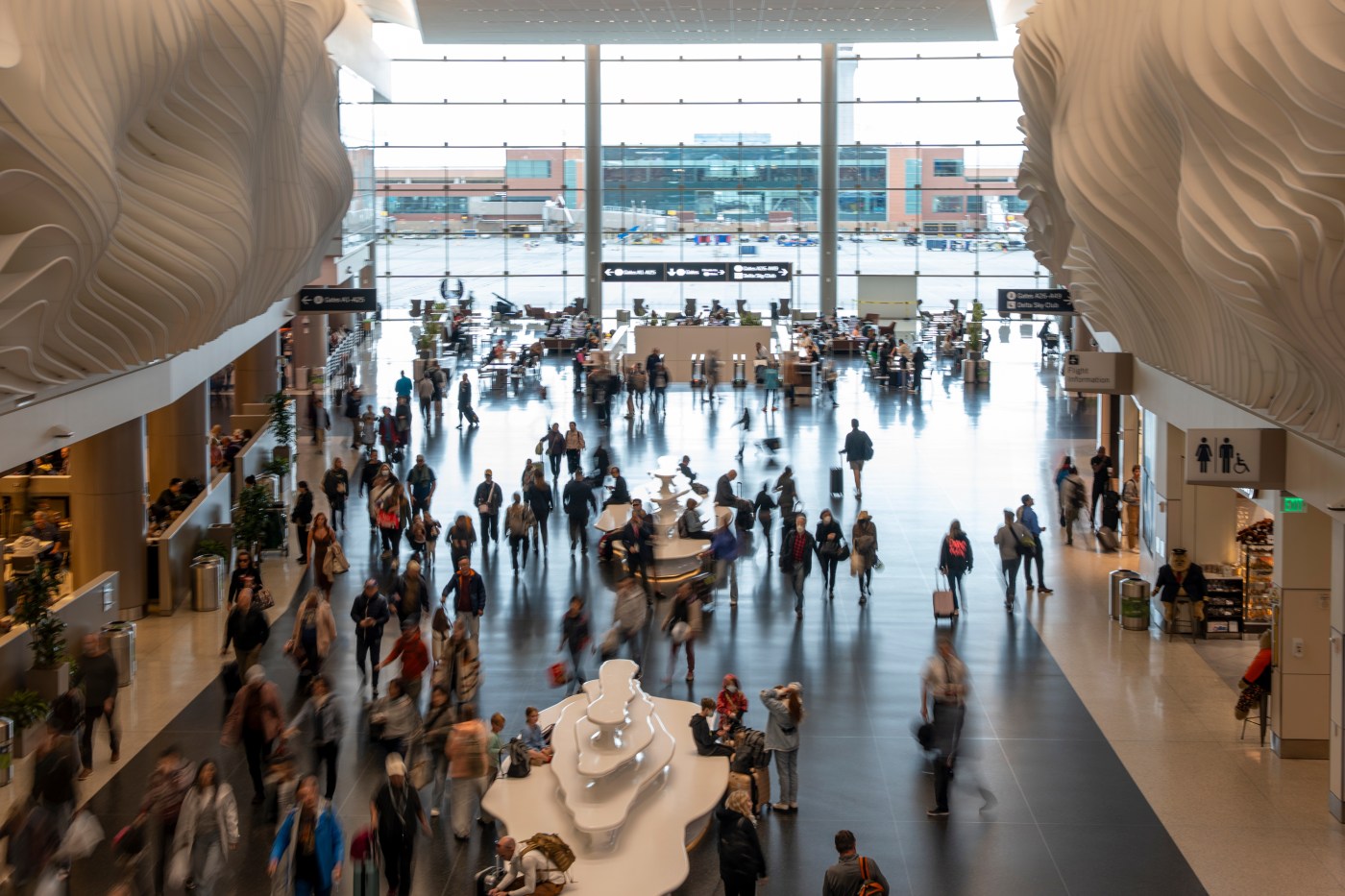
Today, those gateways echo a different rhythm. With the federal government shutdown that began on Oct. 1, air travel has become a high-altitude casualty of political gridlock. Airlines, employees and airport authorities warn of mounting risks as critical personnel work without full pay, and operational stress compounds day after day.
Airlines for America, representing major carriers, has urged an immediate end to the shutdown, noting that more than 13,000 air traffic controllers and 50,000 Transportation Security Administration officers recently received only partial pay and could soon get nothing if the stalemate persists.
The numbers tell a story of steadily rising friction. After a choppy start in the first week of October, FlightAware tracked more than 22,000 delays from Monday through Friday of the second week. On that Friday, more than 6,400 flights were delayed and 470 canceled, with the Columbus Day travel weekend set to add pressure.
A few days later, another snapshot showed 7,928 delays and nearly 600 cancellations in a single day as the shutdown approached the three-week mark. These aren’t isolated weather days but a pattern that tracks with staffing shortages and fatigue across the system.
Inside the system, the constraints are familiar but sharper. The FAA already runs thin with a workforce that handles the world’s busiest aviation market; training new controllers takes years, and attrition is hard to backfill even in regular times.
During shutdowns, controllers and TSA officers are deemed essential, barred from striking and required to work while pay is delayed, conditions that reliably produce spikes in sick calls and unscheduled leave. October is following the script, with airports from Boston and Chicago to Denver, Houston, Las Vegas, Nashville, Philadelphia and Phoenix reporting delays tied to staffing. The National Air Traffic Controllers Association and pilots’ groups have emphasized safety first, warning that the risk envelope tightens as fatigue spreads.
The 2018-2019 shutdown, America’s most extended, offered a preview of how this can end: sickouts forced ground stops and cascading delays. The difference now is scale and timing. Treasury’s updated estimate suggests the current shutdown could shave $15 billion weekly from economic output, a drag that collides with a fragile post-pandemic travel expansion and a still-healing supply chain. Airlines face higher operating costs due to schedule padding and reroutes, while small businesses lose meetings and shipments when connections are disrupted. Even if safety holds, reliability — the lifeblood of aviation — takes repeated blows that are felt well beyond the terminal.
The ripple effects are global. The U.S. system anchors long-haul flows linking Asia, North America and Europe. When a late departure from Los Angeles or Chicago knocks a 787 off its slot to Shanghai, backups propagate through hubs and ground handling windows on the other side of the Pacific. The industry’s biggest U.S. trade group now warns the situation could “worsen dramatically” when employees receive a zero paycheck within days, and pilots’ and controllers’ unions are echoing the call for a continuing resolution to restore regular operations.
For international partners, predictability matters as much as volume. Uncertainty in U.S. airspace planning complicates fleet and crew use in Guangzhou, Shanghai and Beijing as much as it does in Dallas or Newark.
Politics, not aviation physics, is doing the damage. The shutdown builds upon years of underinvestment in controller hiring and modernization, with training pipelines that can’t be accelerated at will. Congress has authorized upgrades, but recurring budget brinkmanship keeps throwing sand in the gears. Airports and airlines can rearrange rosters and ground spare aircraft. What they can’t do is backfill rested, certified controllers or stabilize household finances for essential staff who don’t know when the next whole paycheck will land.
As the shutdown continues, industry leaders warned that the system’s resilience has limits.
The cumulative toll extends beyond inconvenience. Delays result in missed cargo windows, overtime costs, crew misalignments, and maintenance knock-ons that ripple through balance sheets. For travelers, the experience degrades in visible ways — longer TSA lines, tighter connections, more missed events — eroding confidence in the reliability of U.S. infrastructure. And while aviation has maintained its enviable safety record through far worse, no one in the industry wants to test how long a stressed workforce can hold that line.
There is a way out, and it is boring by design: pass a clean continuing resolution, restore pay certainty for essential workers, and recommit to multi-year hiring and training targets that match traffic projections, not wishful thinking. Airports really are barometers. When politics stalls, its fragility is suddenly apparent.
If Washington can land this plane — reopen government, stabilize pay, and fund the people and systems that keep the aircraft moving — it will signal more than the end of a travel headache. It will show that the United States can still navigate its turbulence, and by doing so, restore a measure of predictability to a world economy that depends on it.
Imran Khalid is a geostrategic analyst and international affairs columnist/InsideSoures


More Stories
Lidl to open more than 50 stores after sales rise to £13bn
Lidl GB increased turnover by 10.8 per cent to £13bn in the financial year ended 28 February 2026, with operating...
Nandy intervenes in BT’s TalkTalk deal, citing risk to life
The government has intervened in BT Group’s acquisition of TalkTalk, with Lisa Nandy, the Secretary of State for Digital, Culture,...
Getting to know you: Professor David Keene MBE, CEO, Aurrigo
Professor David Keene MBE is the founder and chief executive of Aurrigo International plc, the AIM-listed Coventry company that builds...
Getting to know you: Malcolm Seagrave, CEO, Hedgehog Lab
Malcolm Seagrave is chief executive of Hedgehog Lab, the Newcastle upon Tyne digital product studio that designs and builds software...
Tax experts call for inflation relief if capital gains tax rises
Any rise in capital gains tax (CGT) at the budget on 28 October must be accompanied by “inflation relief” on...
Tesco considers offer for 210-store Majestic Wine chain
Tesco is considering an offer for Majestic Wine Group, the UK’s largest wine retailer, which was put up for sale...