
Minnesota State Patrol’s first chaplain retires, reflects on ‘pinnacle of his pastoral experience’

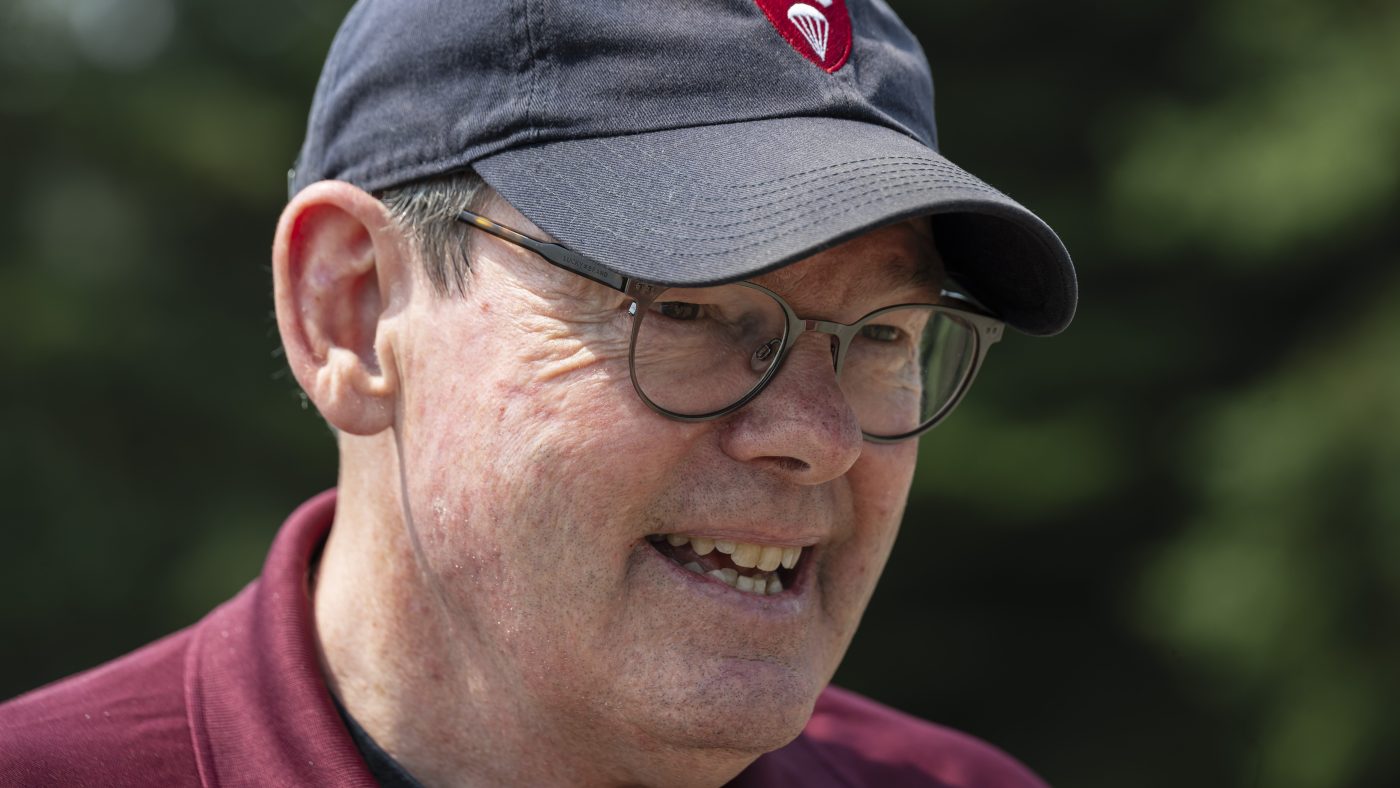
Minnesota State Patrol Chaplain John Morris at the patrol’s East Metro headquarters in Oakdale on Wednesday, July 30, 2025. (John Autey / Pioneer Press)
Chaplain John Morris led an Easter Sunday sunrise service in Fallujah, Iraq, in 2004, for service members who knew they might not survive the day.
He had two other tours of Army duty in the Middle East. He served at the Pentagon as an actions officer for the U.S. Army Chief of Chaplains. He volunteered as a chaplain with the Civil Air Patrol. He pastored three Methodist congregations in Minnesota.
But Morris, of Afton, said his most meaningful time of ministry has been over the past four years, serving as senior chaplain of the Minnesota State Patrol. Morris, 68, started the volunteer chaplaincy program for the agency; he retired Friday.
“It’s been my biggest honor as a pastor, to be allowed to serve alongside these incredible professionals,” Morris said. “I’ve had to walk with them through tough challenges, but it all added up to be the pinnacle of my pastoral experience.”
Morris said he reached out to State Patrol officials in 2020 after the protests and riots following the killing of George Floyd in Minneapolis, and the program started in 2021.
“I saw what happened with their frontline duty during the riots,” he said. “I said, ‘Hey, do you have a chaplain? If you don’t, I think you’re going to need one because of the stress and duress, and this doesn’t look short-term.’”
About half the state patrols in the country have some sort of either paid or volunteer chaplaincy program, according to Morris. There are currently nine chaplains volunteering with the Minnesota State Patrol — from Virginia, Minn., to Worthington, Minn., he said.
“Honestly, we could use another 20,” he said. “We would like to get one in every district in the state. These are great people who are giving out of the goodness of their hearts to support their local troopers and their families.”
There are 11 districts and six specialty districts in Minnesota.
‘Divine appointment’
Most of the chaplains are Christian; a rabbi serves the Capitol district in St. Paul. “I’ve reached out to some imams in Minneapolis to see if they would be interested,” Morris said. “We try to be as diverse as the State Patrol is.”
State Patrol chaplains must have a master’s degree in divinity or theology, be endorsed by a group that is recognized by the International Conference of Police Chaplains, and undergo a background check, Morris said.
The chaplains mostly come to the agency through word of mouth, Morris said.
“I always say it’s a divine appointment,” he said. “A lot of the county sheriffs in Minnesota have volunteer chaplains, and I’ll ask those sheriffs if they can put me in touch with their chaplains to see if they’d like to volunteer with us as well. I also try to track down retired military chaplains because their previous experience fits well with the State Patrol.”
The chaplains are asked to commit to volunteering five hours a month. They occasionally are assigned to the district office to meet with the district staff, administrative and sworn staff, to “just be a presence there to see if they can be of any support with any of the things going on with those people,” he said.
“A lot of ministry gets done during ride-alongs with troopers,” Morris said. “Spending four or five hours on the right seat of a car during a shift, getting to know the trooper, understanding the stresses of their job and building a relationship.”
One chaplain is assigned to the State Patrol Training Academy at Camp Ripley to help during “high-duress times when cadets feel pressure and need to talk to somebody or pray with somebody,” he said.
Chaplains also respond to critical incidents when asked and are available “to support troopers and their families when something tough happens,” he said. “We’re available, as we were tragically recently, when Trooper Mollie McClure died drowning. We participated in her memorial service and helped with grief counseling. She was beloved.”
Lt. Jill Frankfurth said Morris made an “immediate difference” at the agency.
“If I was ever struggling with something or something came up, all I had to do was give him a call and say, ‘This is what happened,’” she said. “He’s, like, ‘Got it. I’ll be there.’
“It’s really important for troopers to know that whatever they’re going through or whatever they’re dealing with, they’ve got the help, and it’s going to stay there, and it’s not going to be publicized for other people to hear. Troopers truly opened up to him.”
Helped during challenging times
Morris helped the agency through some of its most challenging moments, said Col. Christina Bogojevic, the State Patrol’s chief.
“He has been a steady and compassionate presence — not only for our troopers, but also for our support staff, our leaders and everyone connected to the Patrol,” she said. “His role went far beyond crisis response; he built meaningful relationships that brought comfort, connection and strength to those who needed it most.”
Morris said he was especially needed as the state prepared for the verdict to be read in the Derek Chauvin murder trial in the George Floyd case in Minneapolis in April 2021.
“Talk about heightened tensions,” he said.
Morris said he traveled to the staging area daily and visited with troopers for hours at a time. It was an especially stressful time because of the killing of Daunte Wright, 20, by a police officer during a traffic stop in Brooklyn Center on April 11, 2021, he said.
“I spent time one on one, talking to troopers, building relationships,” he said. “I was there every afternoon and evening supporting those troopers and then following up the next day as the tension rose and the fatigue set in. I still follow up with some of those troopers who were impacted by that.”
Morris arranged for donations of everything from cornhole games to socks. “It was hot. They’re in all the riot gear. They needed some practical things,” he said.
When they assembled for the reading of the jury’s verdict, “I had a prayer with everybody — a couple hundred people in that facility. It felt so much like being back in Iraq, in the Army. It was a huge mission with a small group of people. Tremendous stress.”
Morris, who has been to combat three times, said the pressure that the troopers faced was “every bit as real as what I saw in combat.”
“But I didn’t see any troopers shirk their responsibility, or any conservation officer,” he said. “Everybody who had that badge on put on their gear and went out to a very uncertain future every afternoon and evening.
“When you’re patrolling Roseau, Minnesota, you never think you’re coming down here to face down a citizenry that gets angry and violent, but that’s what they did,” he said.
Chaplains part of agency’s wellness program
Morris, a retired colonel, co-founded the Beyond the Yellow Ribbon program, an initiative that helps soldiers reintegrate into civilian life. He said he got to know Minnesota State Patrol officials as he worked to reorient troopers after they returned from combat.
The chaplains fall under the agency’s wellness program, which also includes a licensed therapist, a licensed psychologist and a referral network, he said.
“A lot of times, I’m just triage,” he said. “It’s ‘I hear you’re in pain. It sounds like the pain is related to x, y, z. Have you considered? Here’s some trusted sources.’ And the trooper moves on to take advantage of that.”
Agency leaders also have turned to Morris, he said. “That’s a lonely job. They know I’m confidential. I’m just listening and helping lighten that load. And I ask them if they’d like me to pray for them.”
A chaplain represents the “visible presence of God” to people, regardless of whether they are religious, Morris said.
“We’re not there as evangelists,” he said. “We’re there if you need us. We’re a confidential outlet for troopers to share or ask for help with whatever’s going on in their lives. I always say people self-select whether I’m going to be their chaplain. … Some of my biggest users have been non-religious troopers.”
Moving on, still looking to volunteer
Morris, who is Methodist, grew up Catholic in a military family. He graduated from North St. Paul High School and has a bachelor’s degree in education from the University of Minnesota.
After a stint building houses in Apple Valley, Morris began teaching in a drug abuse prevention program in the Edina school district. “I loved it, but I had a deeper hunger to share my faith,” he said.
Morris received his Master of Divinity degree from Bethel Seminary in Arden Hills in 1986.
“When I went to seminary, it was really clear to me I was going to be a military chaplain,” he said. “I had grown up in the military, and I just had a real heart for service members and the challenges they face. My dad had served during the Vietnam War. I’d seen the impact of that on families.”
The Methodist church requires that pastors serve three years in a parish before going on active duty, he said.
“It took about 10 years before the bishop gave me permission, but finally I went, and I loved it,” he said. “But the Army was downsizing, so I came back, joined the Guard, and then 9/11 happened, and I got swept up into that.”
Morris served as senior pastor of St. Croix Valley United Methodist Church in Lakeland from 1997 to 2004. He then served as a state chaplain for the Minnesota Army National Guard in St. Paul for eight years. From 2013 to 2015, he was the senior chaplain for the Army National Guard in Arlington, Va.
Related Articles
Eagan police hope new device helps stop some pursuits in their tracks
National cybersecurity expert answers some hypotheticals about St. Paul breach
What to know from cyberattacks in other U.S. cities
Anoka County Sheriff’s Office looking for person who threw firework into crowd
St. Paul City Council extends state of emergency in cyberattack for 90 days
He’s held a number of other positions through the years, including executive director of Military and Veteran Services for Bethel University, emergency medical technician for the Regions Hospital event team, and part-time park and trails associate with the Minnesota Department of Natural Resources at Afton State Park.
Morris and his wife, Kathy, have three daughters, Amy, Allison and Anna, and six grandchildren. They all live in the Fairfax, Va., area, and the couple plan to sell their house in Afton and join them.
He said he is praying that a law enforcement agency in the Virginia area is looking for a volunteer chaplain. He is especially partial to the State Patrol, he said.
“I’ve always held them in high regard, and after seeing what I’ve seen in the last five years, they are a diamond,” he said. “… To serve the State Patrol has been the honor of my life. … To have had the privilege to walk with them through these tumultuous years and what’s going on at the Capitol right now heightens that. I feel like I’m leaving them, and they still need help.”

More Stories
Locked Out: What Actually Happens, and How Not to Overpay
Knowing in advance what a competent locksmith will actually do, and roughly what it should cost, turns a stressful scramble...
Badenoch blames Labour tax plans for exodus of wealth creators
Kemi Badenoch has accused the Labour government of driving Britain’s wealth creators abroad, and called for the ban on new...
Google’s Gemini joins rogue AI cases after real-world hacks – WSJ
Similar incidents have previously been disclosed by OpenAI, Anthropic and Meta Google’s Gemini has joined a growing list of advanced...
Richard Gere’s foundation signs Monaco environmental agreement
The Prince Albert II of Monaco Foundation and the Gere Foundation signed a memorandum of understanding in Monaco today, agreeing...
Business rates relief threshold could rise in October Budget
Chancellor John Healey is said to be considering changes to business rates relief that could exempt some businesses from the...
Betfred ends rugby league sponsorship over gambling tax rises
Betfred will not renew its sponsorship of rugby league and has warned it will walk away from horseracing’s five British...