
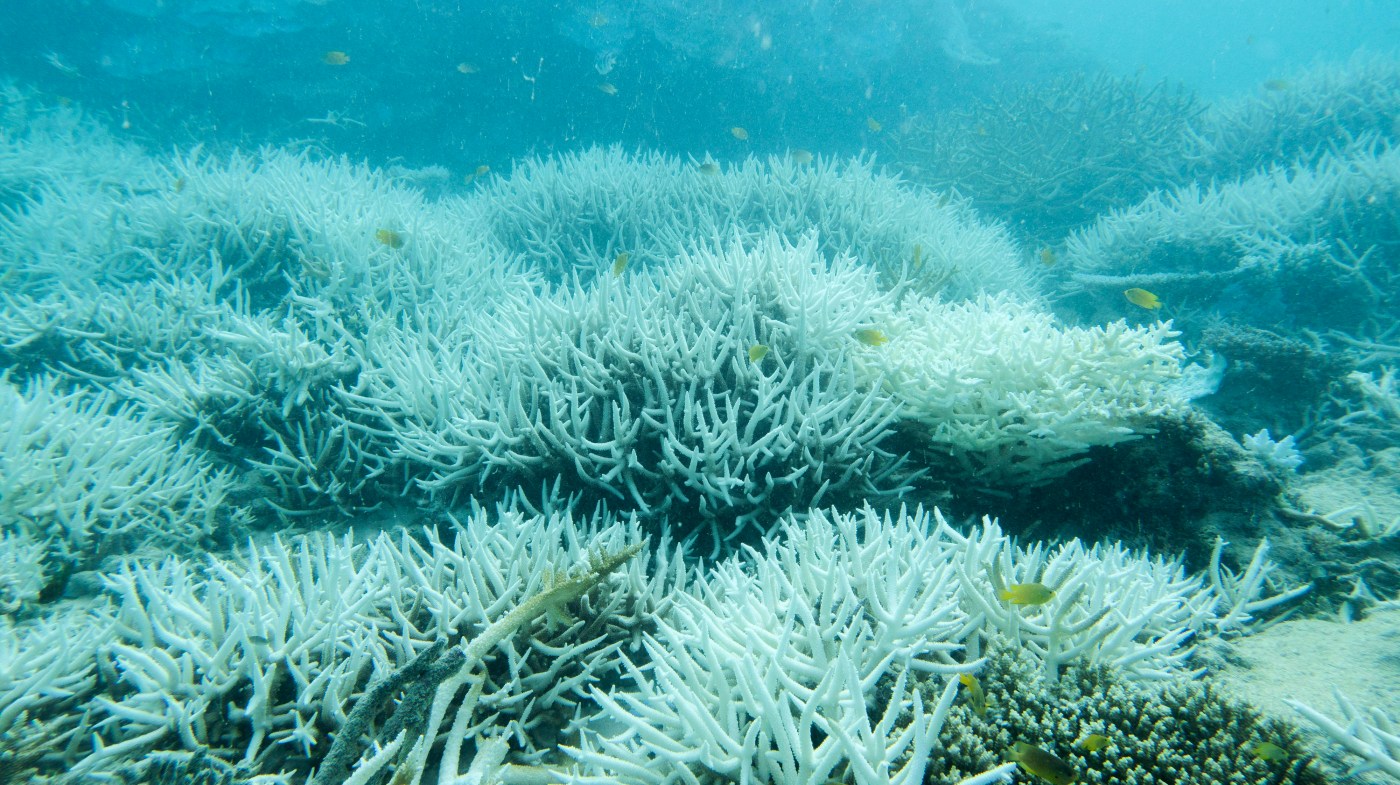
Heat raises fears of ‘demise’ for Great Barrier Reef within a generation

This generation will probably see the demise of the Great Barrier Reef unless humanity acts with far more urgency to rein in climate change, according to scientists in Australia who released new research on heat in the surrounding ocean.
The Great Barrier Reef is the largest coral reef system in the world and is often called the largest living structure on Earth. The study, published Wednesday in the journal Nature, found that recent extreme temperatures in the Coral Sea are at their highest in at least 400 years, as far back as their analysis could reach.
It included modeling that showed what has been driving those extremes: Greenhouse gas emissions caused by humans burning fossil fuels and destroying natural places that store carbon, like forests.
“The heat extremes are occurring too often for those corals to effectively adapt and evolve,” said Ben Henley, a paleoclimatologist at the University of Melbourne and an author of the new study. “If we don’t divert from our current course, our generation will likely witness the demise of one of Earth’s great natural wonders, the Great Barrier Reef.”
The study’s scientific prose put it this way: “The existential threat to the Great Barrier Reef ecosystem from anthropogenic climate change is now realized.”
Tanya Plibersek, Australia’s environment minister, said in a statement that the government understood its responsibility to act on climate change and safeguard the reef. She pointed to a recent law that calls for a 43% reduction of emissions by 2030 and to $1.2 billion in measures to protect the reef.
All coral reefs are in danger from global warming, scientists say. Too much heat causes coral to bleach, meaning they lose the symbiotic algae they need to survive. If conditions don’t improve quickly enough, the coral die.
The new research comes as the world’s reefs are in the grips of the most widespread bleaching event on record. From January 2023 to August 2024, 74% of the ocean’s reef area has experienced bleaching-level heat stress, according to the National Oceanic and Atmospheric Administration’s Coral Reef Watch. The previous record, which occurred between 2014 and 2017, was 65.7%.
Coral reefs support an estimated quarter of marine species, protect coasts from storms and underpin activities like fishing and tourism. Their economic value has been estimated at $2.7 trillion a year.
Related Articles
Skywatch: Cat’s eyes of the summer skies
F.D. Flam: Deep-sea mining may be necessary for a greener future
Skywatch: Perseids, planets and more
Skywatch: Lunar landing memories
Skywatch: Astronomical tape measures
This article originally appeared in The New York Times.

More Stories
The CFO’s Strategic Guide to Global E-Invoicing and German B2B Compliance
It is important for CFOs and other finance department managers working in multinational companies to be aware of constantly changing...
How Global Garlic Trade Works: Key Market Trends, Supply Chain Challenges, and Business Opportunities:
Among all traded agricultural commodities, garlic stands out as a vital primary crop for food processors, commercial kitchens, and retail...
Choosing Between Suites, Townhouses, and Villas at Wyndham Grand Batumi Gonio
The three formats offer noticeably different approaches to space, privacy, outdoor living, and day-to-day convenience. A suite can keep everything...
Edmund Dorsz: From Running His Own Tooling Shop to Programming on the Floor
Raised in Detroit, he built an early reputation for solving mechanical puzzles, an instinct that carried him through studies at...
Microsoft faces tougher UK oversight under CMA proposal
The Competition and Markets Authority has proposed designating Microsoft with strategic market status in the UK’s business software market, a...
Nvidia’s Jensen Huang warns UK against relying on ‘opaque’ AI models
The chief executive of Nvidia has warned British companies, government agencies and individual users against relying on “opaque” artificial intelligence...