
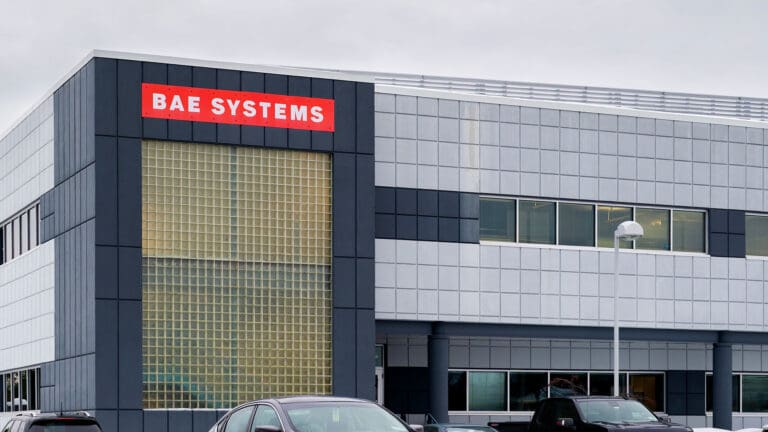
BAE Systems plans 1,070 voluntary redundancies to become “more agile”

BAE Systems, Britain’s biggest defence company, plans to cut more than 1,000 jobs from its head office and air division in an effort to become “more agile”, it said yesterday.
The company told Reuters it wanted to cut 1,070 roles and that it was aiming to achieve the reduction through voluntary redundancies. It said the cuts would exclude staff involved in shop-floor manufacturing and aircraft maintenance.
BAE employs about 50,000 people in the UK, up from 35,000 six years ago, according to Reuters. Of that total, 18,500 work in the air sector, which includes the production of fighter jets, and about 1,000 work in its head office.
“This announcement is the next stage of our ongoing focus on enhancing our agility and competitiveness, so we can help to maximise the value of every pound our customers spend on defence,” BAE said.
The company said the cuts formed part of an investment plan intended to meet government demands for greater speed in a rapidly changing security environment, Reuters reported.
The announcement follows a period of growth at the contractor, which has benefited from countries spending more on defence since Russia’s invasion of Ukraine in 2022 raised the geopolitical threat level.
In its half-year results, BAE reported an 8 per cent increase in revenue to £14.6bn and a 13 per cent increase in operating profit to £1.5bn for the six months to the end of June. This month the company forecast that underlying operating profit would rise by 10 per cent to 12 per cent in 2026, according to Reuters.
Government figures show the Ministry of Defence’s spending with UK industry reached a record £34.1bn in 2025/26, a rise of 3.2 per cent in real terms, supporting an estimated 274,000 roles in 2024/25.
Unite, the trade union, said delays in defence spending by the British government were having a negative effect on jobs in the sector.
Sharon Graham, Unite’s general secretary, said: “We won’t have a manufacturing industry left if the government doesn’t start making critical decisions. For months, Unite has been warning that delays in defence spending are driving companies in the sector to make negative decisions impacting British jobs.”
Graham called on the government to announce contracts for British-built Typhoons, a collaboration involving BAE, Airbus and Leonardo. BAE said it directly employs about 5,000 people in northwest England on the project.
Graham also called for orders for collaborative combat aircraft, saying “the government needs to announce contracts for British-built Typhoons and Collaborative Combat Aircraft immediately.”
Unite said BAE was not the only company affected by delays in contract decisions. “The government must now award the Skynet 6 contract to Airbus, protecting thousands of highly skilled jobs in Portsmouth and Stevenage,” the union said.
The Skynet 6 military satellite contract is worth more than £2bn. Bidders, including Airbus and Lockheed Martin, were given an extended deadline.
The cuts come as ministers set out longer-term defence budgets. The Defence Investment Plan, published on 30 June, set out £298bn of planned Ministry of Defence spending over the four years to 2029-30, and Prime Minister Andy Burnham said last month that the Budget would set out a path to 3 per cent of GDP on defence by 2030.
In his first keynote as Defence Secretary in July, Wes Streeting said more than £11.8bn of contracts had been agreed in the 10 days after the plan was published.

More Stories
Kutcher-backed fund’s Anthropic stake valued at $7bn as IPO prices at $83
Anthropic priced its initial public offering at $83 a share yesterday, above its marketed range of $70 to $78, ahead...
Rick Stein restaurant group losses almost double to £814,000
Pre-tax losses at The Seafood Restaurant Group, the company behind Rick Stein’s restaurants, hotels, online shop and cookery school, almost...
Companies House begins enforcement as ID verification reaches 90 per cent
Around 90 per cent of live companies have complied with mandatory identity verification requirements, Companies House said yesterday, one year...
What those little orders cost your business over a month
By the time the invoices reach the bookkeeper, one is filed under packaging and the other under general expenses. Both...
How Rising Insurance Costs Are Changing Commercial Real Estate Underwriting in the Sun Belt
That is no longer how it works in much of the Sun Belt. Coastal and Gulf-adjacent markets have seen insurance...
Octopus Energy launches Octonova to show employers how it runs
Octopus Energy Group has launched Octonova, a new company that will show other employers how Octopus runs its business, and...