

BMW’s 838-HP Electric M3 Could Set a New Benchmark for Performance EVs

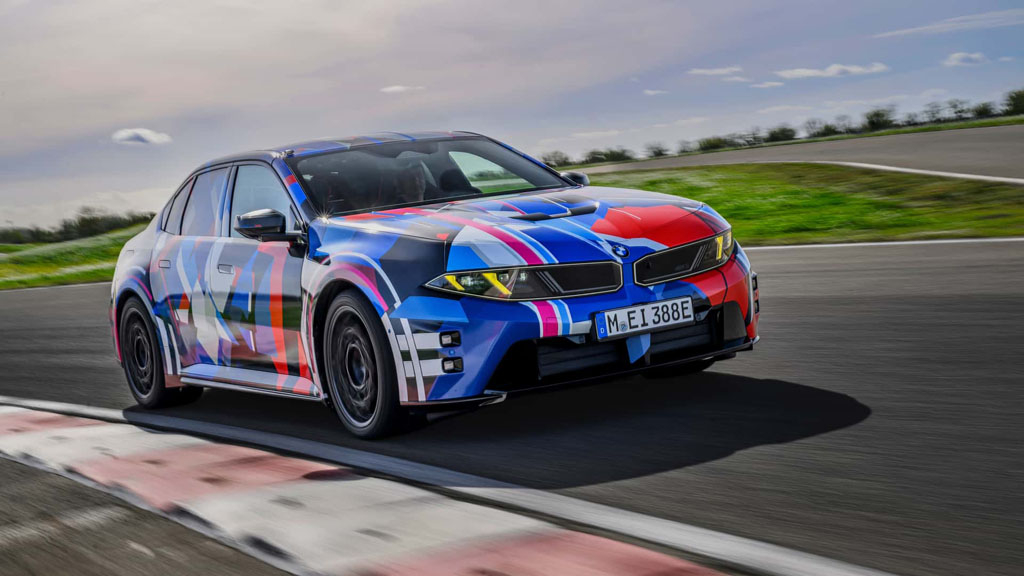
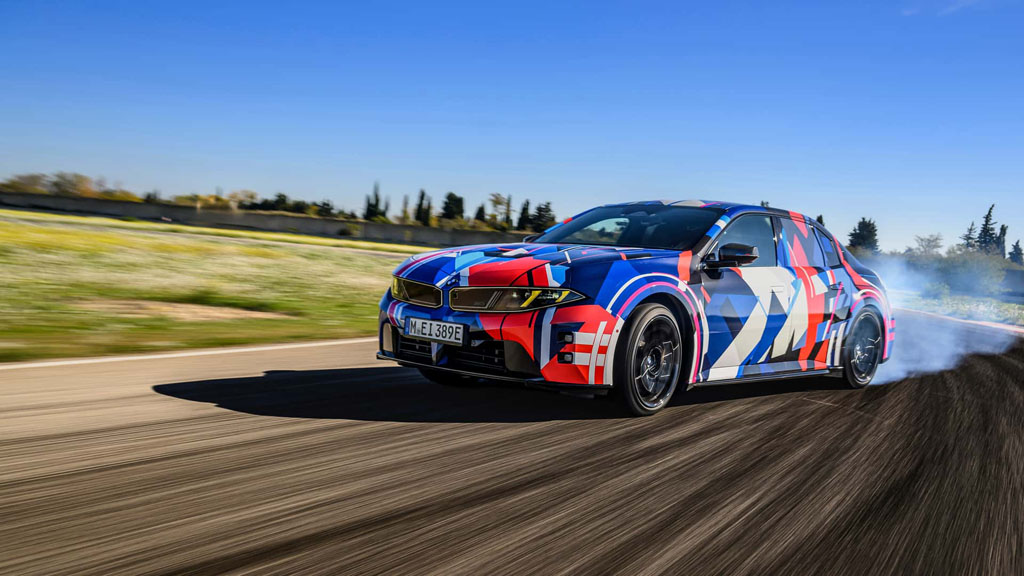
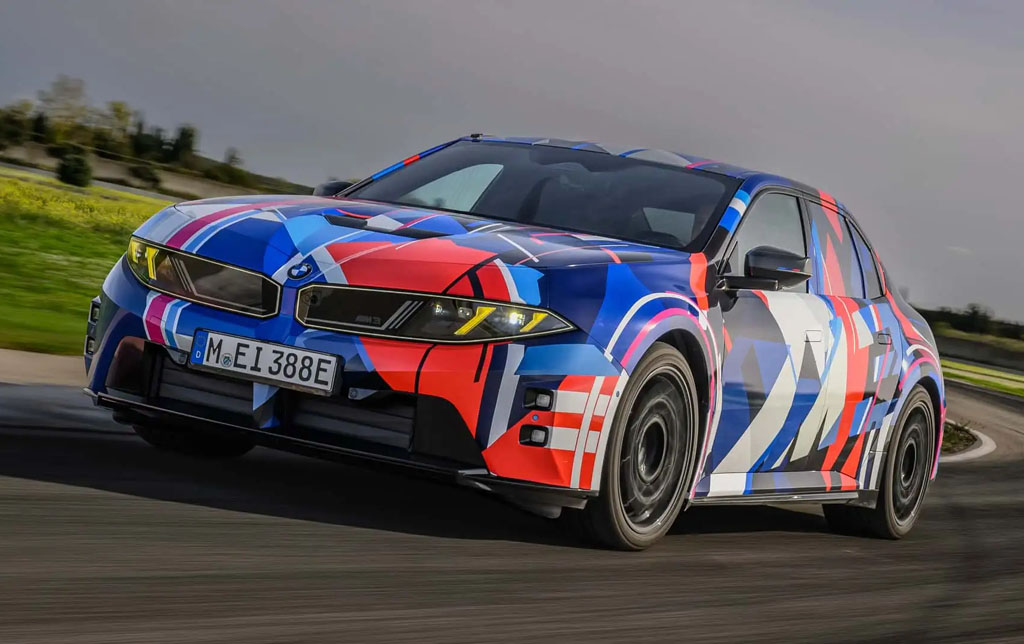
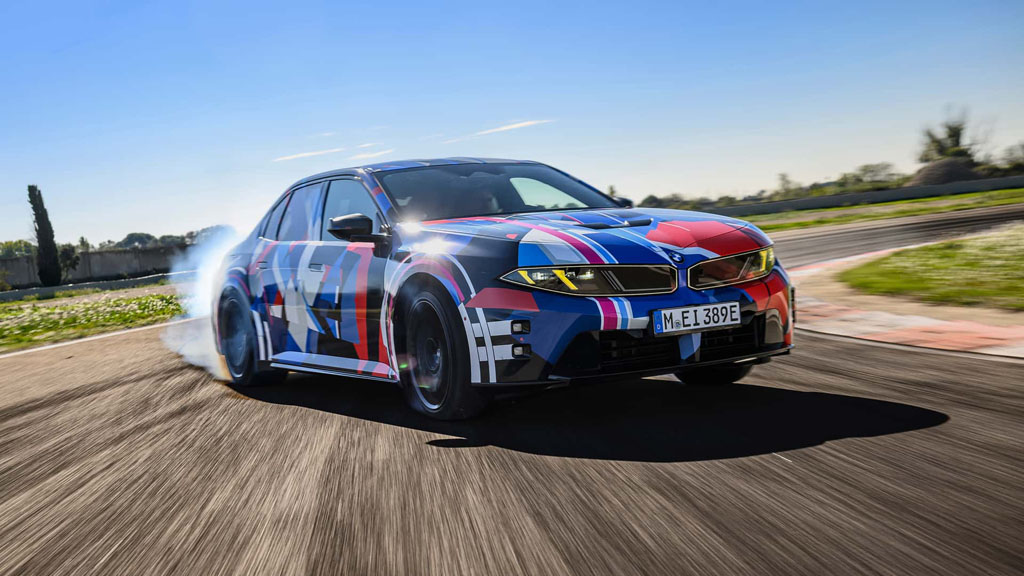
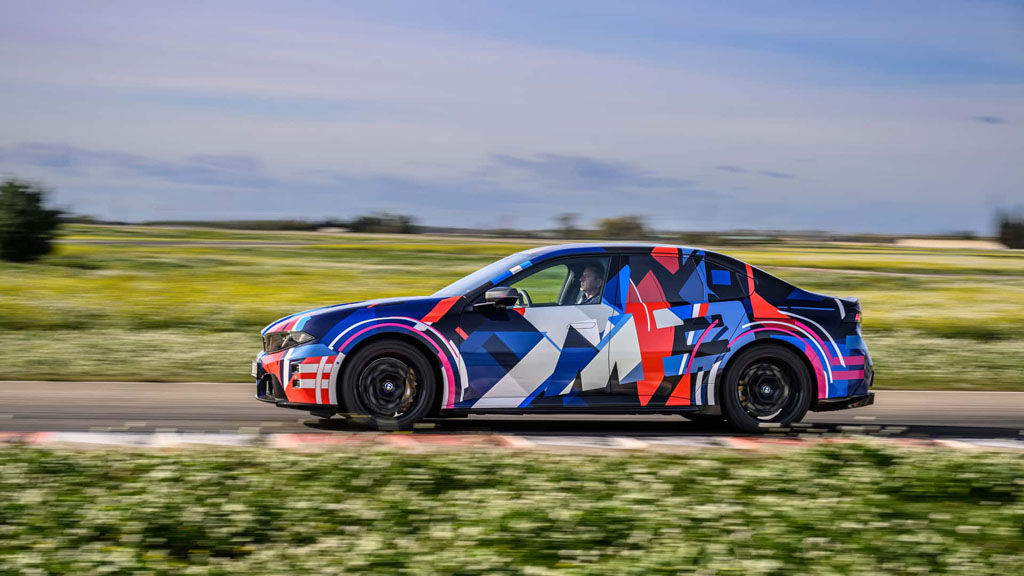
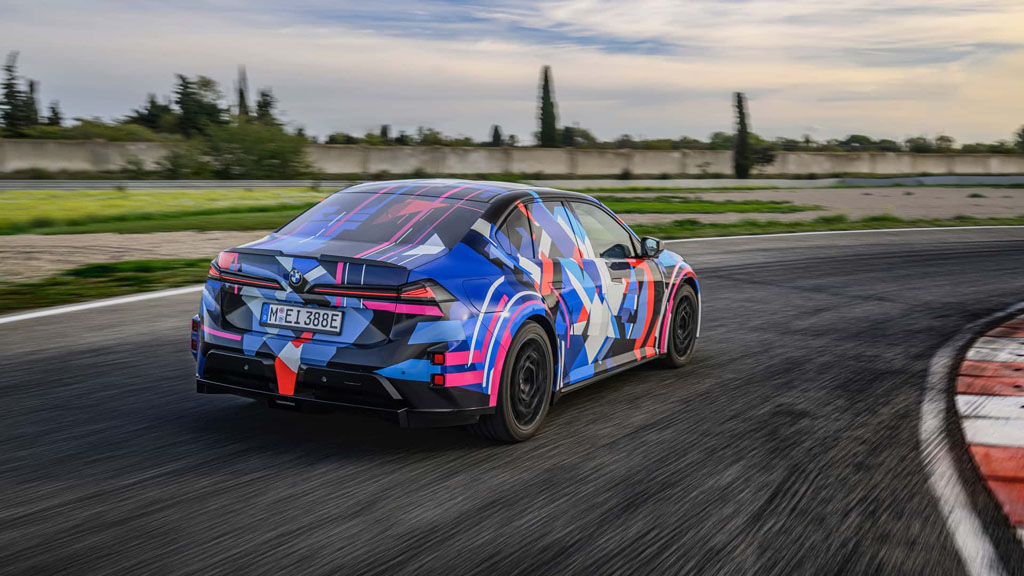
The most encouraging thing about the first electric BMW M3 prototype isn’t that it makes 838 horsepower. It’s that the people who drove it came away talking about the front tires. On BMW’s test track in southern France, the camouflaged Neue Klasse sedan reportedly gave drivers a clearer sense of what the front axle was doing than BMW’s other performance EVs. Straight-line speed was never going to be the hard part. Getting a heavy electric sedan to tell you how much grip you have left as you turn in is a much better test of whether it deserves the M3 badge.
The prototype makes at least 838 horsepower and about 885 lb-ft of torque from four electric motors, one for each wheel. That gives BMW’s Heart of Joy controller the ability to adjust drive torque and regenerative braking at each corner independently. The M3 also uses a model-specific battery with about 100 kWh of usable capacity and an 800-volt architecture. BMW is targeting around 300 miles of range, peak DC charging of about 420 kW, and up to 540 kW of regeneration. Those are preliminary figures, not certified range or independently tested charging results.
What stood out in the early drives was how much the car changed with its settings. In one test, the prototype began to push wide as the pace picked up with full stability control. A more permissive M Dynamic Mode let it turn in more readily and let the rear move around on corner exit. The brakes also drew praise for feeling natural even though the motors were doing much of the slowing. The weight didn’t disappear, and BMW hasn’t published a final curb weight, but there’s a difference between a car that hides its mass on a spec sheet and one that still gives you choices halfway through a corner.
The simulated shifts were more divisive. BMW gives the M3 six virtual stages, paddle control, and a synthesized soundtrack that rises and falls as you work through them. Some drivers found that the sound and shifts gave them useful cues about speed and load. Others preferred the automatic setting or found the paddle experience less convincing than what Hyundai pulled off with the Ioniq 5 N. We’re glad BMW lets you turn it off. If the steering and chassis are as communicative as these early drives suggest, the car shouldn’t need a pretend upshift to hold your attention.
We at Automotive Addicts can’t wait to get our hands on a production electric M3. A few laps in a prototype tell us something, but we want to know how the car rides on patched pavement, whether the steering still talks at everyday speeds, and how much performance it can repeat deep into a track session. If BMW can carry that cornering balance and natural brake feel into the finished sedan, the electric M3 could set a benchmark for performance EVs. Not because it wins another horsepower contest, but because it gives drivers a reason to take the long way home.

More Stories
Aston Martin Takes On the 2027 Dakar Rally With Fernando Alonso and the Dreadnought
Fernando Alonso’s first race of 2027 won’t be in a Formula 1 car. He’ll be in the Sahara, driving an...
Stacked or Non-Stacked Coverage: Differences to Know
Florida does not require drivers to carry uninsured motorist coverage, so the decision to stack it deserves a closer look....
What Drivers Should Compare Before Choosing Their Next Car Insurance Policy
Car insurance is one of those expenses that every driver needs to consider, but it’s easy to overlook the details...
The Used Car Features That Matter More Than Mileage Alone
Mileage is often one of the first things buyers check when shopping for a used car. A vehicle with 30,000...
The Gear Every DIY Car Mechanic Should Own
Taking care of your own car can be incredibly rewarding, especially when you realize how many maintenance jobs you can...
2028 Ford Mustang GTD Gets a 1901 Edition and Finally Adds Magnesium Wheels
Ford reached back to a race Henry Ford ran before there was a Ford Motor Company to name its newest...