
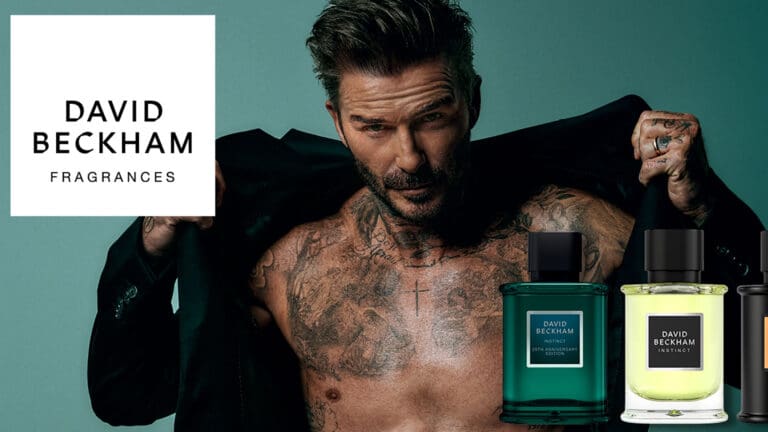
Beckham company sues Coty for $41m over alleged Poundland sales

Sir David Beckham’s company, DB Ventures, is seeking at least $41m (about £31m) in damages from Coty, the fragrance maker that holds the licence for his perfumes and aftershaves, alleging the products were sold through Poundland, discount stores and petrol stations in breach of their licence agreement.
The claim was filed in New York on 23 April and first reported by Reuters on 1 May. The Telegraph reported today that court documents name the British discount chain Poundland as one of the outlets. Coty denies that the fragrances were ever sold in Poundland.
Court papers describe Sir David’s “shock and dismay” at finding his fragrances on sale in those outlets, according to The Telegraph. The lawsuit alleges that Coty sold about $24m (£18m) of Beckham-branded stock through what it calls “unapproved distribution channels”.
The filing asks how this could have happened and answers: “Desperation and greed.” The Daily Mail reported that the documents say Coty’s distribution through Poundland allowed the products to sell “for dollar store prices”.
DB Ventures also accuses Coty of under-reporting sales by $123m (£93m), which it says cost it $6m (£4.5m) in royalties.
Coty has filed a defence and asked the court to dismiss the case. It argues that it has a contractual right to decide where the Beckham range is sold, and that the claim is an attempt by DB Ventures to end the agreement early so that the brand can move to a rival licensee.
According to The Telegraph, Coty called the claim a “transparent effort to manufacture a pretextual basis” and said: “This is not about protecting the David Beckham brand.”
When Reuters first reported the lawsuit in May, a Coty spokesperson said: “Coty does not comment on ongoing legal matters. The claims are without merit, and we will defend ourselves vigorously.” Authentic Brands Group, the US brand management company that co-owns the Beckham brand, declined to comment at the time.
Coty produces 45 David Beckham fragrances, each selling for about £20, according to The Telegraph. Reuters reported that annual sales of the range rose 71.9 per cent between 2023 and 2025 to $22.9m, citing Nielsen data. An industry source told Reuters the sales performance contradicted the claims in the lawsuit.
In January, Interparfums announced a 20-year exclusive worldwide licence for David Beckham fragrances, taking effect from 1 April 2028. It said it expected annual sales to exceed $50m in the first years under its management.
Nautica, another brand owned by Authentic Brands, has filed a similar lawsuit against Coty, according to Reuters. Both claims allege that Coty used unapproved distributors.
Authentic Brands holds 55 per cent of DRJB Holdings, Sir David’s licensing company, which counts Coty among its partners and more than doubled its pre-tax profits to $36.2m in 2023.
The allegations involving Poundland come as the discount chain faces its own difficulties. Its owner, Gordon Brothers, filed a notice of intention to appoint administrators last month, putting around 12,000 jobs at risk.
Gurpreet Sanghera, a partner at media and entertainment law firm Simkins, said: “David Beckham’s fragrances may be selling at bargain prices, but the real cost could lie in the alleged breach of contractual protections designed to safeguard his brand.”
She said the case alleged “various breaches of the terms of the license agreement, designed to protect both the image of the product as well as ‘the David Beckham’ brand.”
“Whilst the case has been issued in New York, similar issues could arise within the UK,” Sanghera said. “Owners of luxury products will want to take all necessary steps to control and protect their brand image by entering into agreements that allow them to maintain control over the product distribution whilst seeking to limit the distributor’s ability to dilute the image of the brand.”
She added: “There’s a fine balance to be struck, as the parties will need to ensure that the terms are enforceable and do not breach competition legislation within the UK.” The Competition and Markets Authority publishes guidance on the Vertical Agreements Block Exemption Order, which covers selective distribution systems.

More Stories
How to Use Video-to-Video AI Without Losing Movement or Camera Motion
The strongest results begin with one continuous shot, readable gestures and a transformation scope that does not rebuild unnecessary elements....
9 Profitable Kids’ Story Video Ideas for a Faceless YouTube Channel
AI can reduce production time, while the story concept still determines whether children keep watching. These nine formats give you...
Buying Instagram Likes for a New Single: A Guide for Independent Artists
Jordan plays guitar in a small folk duo. (He’s a made-up example, but plenty of real artists have been in...
Under-25s NIC cut risks pushing joblessness onto older workers
Reducing employer national insurance contributions (NICs) for workers under 25 risks shifting unemployment onto older workers rather than cutting it,...
UK inflation forecast to hit 3.8 per cent as youth jobless rate holds
UK inflation is expected to have risen to as high as 3.8 per cent in October, according to City forecasts...
AI law firm Alecto raises $20m as it targets UK conveyancing
Alecto, a London-based AI law firm serving consumers, has raised $20m in a Seed round led by Insight Partners, the...