
Crypto industry hit by three or four hacks a day, says Binance founder

The crypto industry is suffering “three or four hacks a day” as artificial intelligence tools make it easier for attackers to exploit weaknesses in platforms, according to Binance founder Changpeng Zhao.
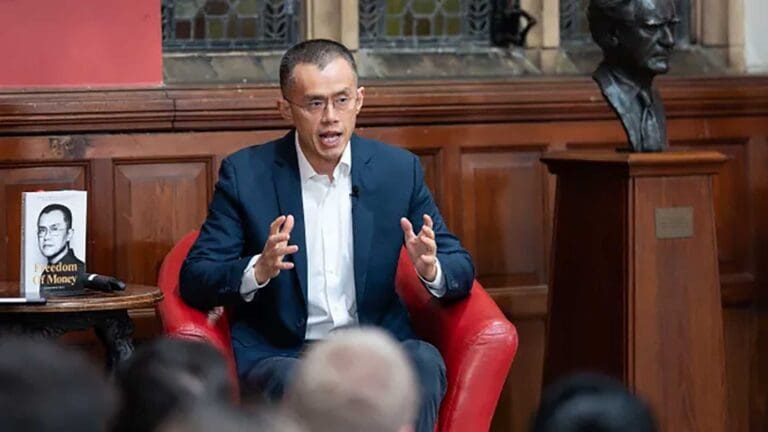
Speaking at the Oxford Union, Zhao, who is also known as CZ, said AI would help make platforms more secure in the long run, but that the transition would be “very painful”.
“It used to be that we saw one or two hacks a year, and then it became one or two hacks every week. In the past week, we see three or four hacks on crypto platforms every day,” he said.
His comments come a week after Binance, the world’s largest crypto platform, was hit by a $6.3bn heist that is thought to be the largest financial robbery in history.
TRM Labs, a blockchain intelligence company, has estimated that attackers carried out 207 hacks in the first half of the year, more than double the number recorded a year earlier.
The Federal Bureau of Investigation has traced last week’s theft to TraderTraitor, a North Korean hacking group with links to the government. The FBI also named TraderTraitor as responsible for the $1.5bn theft from Bybit, another crypto platform, in an alert published in February 2025.
Binance has 335 million registered users globally and had about $162.8bn in assets under custody, according to its 2025 annual report.
An internal investigation published by Binance this week found that the hackers had used “fake job interviews” as well as advanced AI tools to carry out the heist. According to the investigation, the attackers infiltrated the company after a Binance employee downloaded malicious code onto his work computer during a job interview with a “fictitious company”.
Zhao said: “To be very frank, there were some basic internal security procedures which were not followed by internal employees, which is really bad. It should not happen for a platform that handles this amount of money.”
He said that once the attackers had gained access to the internal system, their use of AI enabled them to analyse internal systems “very quickly”.
“Once they found one weakness, they were able to understand our system very, very fast,” he said.
Binance suspended withdrawals for two days after the hack. When withdrawals reopened on Sunday, investors pulled about 2 per cent of total assets, or $3.6bn, from the platform. Zhao called the figure a “huge statement”.
He said: “I thought it would be like 20 per cent, or maybe even higher. I thought it would be like 30, 40 per cent [of funds] … It’s become net inflows, so the money coming back is faster than the money going out. That is the result of trust.”
Binance recorded just under $80m in net inflows over a 24-hour period, according to DefiLlama, an independent platform that tracks withdrawals across crypto platforms.
Zhao said crypto platforms were not the only targets. “I can probably tell you that many banks are getting hacked but we don’t know. They’re not public about it. You only hear about it six months later. At least with the blockchain you see what’s happening,” he said.
Zhao, who left Binance in 2023 after pleading guilty to violating US money-laundering rules, said AI would make security systems safer over time.
“In the short term, it’s going to hurt. There will be more of these instances. But the truth is that AI will actually make our systems safer. Like it or not, by uncovering all of the security issues we can now fix them. Short term it’s a double-edged sword, but long term I actually believe it’s going to make our systems safer,” he said.


More Stories
UK business population falls by 104,000 as self-employed numbers drop
The UK business population fell by an estimated 104,000 in the year to the start of 2026, taking the total...
‘Would they have done that to Gordon Ramsay?’ Veeraswamy sues landlord
Veeraswamy, the UK’s oldest Indian restaurant, has begun a trial against its landlord, the Crown Estate, in a bid to...
Financial Decisions That Can Change Your Life: What to Know Before You Act
Business owners and the self-employed often reach these crossroads with irregular income and a business to protect. Here are five...
HGV width: why knowing your vehicle’s dimensions matters
Keeping accurate vehicle dimensions readily available helps operators plan work and gives drivers information they can rely on. Start with...
Best Crypto Perpetual Futures Platforms for 2026
However, selecting a perpetual futures platform requires evaluating more than headline contract counts. Active traders have to look at funding,...
The Modern Woman in Business: Strengths, Challenges and the Power of Leadership
Yet female leadership remains a subject of debate. Are women better communicators? Do they take fewer risks? Are they more...