
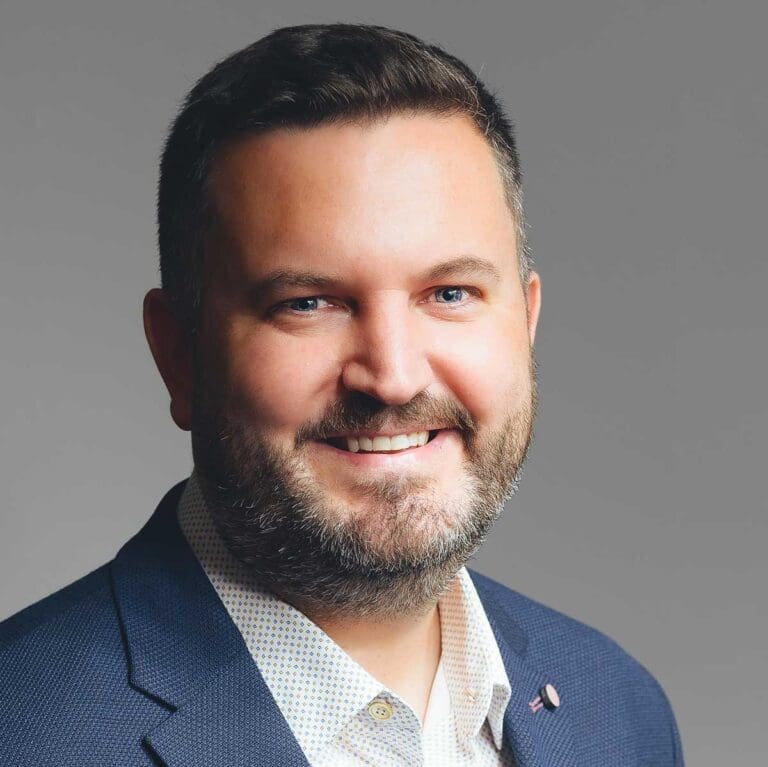
Why Nexa Law’s Eliot Hibbert wants lawyers to own their own practices

Eliot Hibbert is the founder and chief executive of Nexa Law, the Oswestry-based consultancy law firm he launched in 2017 after 15 years in commercial law.
The firm gives experienced lawyers the infrastructure, technology and regulatory framework to run their own practices, and says it now has more than 200 consultant lawyers. In October Hibbert was named one of The LDC Top 50 Most Ambitious Business Leaders for 2026, and Nexa Law is a finalist for Business Enabler of the Year at the Lloyds British Business Excellence Awards on 10 November.
He tells Business Matters why he set out to prove that entrepreneurial freedom and the standards of an established firm can sit side by side.
What do you currently do at Nexa Law?
As founder and CEO of Nexa, my role is to set the strategic direction of the business, lead its growth and ensure that we continue to challenge conventional thinking about how a law firm should operate.
That involves balancing the commercial priorities of the business with our responsibility to provide the infrastructure, professional standards and support that enable our consultant lawyers to deliver excellent outcomes for their clients.
Much of my focus is on the future: how we develop our model, invest in the right technology and people, and continue to attract ambitious, experienced lawyers who want greater ownership of their practices without having to build everything from the ground up.
Ultimately, my ambition is for Nexa to demonstrate that entrepreneurial freedom can sit comfortably alongside the credibility, support and professional standards of an established law firm.
What was the inspiration behind your business?
Nexa began with the belief that there was a better way to practise law.
Traditional law firms can offer excellent training and professional development, but their structures do not always suit experienced lawyers who have established strong client relationships and want greater control over their careers, working lives and earning potential.
I saw an opportunity to rethink that relationship. Why should a lawyer have to choose between the independence of running their own practice and the infrastructure, support and professional credibility of an established law firm?
Nexa was built in response to that question. We created a firm that gives experienced lawyers the freedom to develop their own successful practices while benefiting from the systems, expertise and operational infrastructure they need.
It was never intended to be a halfway house between employment and self-employment. The aim was to build a genuinely different model, designed around the needs of entrepreneurial lawyers and their clients.
What has 2026 brought for Nexa?
In October I was named one of The LDC Top 50 Most Ambitious Business Leaders for 2026, a programme run by LDC with The Times that attracted more than 620 nominations this year. For me, ambition is about more than growth for growth’s sake.
Nexa Law has also been named a finalist for Business Enabler of the Year in the Lloyds British Business Excellence Awards, which take place at Grosvenor House in London on 10 November.
Who do you admire?
I admire people who are prepared to challenge established ways of doing things and who then have the resilience and determination to turn their ideas into sustainable businesses. Identifying a problem is relatively easy; building a model that genuinely solves it, earns people’s trust and stands the test of time is much harder.
I also have enormous respect for entrepreneurial lawyers. Many have spent years developing their expertise, reputations and client relationships. Making the decision to build a business around those strengths requires confidence, discipline and real conviction.
I see those qualities every day among Nexa’s lawyers. Their ambition, professionalism and willingness to do things differently are a significant part of what makes the business successful.
Looking back, is there anything you would have done differently?
I would have trusted the strength of the model sooner and made certain decisions more quickly.
When building a business, there is a natural temptation to wait until every detail is resolved before taking the next step. In reality, some of the most valuable lessons come from putting an idea into practice, listening carefully to the people using it and improving it as you go.
I would also have invested earlier in some of the systems and specialist capabilities needed to support growth. What works for a business at one stage will not necessarily work at the next, and it is important to anticipate when the organisation needs a different level of infrastructure, expertise or leadership.
That said, I would not change the underlying purpose of Nexa. We have remained focused on creating a better way for experienced lawyers to develop their practices. The route has evolved, as it should, but the central ambition has remained consistent.
What defines your way of doing business?
My approach combines challenging convention, thinking commercially and putting talented people in a position to succeed.
We did not establish Nexa simply to replicate the traditional law firm model with a few adjustments. We wanted to create a fundamentally different relationship between the firm and its lawyers, one that gives experienced practitioners greater ownership of their practices while providing the infrastructure, professional support and regulatory framework they need to operate with confidence.
It is also important to be clear about the commercial proposition. Independence must work in practice, not merely sound attractive in principle. The model must enable lawyers to build sustainable practices, provide an excellent service to their clients and plan for the long term.
I believe in being honest and straightforward with people, delivering genuine value and building relationships based on trust. Nexa’s success is closely connected to the success of its consultants and the quality of service they provide. If we create the right environment for both, sustainable growth follows.
What advice would you give to someone starting out?
Start by being very clear about the problem you are trying to solve. An interesting idea is not enough on its own. You need to understand who the business serves, why the problem matters and what will make people choose your solution over the alternatives.
Once you are clear about that, speak to the people you hope will become your customers. Listen carefully and test your assumptions early. Founders can become attached to how they think a business should work, but the market will tell you what genuinely creates value.
Do not neglect the foundations. Sales and growth are important, but sustainable businesses depend on the right people, sound financial management, reliable systems and effective processes. Those foundations do not need to be perfect from the outset, but they must be capable of developing as the business grows.
Finally, distinguish between your purpose and your plan. You should have conviction in what you are trying to achieve, but remain flexible about how you achieve it. Surround yourself with capable people, respond honestly when something is not working and do not assume that you need to have every answer yourself.
Building a business is rarely a straight line. Stay close to your customers, learn quickly and keep moving forward.

More Stories
Linux VPS for Scalable Cloud Solutions: Benefits and Use Cases
An online store might initially run its website and database on one machine. Then orders rise. Moving the database or...
French economy ‘headed straight for a wall’ – finance minister
Shrinking output and accelerating inflation have added to Paris’ mounting financial troubles, official figures show France is “headed straight for...
US oil companies tripled profits during Iran war – NYT
American producers and refiners are getting richer, but President Donald Trump may pay the price The US’ largest oil companies...
Planning a Dental Holiday: What to Expect and How to Prepare
For others, it is shorter waiting times or access to a specific specialist. Whatever your reason, a dental holiday is...
Where to Buy TikTok Likes in the UK? 6 Best Sites
With that many videos fighting for attention, even good content can struggle to pick up likes. Some creators look at...
Why Outdoor Structures Fail Earlier Than Expected, and What Homeowners Can Do About It
The problem is rarely bad luck. In most cases, early failure can be traced back to a small number of...