
Israel Heads for Coalition Talks After Election Deadlock

By Evgenia Filimianova
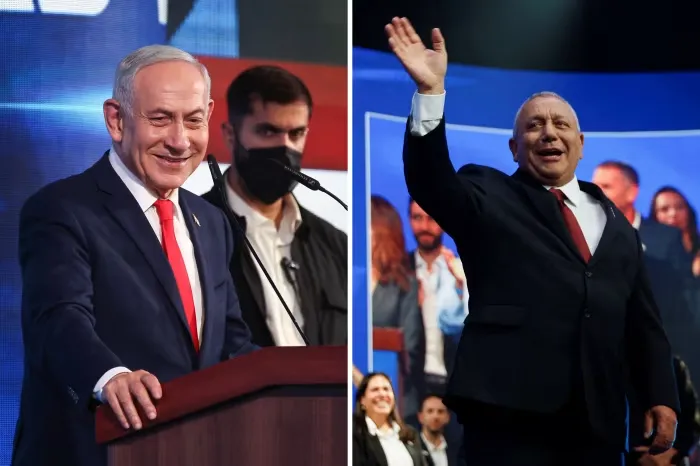
Final Israeli election results showed that neither Prime Minister Benjamin Netanyahu nor his main rival, Gadi Eisenkot, secured enough seats to form a majority government, leaving parties to negotiate a coalition.
According to results released Friday, Netanyahu’s Likud won 53 seats in Tuesday’s election, while former military chief Eisenkot’s bloc secured 48. Both are short of the 61 needed for a majority in the 120-seat Knesset.
Israel’s two Arab-dominated parties, The Joint List and Ra’am, secured a record 19 seats.
Netanyahu’s bloc has ruled out forming a coalition with the Arab parties, while Eisenkot has also rejected working with them, citing a lack of shared values.
The final results were announced amid allegations of election fraud and suspected foreign interference. Netanyahu alleged on Wednesday that Arab parties were involved in widespread election offenses. Likud claimed Qatar was behind the alleged election intervention, which Qatar denied.
The Israeli Central Elections Committee has instructed Israel’s internal security service Shin Bet to investigate allegations of foreign involvement in the elections. Eisenkot said the head of the Shin Bet and the chairman of the Central Elections Committee updated him on Thursday.
“It is too early to understand what happened, or even whether anything happened at all,” Eisenkot said in a video message posted on X.
“The professional authorities must be allowed to complete their investigation without political interference.”
While backing the probe, Eisenkot said the 26th Knesset should convene on schedule and warned against using unverified allegations to undermine the official election results
With the votes now counted, President Isaac Herzog is expected to hold consultations with party representatives after Nov. 4 before selecting the lawmaker he believes has the best chance of forming the country’s next government.
Early on Friday, Israel’s Central Elections Committee reiterated comments by acting director Dean Livne rejecting reports of widespread voter fraud, despite the ongoing investigation into suspected foreign influence.
He added that the investigation “will not affect the final results submitted to the president, nor does it concern any particular sector of the population.”
Qatar Rejects Allegations
Qatari Foreign Ministry spokesperson Majed Al Ansari rejected the accusations on Thursday, saying Doha had not interfered in Israel’s elections or funded activities intended to influence the outcome.
He described the accusations as “ridiculous and dangerous” and said Qatar had no involvement in Israel’s political competition and would not accept attempts to draw the country into its internal politics.
Al Ansari added that Qatar would continue its diplomatic and humanitarian efforts in the region.
Joint List leader Yousef Jabareen also rejected fraud allegations, saying the election outcome reflected the will of the people and should be respected.
“No incitement campaign will change the decision of the voters,” Jabareen said in a Thursday post on X.
He called for the election results to be formally transferred to President Herzog so that the 26th Knesset could be sworn in on schedule.
Earlier, Jabareen said his alliance was prepared to help replace Netanyahu’s government, adding that “the change comes through Jewish–Arab partnership.”
Speaking on Wednesday, Herzog urged political leaders to avoid forcing Israel into another election, according to the Times of Israel.
“We must do everything we can, certainly after yesterday, to avoid another round of elections. So I expect everyone who comes here to come with an open mind,” he said.
Reuters and The Associated Press contributed to this report.


More Stories
US Signs Critical Minerals, Energy, Technology Deals With Finland, Hungary
By Victoria Friedman The United States has signed critical mineral, energy, and technology deals with Finland and Hungary, strengthening economic...
Nasdaq Falls More Than 2 Percent as Amazon, Intel Earnings Weigh on Markets
By Andrew Moran The tech-heavy Nasdaq Composite Index fell more than 2 percent as disappointing results from Amazon and weak...
Oil Prices Jump Amid More Shipping Incidents in Strait of Hormuz
By Evgenia Filimianova Oil prices rose on Friday and were on track for sharp monthly gains after fresh maritime security...
State Official Says No System to Identify Whether Voters Are Noncitizens
By Zachary Stieber A top Washington state official said on Oct. 29 that the state has no way to confirm...
The Great Banking Betrayal: Who Really Paid the Price?
By Stephen Zogopoulos, USNN World News USNN WORLD NEWS | SPECIAL EDITORIAL INVESTIGATION October 30, 2026 | Investigative Opinion &...
Trump Says Democratic Candidate Should Be Prosecuted Amid Alaska Same-Name Controversy
By Jack Phillips President Donald Trump has called for the prosecution of a Democratic Alaska Senate candidate amid allegations that...