
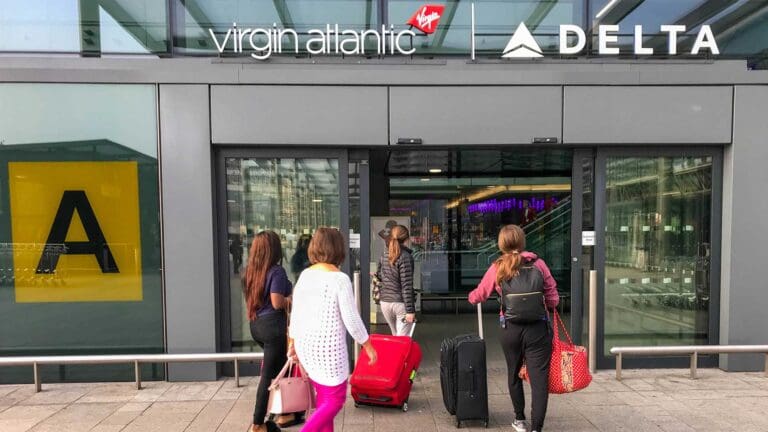
Virgin Atlantic threatens Heathrow challenge over Delta terminal move

Virgin Atlantic is considering legal action against Heathrow after the airport said Delta Air Lines, its joint venture partner and 49 per cent shareholder, will move from Terminal 3 to Terminal 4 under a review of how the airport’s terminals are used.
Delta is one of five airlines being relocated to free up capacity at Britain’s biggest airport. China Southern, Latam, Finnair and Japan Airlines are also moving, with the changes expected to take place over the next two years.
The plan was reported earlier today by Travelling for Business which said Heathrow began briefing airlines on the outcome of its terminal occupancy review yesterday and that Delta would start operating from Terminal 4 in 2028.
Delta and Virgin Atlantic co-ordinate schedules, pricing and routes under their partnership, flying to more than 130 destinations. Terminal 3 acts as Virgin Atlantic’s hub, so the move would separate the two airlines.
Corneel Koster, chief executive of Virgin Atlantic, said the airline was “considering all available options” to challenge the outcome and warned it could result in higher fares for passengers.
It is understood the options include legal action and potentially asking the regulator to investigate the process, on the basis that it could be anti-competitive.
Koster said: “Moving Delta to the remotely located Terminal 4, would create friction for customers, weaken competition and reduce choice. As all other airports seek to co-locate joint venture partners, Heathrow has chosen to split ours after more than a decade together. If this goes ahead, consumers will pay the price.”
He said moving Delta would “weaken our joint business”, adding: “It enables fast and seamless connections, operational resilience and efficiency, while providing the most meaningful competition to the British Airways-American Airlines joint venture, helping secure lower fares and choice for customers.
“A level playing field for UK-based carriers and their partners is vital for consumers and the UK economy. Given Heathrow’s significant market power and the expected impact on UK long-haul competition, we will now consider all available options to challenge this outcome.”
Travelling for Business reported that it was not clear what legal mechanisms the airline could use. One source quoted by the title described the decision as “one monopoly reinforcing another monopoly”.
Under Heathrow’s terminal occupancy review, which has been three years in the making, China Southern will move from Terminal 4 to Terminal 5 and Latam from Terminal 3 to Terminal 2. Finnair and Japan Airlines will join Delta in moving from Terminal 3 to Terminal 4.
British Airways, which operates from Terminal 5, will not be moved.
It is understood that airlines representing 81 per cent of Heathrow’s passengers support the final decision. Heathrow insiders told Travelling for Business that the chosen option required the fewest airline moves and the least capital expenditure, could be delivered fastest and fitted best with airlines’ growth plans.
A Heathrow spokesman said: “Following consultation with our airline customers, Heathrow has developed a clear plan to make the best use of current terminal capacity and deliver a better overall experience for passengers, as well as strengthening operational resilience and creating room for growth.
“As demand to travel through Heathrow continues to grow and capacity remains constrained, these five moves will unlock more capacity across terminals, reduce congestion, improve the flow of passengers through the airport and help keep passenger costs down. We are committed to working closely with our airline customers as these changes are delivered.”
The reallocation comes as Heathrow, which lost its position as Europe’s busiest airport to Istanbul in July, seeks permission to expand. It has proposed a third runway costing £33bn as part of a wider £49bn upgrade, according to Travelling for Business.
Airlines including Virgin Atlantic and British Airways owner International Airlines Group have previously raised objections to the cost of the expansion, warning that it could be funded through higher landing charges passed on to passengers.
More Stories
Jeremy Hunt says Healey wasted Budget by putting off hard decisions
Former Chancellor Sir Jeremy Hunt today accused John Healey and Andy Burnham of wasting their political capital by putting off...
Healey cuts electricity bills by a quarter for 10,000 industrial firms
Chancellor John Healey today announced a British Industrial Competitiveness Scheme that will take 25 per cent off electricity bills for...
Healey raises minimum and living wages by 3.9 per cent
Chancellor John Healey today increased both the National Minimum Wage and the National Living Wage by 3.9 per cent, a...
Healey extends energy VAT cut and raises bank surcharge in Budget
Chancellor John Healey today extended the cut to VAT on household electricity bills to July and announced a temporary rise...
Healey blinked on bank tax, but mortgages, savings and pensions will feel it
Chancellor John Healey has used his first Budget today to add 3 per cent to the bank surcharge from January,...
Healey lifts small business rate relief threshold to £18,000
Chancellor John Healey today raised the threshold for small business rate relief for retail, hospitality and leisure businesses from £12,000...