

Alfa Romeo Cuorerosso Concept Reveals Stunning Hybrid V6 Design That Could Inspire the Next Giulia

Alfa Romeo has always had a special talent for building cars that make enthusiasts stop and stare, even when the Italian automaker struggles to compete with its more established luxury rivals. Its latest creation, the Alfa Romeo Cuorerosso concept, is another reminder of why so many of us have a soft spot for the brand. Unveiled at the 2026 Paris Motor Show, this striking four-door grand tourer combines the dramatic styling of an exotic sports car with something particularly encouraging under its sculpted hood: a hybrid version of Alfa Romeo’s beloved twin-turbocharged V6 engine. As we discovered over at Car and Driver, the Cuorerosso isn’t necessarily a direct preview of the next-generation Giulia, but it offers an exciting glimpse into what future Alfa Romeo performance cars could look and feel like. If even some of this design makes it into production, we’re going to have plenty to look forward to.
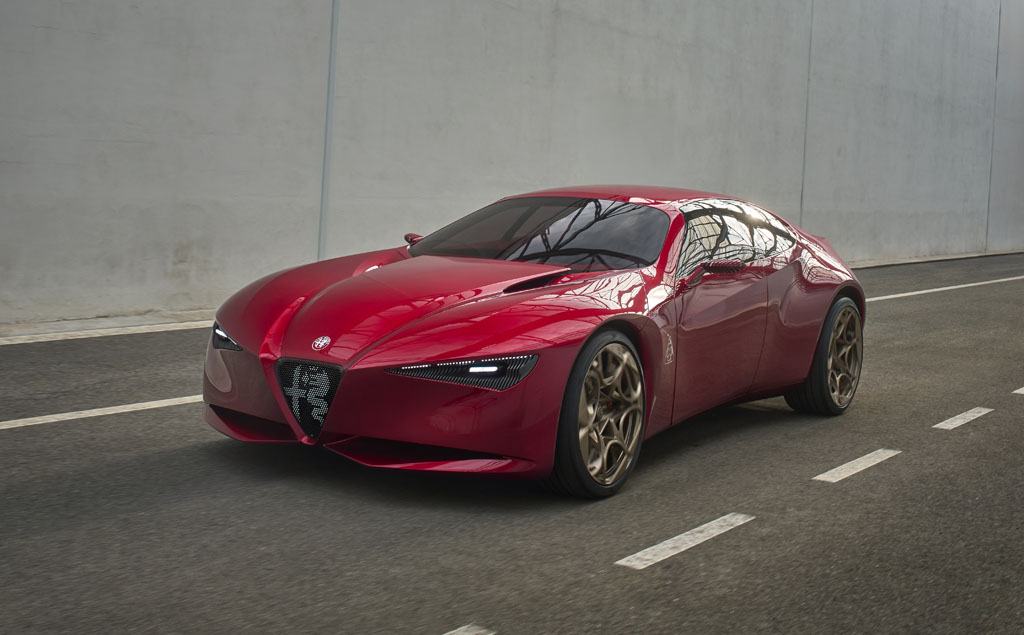
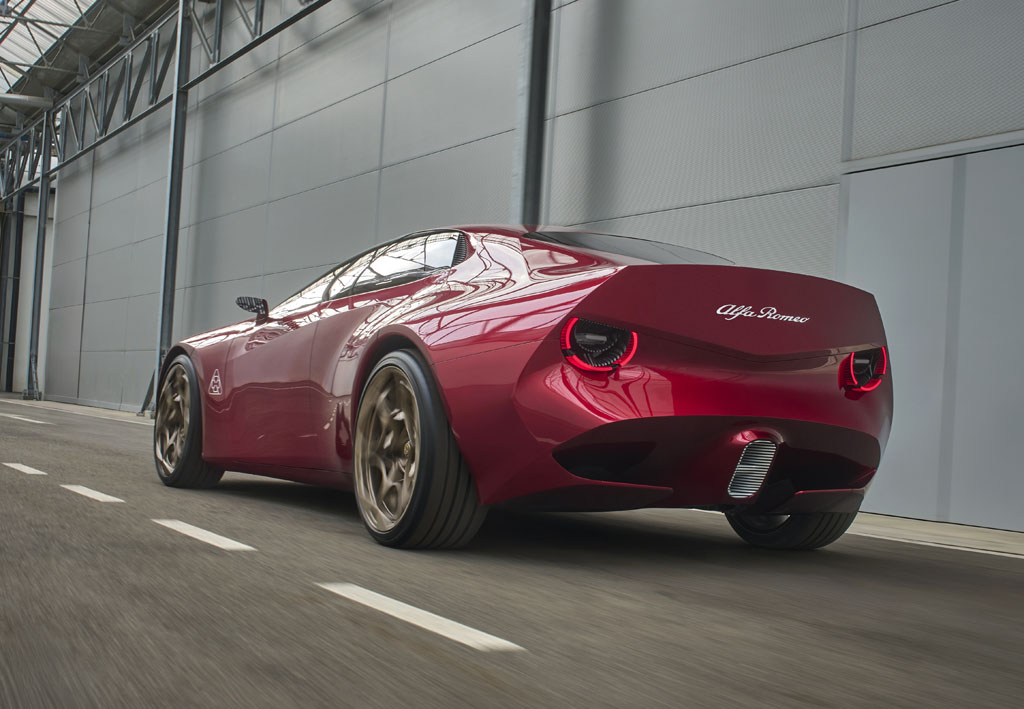
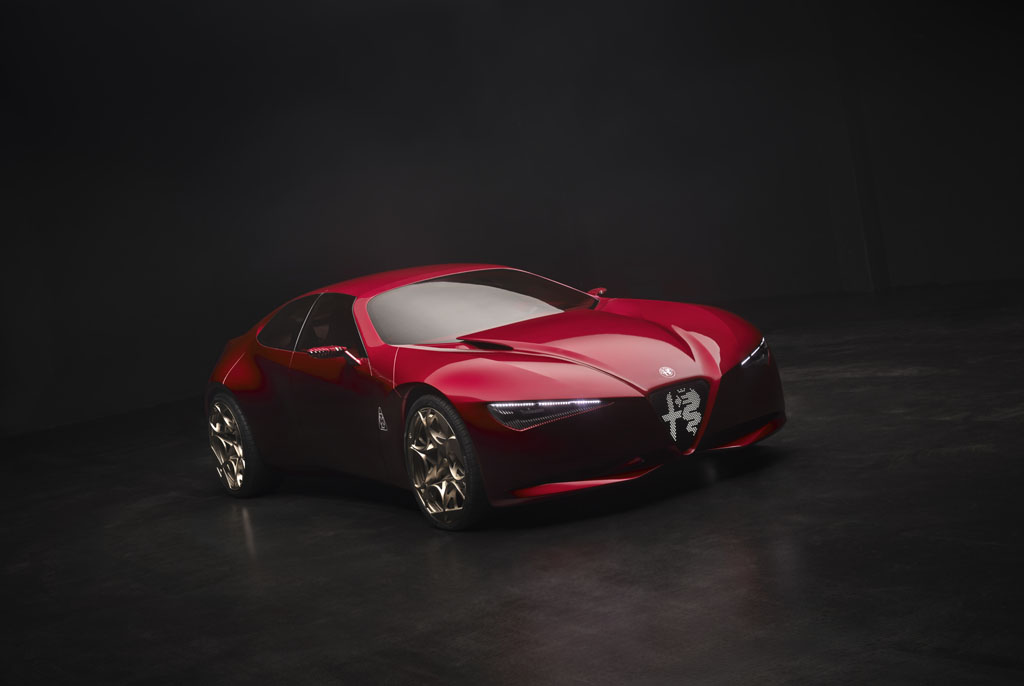
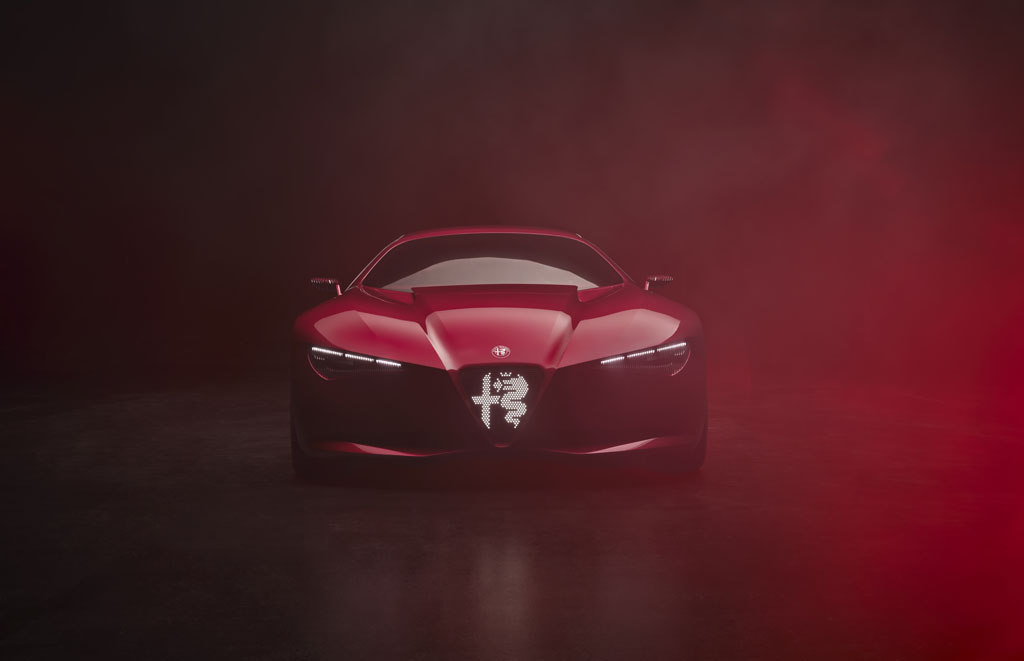
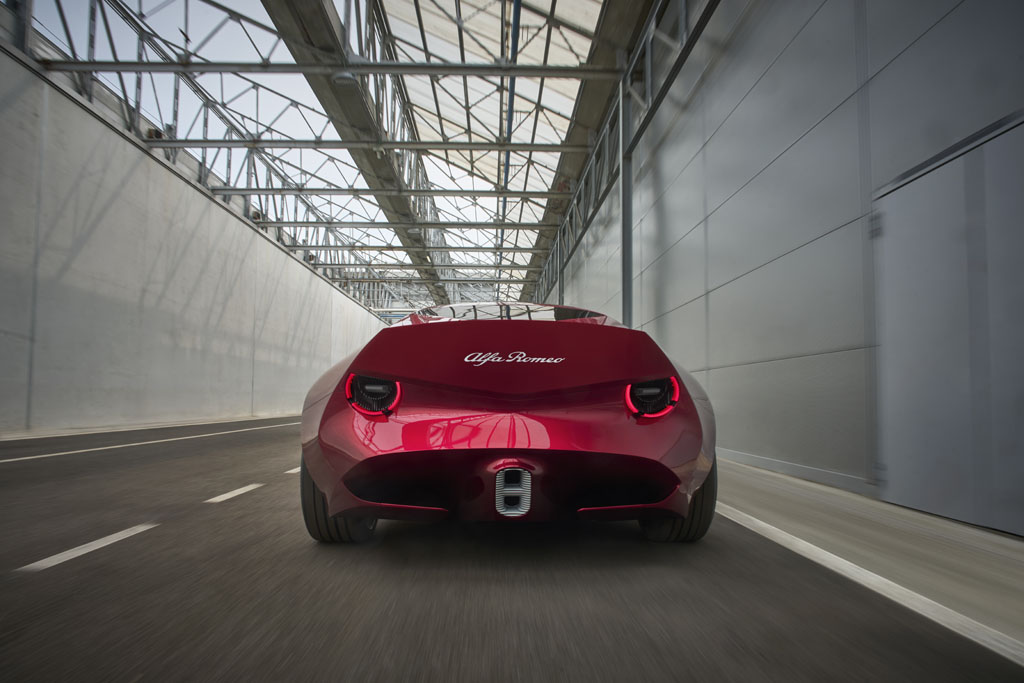
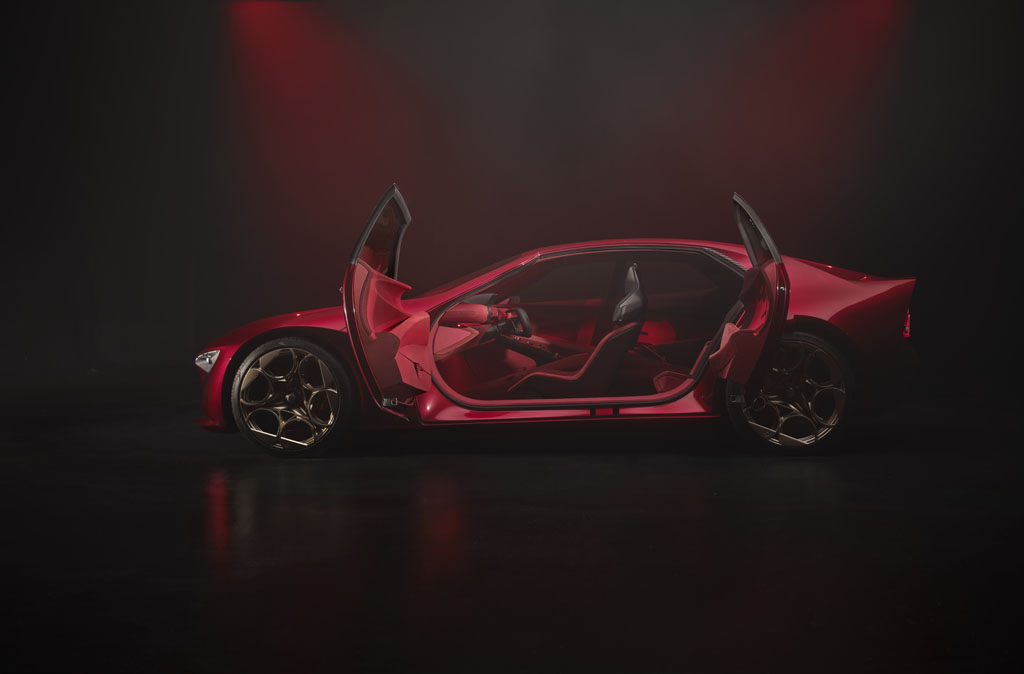
The Cuorerosso, whose name translates loosely to “Red Heart” in Italian, looks like the kind of vehicle that could easily wear a six-figure price tag without anyone questioning it. Its proportions blend the elegance of a traditional Italian grand touring car with the aggressive stance of a modern supercar. The concept is slightly longer and wider than today’s Giulia Quadrifoglio, featuring an exceptionally low roofline, muscular rear fenders, and dramatic curves that appear to flow naturally from one end of the body to the other. Alfa Romeo has also incorporated rear-hinged coach doors, creating a distinctive four-door configuration around a 2+2 seating arrangement. Familiar styling elements haven’t been forgotten, either. The iconic triangular Scudetto grille remains a prominent feature, while the classic Alfa Romeo cross and Biscione emblem appear within the front design. Even the wheels reinterpret the brand’s famous telephone-dial pattern, making this concept unmistakably Alfa Romeo despite its futuristic appearance.
Perhaps the most exciting news is that Alfa Romeo hasn’t abandoned its wonderful 2.9-liter twin-turbocharged V6 in favor of an entirely electric powertrain. Instead, the Cuorerosso incorporates a hybridized version of the engine that has helped make the Giulia Quadrifoglio one of the most entertaining sports sedans of the past decade. In its current production form, that V6 delivers 505 horsepower in the U.S.-market Giulia Quadrifoglio, accompanied by an exhaust note and driving personality that enthusiasts have come to appreciate. Alfa Romeo hasn’t released an official horsepower figure for the Cuorerosso, but the addition of electric assistance certainly raises some interesting possibilities for both performance and efficiency. The concept also features an all-wheel-drive system and an automatic transmission, showing how Alfa Romeo could combine electrification with its traditional performance engineering. With a reported curb weight of approximately 3,858 pounds, the Cuorerosso is relatively restrained for a vehicle incorporating both combustion and electric propulsion.
There’s considerably more engineering underneath that beautiful bodywork than just a new powertrain. Alfa Romeo has equipped the Cuorerosso with air suspension, an experimental steer-by-wire system, and Brembo carbon-ceramic brakes, suggesting that driving dynamics remain central to the brand’s thinking. Of course, advanced technology only matters if it improves the experience behind the wheel, and that’s where Alfa Romeo has traditionally distinguished itself from many competitors. The Giulia Quadrifoglio earned its reputation through sharp handling, responsive steering, and a willingness to engage its driver in ways that some luxury sports sedans have gradually forgotten. The prospect of retaining those qualities while introducing hybrid performance is appealing, especially as manufacturers continue balancing stricter efficiency expectations with the demands of driving enthusiasts. We can only hope that future production models capture the same sense of character rather than simply chasing impressive acceleration figures.
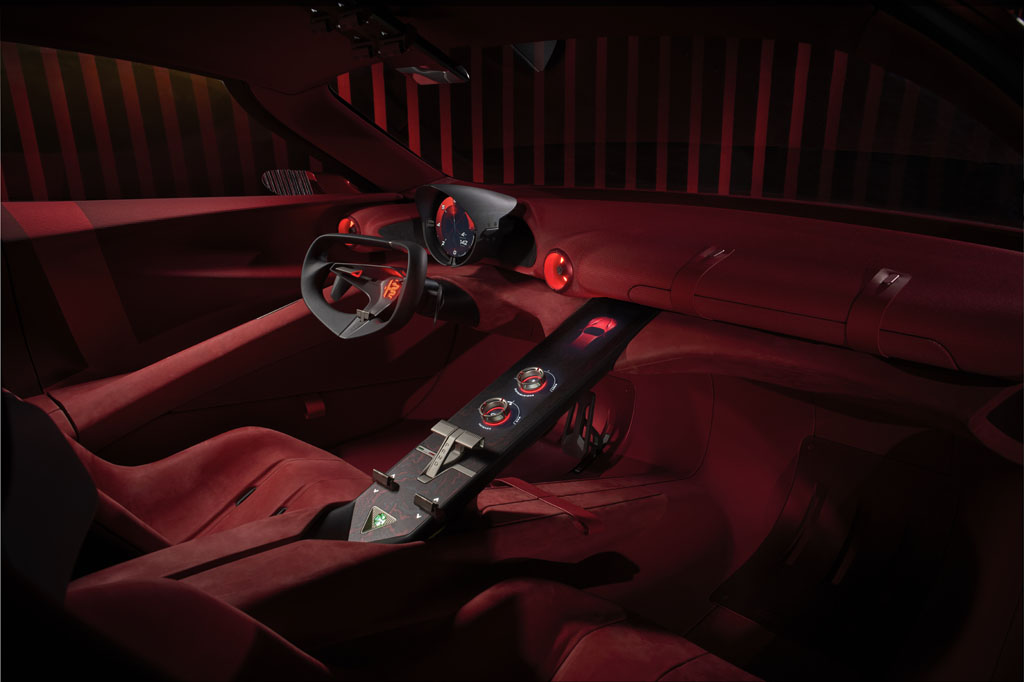
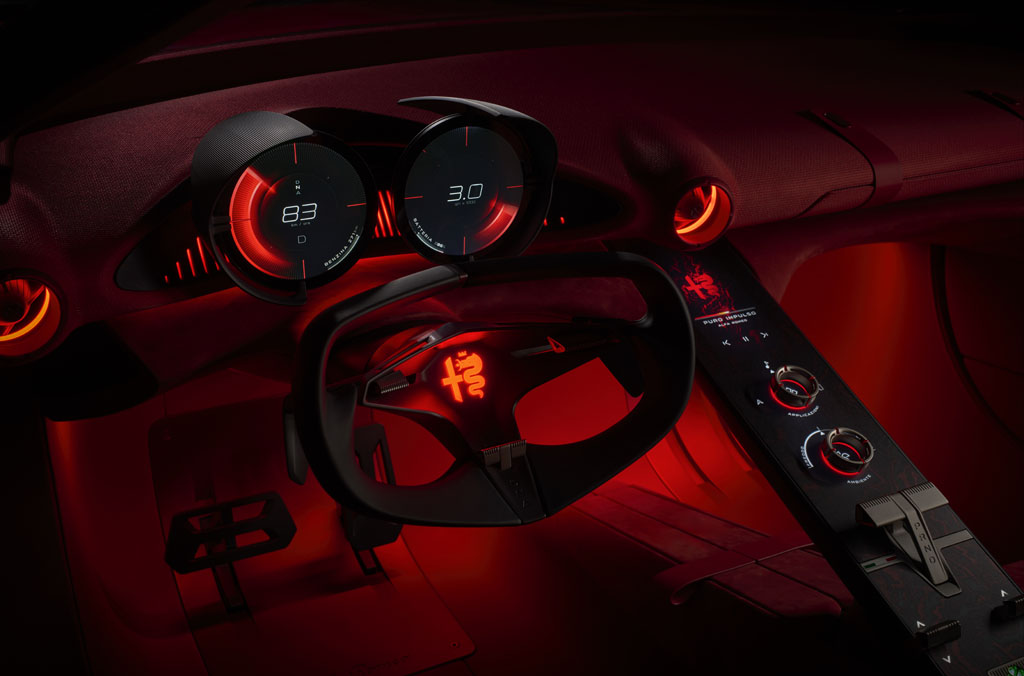
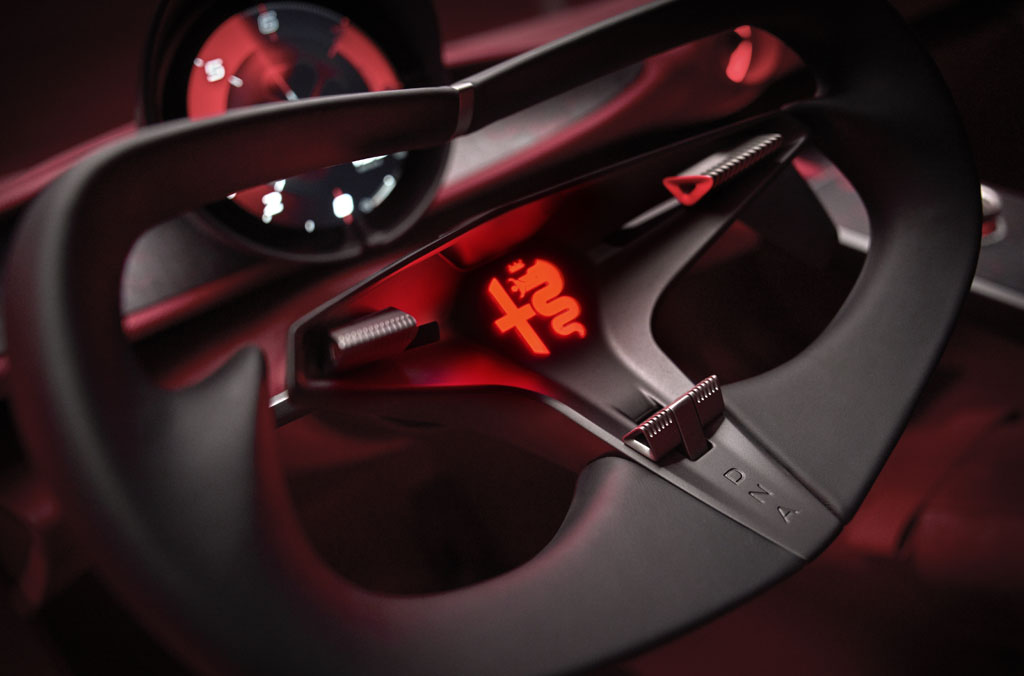
Inside, Alfa Romeo takes a refreshingly different approach from the oversized digital screens that have become almost unavoidable in modern luxury vehicles. The Cuorerosso’s cabin is remarkably minimalist, featuring a stripped-down dashboard with only a pair of primary gauges, two air vents, a futuristic gear selector, and a small collection of physical controls. The centerpiece is something Alfa Romeo calls the Magma Display, an unconventional interface designed to keep the interior focused on the essentials rather than overwhelming occupants with technology. The overall presentation feels more like a modern interpretation of a classic Italian sports car than a typical futuristic concept overloaded with touchscreens. It’s an approach we’d love to see more automakers adopt, particularly when designing performance-oriented vehicles where the connection between driver and machine should take priority. Combined with the car’s dramatic exterior and carefully considered proportions, the interior demonstrates that Alfa Romeo still understands the emotional appeal of driving.
Unfortunately, there’s one significant catch to all this excitement. Alfa Romeo has made it clear that the Cuorerosso isn’t intended to become a production vehicle in its current form. Instead, the company describes it as a design manifesto that will influence future models, introducing a styling philosophy known as Bellezza Necessaria, or Necessary Beauty. That new design direction is expected to begin appearing across Alfa Romeo’s lineup from 2028, although exactly how much of the Cuorerosso will carry over remains uncertain. The possibility of its influence reaching a future Giulia is especially interesting, considering how desperately the sports sedan segment could use another genuinely distinctive entry. More importantly, the Cuorerosso suggests that Alfa Romeo sees a future for combustion engines working alongside electric technology rather than being completely replaced by it. For enthusiasts who appreciate the sound of a great V6, the beauty of Italian automotive design, and the pleasure of driving something with a little personality, that’s encouraging news. Now, if Alfa Romeo could find a way to build something that looks even remotely this good at a price within reach of ordinary enthusiasts, it might have something truly special on its hands.


More Stories
The Hidden Cost of Downtime: Eight Forklift Maintenance Mistakes That Disrupt Warehouse Operations
Source: Pexels A forklift breaking down in the middle of a busy warehouse shift creates more than a mechanical inconvenience....
EV Sales Are Slumping in America While Europe Embraces Electric Cars as U.S. Buyers Turn to Hybrids
The electric vehicle revolution appears to be heading in two very different directions depending on which side of the Atlantic...
This Ferrari 250 GTO Recreation on Bring a Trailer Delivers a $50 Million Dream for a Fraction of the Price
There are certain cars that most of us can only dream about owning, and the legendary Ferrari 250 GTO sits...
2027 Jeep Wrangler Switchback Brings a Bold Two-Tone Look Straight From the Factory
Jeep owners have never been shy about making their Wranglers stand out from the crowd, whether that means installing massive...
Street Fighter II’s Legendary Lexus LS400 Comes to Life as a Real Car You Can Actually Win
If you grew up playing Street Fighter II on the Super Nintendo or spent countless quarters at the local arcade,...
Win an Official Michel Vaillant T-Shirt in Our Exciting Competition
RetroClassic Clothing has launched a new collection of officially licensed Michel Vaillant T-shirts. As a result, the range brings Jean...