
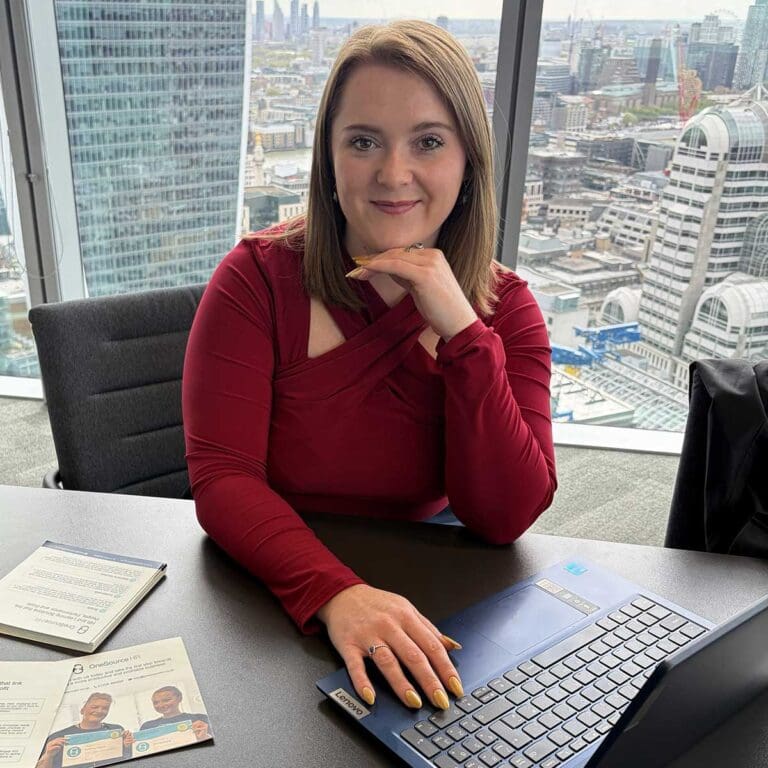
Getting to know you: Chloe Wallace, founder, OneSource HR

Chloe Wallace is founder and managing director of OneSource HR, a South Yorkshire consultancy that specialises in workplace conduct, complex employee relations and trauma-informed practice.
In June 2026 she unveiled Scenari, an AI-powered platform that lets employees rehearse difficult workplace situations rather than simply read about them. It arrives as employers prepare for a strengthened legal duty to take all reasonable steps to prevent sexual harassment, which applies from 30 October 2026.
Elected to the Sheffield Chamber of Commerce Council earlier this year, she tells Business Matters why she wishes she had niched sooner, and why done is often better than perfect.
What do you currently do at OneSource HR?
I run OneSource HR, an HR consultancy with a strong focus on workplace conduct, complex employee relations and trauma-informed practice.
A lot of my work sits in the difficult bits of HR, including investigations, conflict, harassment, culture, risk and helping organisations respond well when something has gone wrong. I am really passionate about bringing trauma-informed and anti-oppressive practice into HR in a way that is practical rather than theoretical.
I also founded Scenari, an AI-powered, practice-based workplace conduct platform, because I became increasingly frustrated with how much workplace learning tells people what they should do without ever giving them the opportunity to practise actually doing it.
What was the inspiration behind your business?
The business I have today really came from bringing together two parts of my life, my personal lived experience and the skills I had built over a career in HR.
I spent a lot of my career working in fast-paced, male-dominated environments where budgets were tight and HR had to be commercially useful. I learned very early that you could not always solve a problem by buying another system, consultant or piece of training. You had to be creative, practical and understand how the organisation actually worked.
Alongside that, my own lived experience changed the way I thought about harm, power and how people respond when something difficult happens to them.
OneSource HR today sits at the intersection of those things. Commercial HR experience, trauma-informed practice, prevention and a belief that we can design workplaces differently.
Who do you admire?
I admire people who challenge the way things have always been done, particularly people who manage to do good and do good business at the same time.
I am very interested in feminist leadership and anti-oppressive practice, so naturally I am drawn to women and thinkers who have been prepared to challenge power, question accepted systems and make space for different voices.
But I also think there is something to learn from almost every leader you encounter.
One phrase that has stayed with me came from a former boss who used to tell the sales team, “business is a contact sport.” In the early days of OneSource HR, I repeated that to myself constantly. It pushed me to network, make connections and grow the business on the days when doing that did not come naturally to me at all.
Sometimes the lesson you take from someone is not about becoming more like them. It is just one thing they said or did that sticks with you.
Looking back, is there anything you would have done differently?
I would have niched much earlier, collaborated much earlier and operated far less from a scarcity mindset.
When you first start a business, it is very easy to think you have to appeal to everybody because you cannot afford to turn work away. I do not believe that any more.
If you are talking to everybody, you are probably reaching nobody.
I think your brand and your profile should almost act like a sieve. They should attract the people you genuinely want to work with and allow the others to decide that you are probably not for them. That is completely fine.
I would have been much braver about saying, “This is what I care about, this is what I am really good at and these are the people I want to work with.”
What defines your way of doing business?
Probably bravery, practicality and a slightly entrepreneurial tendency to think, “Why do we not just do it?”
I am not frightened of being the first person to try something or of putting an idea into the world before every tiny detail is perfect. Done is often better than perfect.
I like collaboration. I like finding people who are brilliant at things I am not brilliant at. And I like taking complicated ideas and turning them into something people can actually use.
Whether it is HR consultancy, training, a new framework or building Scenari, my test is normally the same. Is it useful, does it solve a real problem and will it actually work in the real world?
And I think you have to be prepared to be bold. Some of the best things I have done in business have started with deciding to go for something before I had completely worked out how I was going to do it.
What advice would you give to someone starting out?
Do not be frightened of having a point of view.
You do not need everyone to like your business, understand your business or want to buy from you. You need the right people to.
Find the thing you are genuinely good at, get really close to the people you want to serve and do not dilute yourself because you are worried there might not be enough work.
Collaborate earlier than you think you need to. Talk to people. Build relationships. Ask for help. Put yourself in rooms even when networking feels uncomfortable.
And do not wait until everything is perfect before you start.
Be useful. Be brave. Do the work. You can refine it as you go.


More Stories
Poundland owner Gordon Brothers pushes for insolvent sale of chain
Poundland’s owner, Gordon Brothers, is pushing for an insolvent deal for the discount chain that could see it broken up...
Tinned food sales up 40 per cent at Iceland after stock-up call
Iceland has reported a 40 per cent increase in sales of tinned products over the weekend and Maplin a 284...
Microsoft offers voluntary redundancy to up to 60,000 staff
Microsoft has offered voluntary redundancy to up to 60,000 employees, including staff in the UK, as the technology group seeks...
Record 738,144 UK businesses in financial distress ahead of Budget
A record 738,144 UK businesses were in significant financial distress in the third quarter of 2026, according to research published...
British manufacturers urge Healey to cut costs in tomorrow’s Budget
Two British manufacturers have called on Chancellor John Healey to bring down energy and employment costs in his first Budget,...
AI giant eyes record IPO
Claude developer Anthropic is seeking a record valuation while acknowledging potentially catastrophic risks from its own technology US artificial intelligence...