
Austin’s Driverless Streets: Who Is Liable When an Autonomous Vehicle Causes a Texas Crash?

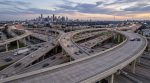
Austin has become one of the most heavily used proving grounds for driverless vehicles in the country. Depending on the corridor and the hour, a driver on Congress or South Lamar may be sharing lanes with vehicles operating with nobody in the driver’s seat at all.
For anyone who follows cars, the engineering is the interesting part. For anyone who has just been rear-ended by one, the interesting part is different: there is no driver to exchange information with, no human account of what happened, and no obvious name to write on a claim form.
Texas has actually addressed this, and the framework changed significantly in 2025.
Texas Decided the Software Is the Driver
The governing provisions sit in Subchapter J of Chapter 545 of the Transportation Code, substantially rewritten by legislation passed in the 2025 session.
The automated driving system is the operator
When an automated driving system is engaged, Texas law treats that system as the operator of the vehicle, including for the purpose of assessing compliance with traffic and motor vehicle laws. The statute goes further and provides that neither a licensed human driver nor a driver’s license is required for the vehicle to operate with the system engaged.
That is a genuine departure. The legal person who “drove” is not a person.
Somebody still receives the citation
The law resolves the obvious gap by assigning responsibility to the owner, or, where the vehicle is operating under an authorization issued by the Texas Department of Motor Vehicles, to the authorization holder. If an automated vehicle runs a light, the citation attaches to that entity rather than to an empty seat.
Commercial Operation Now Requires Authorization
This is the part that changed most recently, and it matters for anyone trying to identify a defendant.
The permit requirement
Under the 2025 amendments, a company cannot operate an automated vehicle to transport passengers or property in furtherance of a commercial enterprise on Texas roads without a human driver unless it receives and maintains an authorization from the state. The Texas DMV automated vehicle program administers that process.
The practical consequence is a public, identifiable entity standing behind each driverless commercial fleet. Before this, identifying the responsible operator was considerably harder.
Insurance is a condition of operation
The statute also conditions operation on the vehicle carrying liability coverage or self-insurance at least equal to what state or federal law requires for that type and use of vehicle.
A Quiet Provision That Does Real Work
Tucked into the same legislation is a change most coverage of the bill skipped entirely, and it may be the most consequential piece for an injured person.
Driverless vehicles were folded into the rideshare insurance rules
The amendments provide that an automated motor vehicle is considered a transportation network company driver for purposes of the insurance requirements in the Texas Insurance Code, and that those coverage requirements apply to the automated vehicle.
That matters because those requirements are not minimal. During a prearranged ride, the rideshare insurance framework calls for a total aggregate limit of $1 million for death, bodily injury and property damage per incident. A driverless vehicle carrying a passenger is now pulled toward that structure rather than an ordinary personal auto policy.
Cities Cannot Write Their Own Rules
Anyone expecting Austin to regulate this locally should adjust that expectation.
State preemption is explicit
The statute prohibits a state agency or political subdivision from imposing regulations that discriminate against automated vehicles relative to other vehicles or with respect to road usage. Austin publishes information about autonomous vehicle activity in the city, but the regulatory authority sits in Austin the capital rather than Austin the municipality.
What Actually Determines the Outcome
For all the novelty, the dispute in a real case tends to land somewhere familiar.
The evidence is unusually good, and unusually controlled
These vehicles are instrumented far beyond an ordinary car. Lidar, radar, camera arrays and full telemetry mean a precise record of the seconds before impact almost certainly exists. That record belongs to the operator, which is a different problem from the record not existing.
Fault is still divided the Texas way
Texas uses proportionate responsibility, and a claimant more than 50 percent responsible recovers nothing. An operator with complete sensor data and skilled counsel is well positioned to argue about the other driver’s share.
According to Matthew A. Rabin, Partner and Managing Attorney at RTRLAW, the difficulty in automated vehicle cases is not proving what happened but getting access to the data that proves it, since the only complete account of the collision sits on the defendant’s own servers. That asymmetry is why people injured by a driverless vehicle often involve an Austin car accident lawyer early, while a preservation request can still reach the operator.
What to Do at the Scene
Photograph the vehicle’s identifying markings and any fleet or permit numbers on the body panels. Note the exact time and location, because the operator’s log is indexed that way. Look for witnesses, since there is no other driver to give an account. Call the police and insist on a report even if the vehicle appears undamaged, and report the incident to the operator through whatever channel is posted on the vehicle.
More Stories
When every kilometre counts, Suzuki puts fuel economy to the test
With fuel prices rising, Suzuki put its fuel-efficient range to the test. Discover how five Suzuki models performed on Pretoria’s...
Brilliant Design Features That Make the Alpine A310 VISION So Exciting
The A310 VISION also demonstrates the design opportunities offered by Alpine’s APP platform. Developed to support future sports cars, the...
Opel STX Concept Brings Active Aerodynamics to the Electric Estate Car
Opel is preparing a new concept car for the 2026 Paris Motor Show. Called the STX, it previews a future...
A Modern Citroën 2CV Sounds Great. Until You Think About the Price
Citroën has revived the 2CV name at the Paris Motor Show, displaying two concepts inspired by its most recognisable small...
Pickup Truck vs SUV Insurance Costs and What Drivers Should Know
Insurance belongs in the buying budget when the shortlist includes a pickup and an SUV. Either vehicle may cost less...
Porsche Mission S Could Get a Manual Transmission and That Makes This Mid-Engine Supercar Even More Exciting
Just when we thought Porsche’s stunning new Mission S concept couldn’t get any more exciting, the German automaker has revealed...