
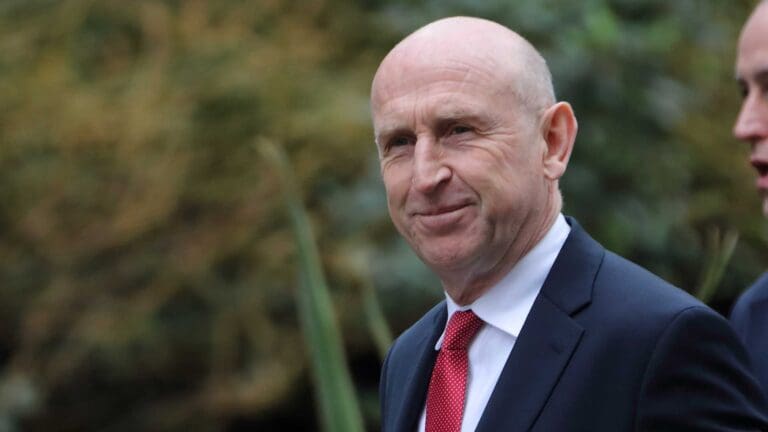
Half of business owners would consider leaving UK over CGT rise

Six in 10 UK business owners would be discouraged from founding a new company if John Healey, the chancellor, raises capital gains tax (CGT) in next month’s budget, according to a survey commissioned by S&W, the professional services group.
The survey of 500 business owners, carried out by the research consultancy Censuswide, also found that half would consider leaving the UK if the tax was raised in the budget on 28 October.
Higher and additional rate taxpayers currently pay 24 per cent CGT on their gains, according to government guidance.
There are growing fears that Healey will raise the tax, or equalise it with income tax, as the government contends with higher borrowing costs and a shrinking fiscal buffer and seeks to fund Andy Burnham’s localism and cost of living agenda.
Toby Tallon, a tax partner at S&W, said the business owners are “sending a clear warning to the chancellor”. He added that CGT and the possible introduction of a wealth tax “are areas business owners will be watching particularly closely”.
Stephen Fitzpatrick, co-chairman of Enterprise Britain and the billionaire founder of Ovo, Kaluza and Vertical Aerospace, said: “Nobody likes tax, but it’s part of what makes our country work. And how we pay taxes matters. To create a prosperous society, we need more than hard work. We need people who are willing to risk everything … time, money, humiliating failure.”
He added: “If the government decides to tax capital gains at the same rate as income, I am not going to leave. This is my home, and my children are growing up here. But would I want to risk everything again? I really don’t know.”
Andreas Adamides, chief executive of the scale-up founders network Helm, is leading a Stop the Creep campaign against tax rises, backed by more than 150 business leaders. He said: “For many founders, selling their business is their pension. Taxing it like a pay cheque would hit them just as years of hard work finally pay off, and push them abroad, taking with them the capital, experience and jobs Britain desperately needs for growth.”
Earlier this month it emerged that Chris Rokos, the billionaire hedge fund manager and Britain’s third-highest taxpayer, is moving to Greece.
Others have argued for an increase. Dale Vince, the founder of Ecotricity and a Labour donor, has proposed equalising CGT with income tax in increments over several years, to help fund a £20bn increase in the income tax personal allowance. Vince said wealth was “taxed more lightly than work”.
Louise Haigh, the first secretary of state, and Wes Streeting, the defence secretary, have both called for a rise in CGT this year.
Asked on Wednesday about the prospect of raising the tax, Emma Reynolds, chief secretary to the Treasury, said: “I can’t give any reassurance on the budget. All I can say is that one of the reasons we are doing the budget earlier than last year is that we are trying to, as much as we can, reduce the amount of speculation, because there is a lot of it. And it’s very often inaccurate and unhelpful.”
The Investment Association, in its pre-budget submission this week, called on the Treasury to avoid further increases to CGT, “which would send the opposite signal to people being encouraged to move from cash savings into long-term investment”.
Robert Salter, a director at the advisory firm Blick Rothenberg, said raising the higher rate of CGT to 34 per cent from 24 per cent would cut receipts by £540m in the 2026-27 tax year, £2.06bn in 2027-28 and £3.5bn in 2028-29. He based the figures on an HMRC bulletin published in June last year. Salter added that most CGT comes from a small number of taxpayers, who are likely to be the most mobile.
A Treasury spokesman said: “As has always been the case, decisions on tax are a matter for the chancellor to set out at fiscal events, rather than routinely commenting on rumour, speculation or proposals.”


More Stories
Hate the new Jaguar? Good. That’s rather the point
Most Sunday mornings in winter, I can be found in a cold garage doing what owners of classic cars do...
Beyond the Microphone: British Comedians Who Became Directors and Presenters
Stephen Merchant co-created The Office and went on to write and direct for the cinema. Simon Amstell writes and directs...
Top 10 Best Hair Transplant Doctors in Turkey: A 2026 Guide to Surgeons
This guide names the top 10 best hair transplant doctors in Istanbul for 2026 and explains, in plain terms, how...
How to Choose an HR System for a Growing UK Business
For a while, email and spreadsheets seem good enough. Then managers start asking where the latest file is, staff have...
Top 10 Best Hair Transplant in Turkey
Turkey has become one of the world’s most familiar destinations for hair restoration, with Istanbul attracting patients from Europe, the...
How to Register a Company in Hong Kong in 2026: A Guide for UK SMEs
You can register a company in Hong Kong remotely, but plan tax, banking and compliance before you start. Why UK...