
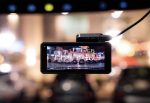
Best 4K Dash Cam 2026: Features, Resolution, and What to Look For

Dash cam footage can only tell you so much, and what it shows depends on what’s visible in the recorded video. A blurry license plate or face is rarely helpful when providing evidence to an insurance company or law enforcement, which is why some drivers are seeking to upgrade their 1080p dashcams to a 4K option and why the change in resolution has quietly become one of the most important upgrades a driver can make to their vehicle.
In this article, we’ll explore the differences between 4K dash cams compared to regular dashcams, highlight what to look for when buying a dash cam, and offer one possible answer to the question many people are searching for, what is the best 4K dash cam for 2026?
Resolution and Why It Matters in Dash Cams
It’s easy to think that any dash cam recorder with video capability will “do the job” in the event of an issue on the road, but it’s important to understand why resolution is so important in dashcam cameras.
A 1080p dashcam may capture the general shape of a vehicle that cuts you off, but zoom in on the license plate and it’s often impossible to make out, especially at night or on the highway. A 4K dashcam records four times the resolution of 1080p, which means the difference between “a car hit me” and “here’s exactly the plate number, time-stamped and clear enough to submit to your insurer.”
This becomes even more important at night. Inexpensive dashcams can blow out headlights into a white glare, losing the ability to see the details inside the frame, while a well-made dashcam sensor keeps those same headlights in view (without overexposure) and preserves other elements in the field of view. If you’ve ever pulled up a dashcam video after an issue on the road and found it impossible to make out a license plate due to overexposure from oncoming headlights, then you know the difference a real 4K sensor can make.
What is the Best 4K Dash Cam for 2026?
For 2026, the Redtiger F77 is a strong contender for one of the best 4K dashcams largely due to the fact that it does not take advantage of the “4K” label by cutting corners, which some budget options do.
The F77 records true 4K video on both the front and rear cameras at the same time and at 3840×2160 resolution and 30fps each, which is uncommon as most dashcams reserve their sharpest resolution for the front and reduce the rear camera’s resolution to 1080p or lower. The front and rear cameras use Sony’s STARVIS 2 IMX678 sensor, an 8-megapixel back-illuminated sensor that provides better light sensitivity and a greater dynamic range, allowing the F77 to capture more shadows while controlling glare from headlights. This is paired with a 7-layer glass lens at f/1.8, resulting in sharper night footage than expected from a dashcam in this class.
Instead of a microSD card that wears out over time, the F77 has 128GB of built-in eMMC storage, which is more durable and faster for both reading and writing. This allows for up to 5 hours of continuous 4K loop recordings without needing a separate card. On the connectivity front, the F77 runs on 5.8GHz Wi-Fi, speeding up transfers of large 4K files to your phone via the Redtiger app much faster than older 2.4GHz dashcams accomplish the same task, plus the built-in GPS logs your route and speed with the footage itself. A 4-inch touchscreen displays playback and settings, while voice control lets you lock a clip or take a photo without having to take your hands off the wheel, which matters more than it seems. Finally, a 24-hour parking mode with motion and collision detection keeps the car recording even when you’ve left it.
All told, that’s a comprehensive answer to what the best 4K dash cam for 2026 looks like: dual true 4K recording (front and rear) on the same high-end sensor, faster internal storage than standard, and real night vision rather than the marketing of “4K” resolution on a product.
True 4K vs.”4K-Labeled” Dash Cams
Something to know when shopping for a dash cam with 4K capability is that not every camera advertised as “4K” actually delivers on that resolution. Some cameras record 4K resolution on the front and drop the rear down to 1080p, while others technically hit 4K resolution on the front but use a cheaper, older sensor that cannot actually resolve that much detail in the real world, so the extra pixels don’t translate into extra details in the video. The Redtiger F77 is highlighted due to it being one of the few dashcams out there that actually run true 4K recording on both the front and rear cameras on the same high-end sensor, while others save their good hardware for a single camera and cut corners on the other.
The other area that’s worth mentioning is storage and file management. 4K resolution produces some large files when recorded, and a dashcam that’s relying on a standard SD card can quickly wear out. Built-in eMMC storage is better-designed to handle that type of continuous, high-bitrate recordings that 4K produces.
Who Should Choose a 4K Dash Cam?
A 4K setup like the F77 is best-suited to situations where the footage actually matters to the driver beyond just being a recording of the experience. This includes rideshare and delivery drivers that need to capture detail in the event of a dispute, drivers that spend a lot of time on the highway where plate numbers and road signs need to be readable even on the move, and those who have had issues in the past where night vision was insufficient for a usable recording of the event. It’s also a good fit for people who want both directions to be captured properly, since many “4K” dashcams actually cut the rear camera’s resolution to an insufficient level. If your driving is mostly short, low-speed trips around town and you’ve never had the need to zoom in, then a standard 1080p dashcam may be sufficient for your needs. Once resolution has failed you, it’s usually the last time.
Final Thoughts
A dash cam is only as good as the video it actually records, and resolution plays a big part in that. The Redtiger F77 is a solid choice in this arena, as it manages true 4K resolution on both the front and rear cameras, features well-regarded Sony STARVIS 2 IMX678 sensors, has ample 128GB of eMMC storage built in, utilizes fast 5.8GHz Wi-Fi, and has built-in GPS tracking in one unit. When looking for what is the best 4K dash cam in 2026, the F77’s dual true-4K recording capabilities are an excellent choice to consider.
More Stories
When every kilometre counts, Suzuki puts fuel economy to the test
With fuel prices rising, Suzuki put its fuel-efficient range to the test. Discover how five Suzuki models performed on Pretoria’s...
Brilliant Design Features That Make the Alpine A310 VISION So Exciting
The A310 VISION also demonstrates the design opportunities offered by Alpine’s APP platform. Developed to support future sports cars, the...
Opel STX Concept Brings Active Aerodynamics to the Electric Estate Car
Opel is preparing a new concept car for the 2026 Paris Motor Show. Called the STX, it previews a future...
A Modern Citroën 2CV Sounds Great. Until You Think About the Price
Citroën has revived the 2CV name at the Paris Motor Show, displaying two concepts inspired by its most recognisable small...
Pickup Truck vs SUV Insurance Costs and What Drivers Should Know
Insurance belongs in the buying budget when the shortlist includes a pickup and an SUV. Either vehicle may cost less...
Porsche Mission S Could Get a Manual Transmission and That Makes This Mid-Engine Supercar Even More Exciting
Just when we thought Porsche’s stunning new Mission S concept couldn’t get any more exciting, the German automaker has revealed...