
Trump Says He Is Open to Chinese Automakers Building Cars in America

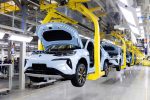
President Donald Trump says he would be open to Chinese automakers building vehicles in the United States, provided those companies put Americans to work. Speaking during an interview on Fox News’ “The Ingraham Angle,” Trump said he would be “okay with” Chinese companies opening U.S. factories, drawing a comparison with Japanese automakers that have established major manufacturing operations across America and employ thousands of U.S. workers. At the same time, Trump made it clear that he does not want Chinese automakers setting up shop in Mexico and using those plants as a gateway to ship vehicles into the United States.
The distinction is an interesting one because Chinese automakers have largely been locked out of the American new-car market, even as brands such as BYD, Geely, and others have rapidly expanded elsewhere. Current federal connected-vehicle regulations impose major restrictions on vehicles and technology with ties to China, including rules that begin prohibiting sales of connected vehicles by Chinese manufacturers for the 2027 model year. Tariffs on Chinese-built EVs have also created another major barrier to entry. Trump, however, appears to be leaving the door open to a very different arrangement, one where Chinese companies could potentially manufacture vehicles on American soil and employ American workers, assuming the regulatory landscape were changed to allow it.
What’s especially notable is that Trump’s comments represent somewhat of a reversal from the direction automotive policy seemed to be heading just days ago. We recently covered how major automakers are pushing Congress to permanently ban Chinese vehicles from the U.S. market, with the Alliance for Automotive Innovation arguing that Chinese connected cars, hardware, and software present economic and national-security concerns. That organization represents many of the biggest names selling vehicles here, including General Motors, Ford, Toyota, Volkswagen, Hyundai, Honda, and Stellantis. The message from much of the established auto industry has been fairly straightforward: keep Chinese vehicles out before they have an opportunity to gain a foothold.
Then there is the Ford situation. Automotive Addicts also recently covered pressure from the Trump administration over Ford’s business relationships with Chinese automotive and battery companies, including CATL, Geely, and BYD. Transportation Secretary Sean Duffy questioned Ford’s reliance on Chinese battery technology and other business ties at essentially the same moment that Washington has been taking a harder look at Chinese involvement throughout the American automotive supply chain. Against that backdrop, hearing Trump say he is comfortable with Chinese automakers actually building vehicles inside the United States is an unexpected turn, and frankly, we’re not entirely sure what to make of it just yet.
There is certainly an economic argument behind the distinction Trump appears to be making. A Chinese vehicle built in Mexico and imported into the United States contributes far less directly to American manufacturing employment than a factory built in Michigan, Tennessee, Georgia, Texas, or another U.S. manufacturing hub. But allowing Chinese-owned automakers to build here would raise the very questions surrounding vehicle software, data security, supply chains, subsidies, and Chinese corporate influence that lawmakers and automakers have been debating. For now, Trump’s remarks should not be mistaken for a formal policy change, and existing restrictions remain in place. Still, the comments suggest the conversation surrounding Chinese cars in America may be considerably more fluid than it appeared only a week ago.
Source: Reuters


More Stories
Brazil September 2026: BYD Dolphin Mini on podium in strongest market in 12 years
The BYD Dolphin Mini breaks into the Brazilian podium in September. 269,014 new cars hit Brazilian roads in September, a...
Israel September/Q3 2026: Jaecoo 5 and MG S9 on top
The MG S9 is #2 in Israel over Q3. According to our local partner cartube.co.il, 23,709 new cars found a buyer...
2027 BMW iX3 M60 Brings 603 HP and Serious Performance to BMW’s Neue Klasse EV SUV
BMW is wasting little time turning up the heat on its new Neue Klasse EV lineup. The 2027 BMW iX3...
2027 BMW iX4 Brings the X4’s Coupe-SUV Formula Into the Electric Era
BMW is bringing back the spirit of the X4, only this time without a gasoline engine. The new 2027 BMW...
Thinking About Modifying Your Volkswagen? Here’s Where to Start
Few cars get modified as often as a Volkswagen. Wander through the car park at any UK show and you’ll...
Documenting the Causes of Traffic Accidents
Justice for car accidents with gavel and car model on the table concept for insurance claim, court hearing or personal...