
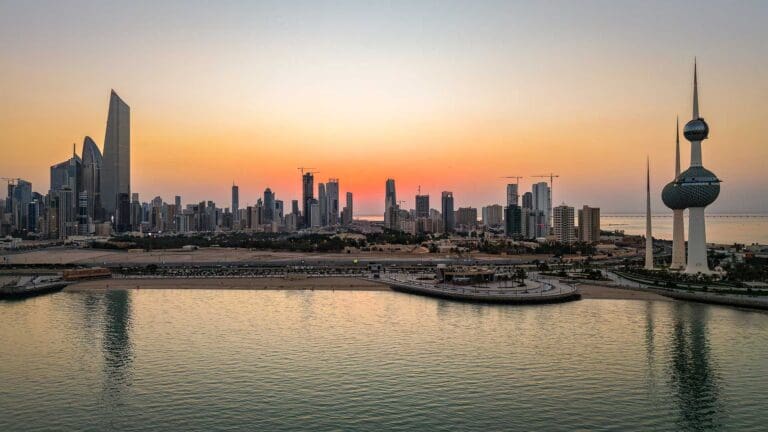
Kuwait’s Non-Oil Economy Records Increase – How It Can Keep the Momentum Going

The latest S&P Global Kuwait Purchasing Managers’ Index (PMI) reading climbed to 53.6 in August from 50.8 in July.
Output and new orders expanded at their fastest rates since February. Export orders returned to growth as businesses secured more demand from customers in neighbouring countries.
This data is important as the Gulf nation has been pushing hard to diversify its economy via sustainable non-oil economic growth, investment and employment.
However, Kuwait must maintain this unwavering drive to widen its economic base. Read on as we look at the current landscape before assessing opportunities for future growth.
Kuwait’s Private Sector Steps Up
The latest PMI figure paints Kuwait’s business environment in a positive light. Companies received more orders and increased their output to meet the demand.
Purchasing activity also surged at a joint-record pace since the survey began in September 2018.
Inventories reached their highest level of the year, and employment started registering growth for the first time in six months. That return is especially significant.
Economic diversification must translate into opportunities for businesses and workers, not just seemingly positive macroeconomic indices.
Kuwait’s August performance shows the increased workload is having its desired economic effect.
However, there are still challenges to surmount. Input-cost inflation was at a six-month high and staff costs rose at their fastest pace in 2026.
If demand continues to rise, businesses will need more productivity and access to new revenue streams to prevent costs from eating away at all their gains.
That is why Kuwait should encourage new industries. They must scour opportunities in technology, entertainment, tourism, payments and digital services.
Online gambling is another lucrative avenue they could explore.
Why iGaming Deserves a Closer Look
Kuwait runs on Islamic laws that frown upon iGaming. However, that hasn’t stopped Arab citizens from passing time with casino games.
Many Kuwaitis have used comparison platforms to find the best online casino in Kuwait, choosing a website or application based on detailed customer reviews.
A regulated gaming market is an ecosystem of technology providers, payment companies, software developers, data businesses, marketing firms, cybersecurity specialists and customer-service operations.
If Kuwait ever decides to change its stance on regulated gaming, the country can generate a tonne of economic activity.
It can be a new source of investment, employment and tax or licensing revenue. It can also spur digital infrastructure development, creating a new stage for Kuwaiti tech companies to shine.
Regulation is the key starting point. Developing a solid framework with clear rules for operators, payments, advertising, player protection, responsible gaming and compliance is a must.
The UAE Shows What Regulation Can Unlock
The United Arab Emirates (UAE) is the ideal example of how gaming can contribute to the economy.
The UAE recorded its fastest non-oil growth since December 2024 in August. Its S&P Global PMI rose from 52.7 to 55.3.
New business reached its joint-fastest growth rate in over two years, and output growth hit a six-month high. The inauguration of the General Commercial Gaming Regulatory Authority (GCGRA) in 2023 has contributed to the rise.
The UAE has a thriving non-oil economy encompassing tourism, construction, logistics, finance and real estate, but iGaming is an exciting new opportunity it has grabbed relatively early.
The GCGRA oversees commercial gaming, internet gaming, sports wagering, lottery and land-based gaming establishments. Companies in the sector are strictly regulated.
The UAE is a worthwhile example for Kuwait to consider, as the GCGRA states that its regulatory system is designed to maximise commercial gaming’s economic contribution.
Kuwait Should Consider the Digital Economy
Kuwait must invest in its digital economy. Digital technologies, the internet and online data exchanges drive serious economic activity.
Investment in high-speed broadband, cloud infrastructure, data centres and connectivity will spur the non-oil economy.
The UAE is already making strides in artificial intelligence (AI), cloud computing, 5G connectivity, the Internet of Things (IoT), talent development and digital content.
Kuwait can capitalise by making AI a core pillar of its non-oil economic growth strategy. Start-ups can build AI solutions for challenges in energy, logistics, banking, healthcare, retail and government services. These solutions can also be exported to the Gulf Cooperation Council.
The country must encourage a start-up ecosystem that can scale into international markets.
Government-backed venture funds, start-up grants, tax incentives and easier company formation can help entrepreneurs venture into financial technology, cybersecurity, AI, gaming and more.

More Stories
Lidl to open more than 50 stores after sales rise to £13bn
Lidl GB increased turnover by 10.8 per cent to £13bn in the financial year ended 28 February 2026, with operating...
Nandy intervenes in BT’s TalkTalk deal, citing risk to life
The government has intervened in BT Group’s acquisition of TalkTalk, with Lisa Nandy, the Secretary of State for Digital, Culture,...
Getting to know you: Professor David Keene MBE, CEO, Aurrigo
Professor David Keene MBE is the founder and chief executive of Aurrigo International plc, the AIM-listed Coventry company that builds...
Getting to know you: Malcolm Seagrave, CEO, Hedgehog Lab
Malcolm Seagrave is chief executive of Hedgehog Lab, the Newcastle upon Tyne digital product studio that designs and builds software...
Tax experts call for inflation relief if capital gains tax rises
Any rise in capital gains tax (CGT) at the budget on 28 October must be accompanied by “inflation relief” on...
Tesco considers offer for 210-store Majestic Wine chain
Tesco is considering an offer for Majestic Wine Group, the UK’s largest wine retailer, which was put up for sale...