

Tesla Cybercab Has No Steering Wheel or Pedals but a Hidden Virtual Joystick Can Control It

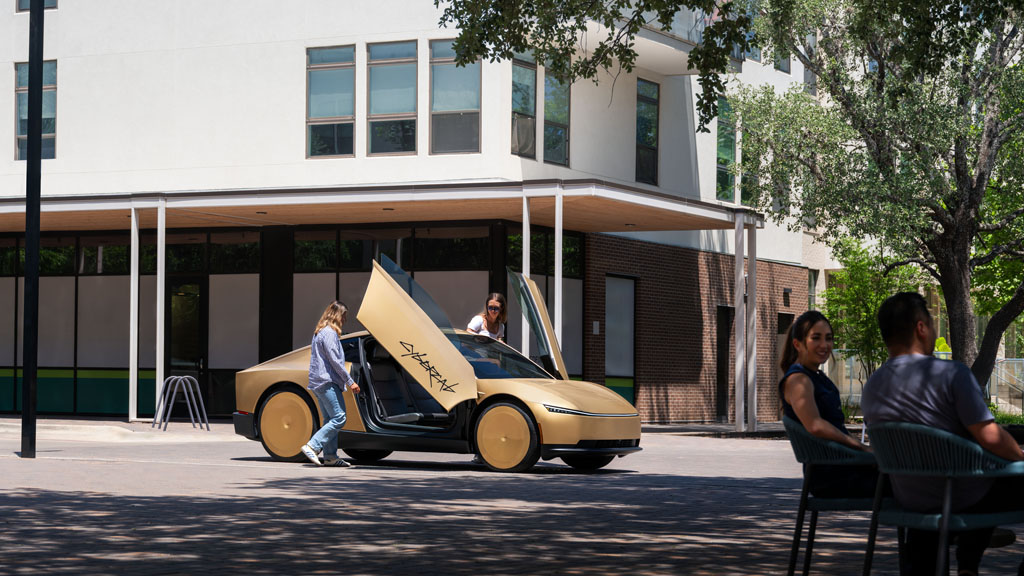
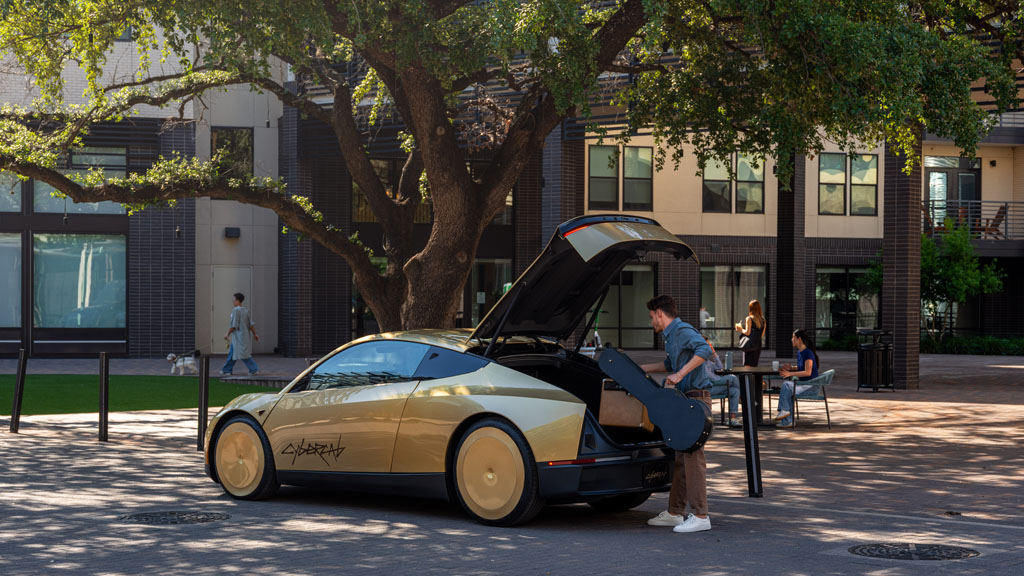
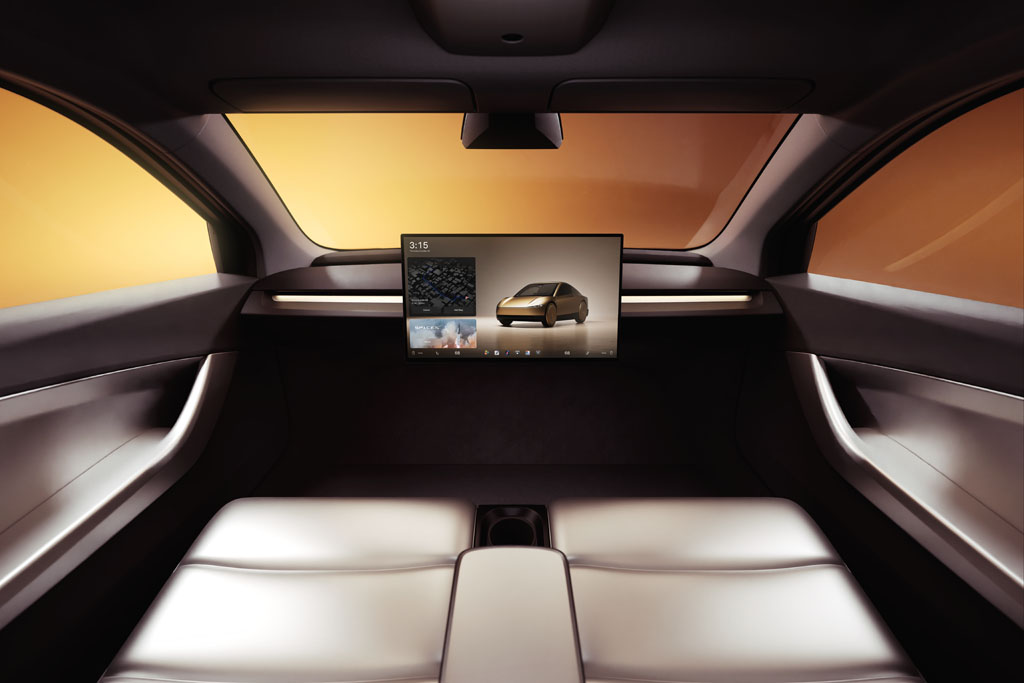
Tesla has made a big point of designing the Cybercab without a steering wheel, accelerator pedal, or brake pedal, but it turns out the purpose-built robotaxi may still have a way to be driven manually. A passenger riding in one of the newly deployed Cybercabs in Austin, Texas, discovered what appears to be an internal virtual joystick interface hidden within the vehicle’s center touchscreen. The discovery adds an interesting wrinkle to Tesla’s vision of a vehicle designed from the outset to operate without conventional driver controls.
The unusual interface was spotted by passenger Matthew Skrzypczack, who shared video of the Cybercab screen showing a joystick-style control along with instructions to press and hold it. The display also prompted the user to swipe up or down to select a gear. Skrzypczack attempted to operate the controls but was unable to get the vehicle moving and eventually contacted Tesla support. Other recent coverage has shown similar controls with functions for steering, acceleration, braking, stopping, and sounding the horn.
Weird #cybercab situation! When I got in the vehicle, the display was in a different configuration with a virtual joystick for manual driving! I have a feeling I wasn’t supposed to see this… but I try to manually drive the vehicle anyway! @wholemars @DirtyTesLa @DavidMoss… pic.twitter.com/mQsoDFDbEJ
— Matthew Skrzypczak (@MatthewSkrzypc1) September 7, 2026
Tesla has not publicly detailed the purpose of the interface, but the most logical explanation is that it is intended for employees, technicians, or service personnel rather than riders. Even a fully autonomous vehicle occasionally needs to be repositioned inside a service facility, charging area, manufacturing plant, or other controlled environment. Giving staff access to low-speed manual controls through the touchscreen would allow them to move a Cybercab without installing a conventional steering wheel and pedal assembly that passengers would never normally use.
That theory is supported by separate footage showing Tesla personnel manually repositioning a Cybercab near a charging station after it stopped too far away for the charging cable to comfortably reach. The hidden interface also appeared alongside camera views associated with Tesla Superchargers, suggesting that the controls may be connected to service or depot operations. Tesla’s own rider information continues to describe the Cybercab as a fully autonomous vehicle with no steering wheel or pedals available to passengers.
The discovery does not fundamentally change what the Cybercab is supposed to be, but it does highlight one of the practical realities of running a driverless fleet. Even a vehicle designed to eliminate human driving entirely still needs some method for technicians or fleet workers to take control when software cannot handle a particular situation. For Tesla, an on-screen joystick may simply be the modern equivalent of a maintenance control panel. For passengers who unexpectedly stumble across it, though, seeing a virtual steering control inside a car advertised as needing no manual controls is certainly enough to raise a few eyebrows.



More Stories
2027 Ford Mustang Mach-E Gets More Range, Lower GT Pricing, and a New Off-Road Trail Trim
Ford is giving Mustang Mach-E buyers a little more to think about for 2027, especially those who have been wanting...
Tesla Plans to Sell Cybercab Robotaxis by End of 2026 Despite Federal Safety Investigation
Would you buy a car that doesn’t have a steering wheel, brake pedal, or even traditional mirrors? Tesla is betting...
Generic OBD2 Readers vs. Foxwell NT530 Plus & NT510 Elite: What’s the Difference?
1. What a Basic OBD2 Reader Actually Does When the check-engine light appears on your dashboard, your first thought might...
The 5 Best Car Audio Brands for Your Ride
A high-quality car audio system has the ability to transform your entire driving experience. Whether you enjoy listening to podcasts,...
Top 7 Car Accident Law Firms in Atlanta, GA
A car crash is powerful enough to alter a person’s life instantly. Victims often face many struggles in recovery, from...
Foxwell NT710: A Practical Diagnostic Tool for Overland & Off-Road Trips
1. When a Warning Light Interrupts a Remote Trail Imagine driving your vehicle along a remote off-road trail. After crossing...