
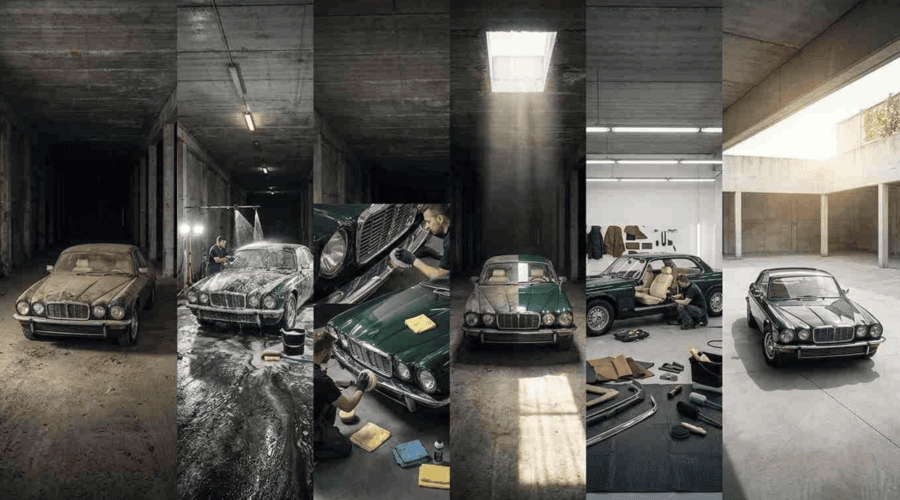
How Car Detailing and Restoration Businesses Are Using AI Video Tools

Over 60,000 car detailing businesses operate in the US alone, and roughly 95 percent of them use social media to reach customers, competing largely on the strength of one thing, how convincingly they can show a transformation actually happened. Higgsfield’s AI Video Generator, is becoming part of how these businesses turn raw footage of real work into the kind of polished transformation video that actually earns a booking.
Why Has Before-and-After Video Become the Core Marketing Format for Detailing Businesses?
Detailing and restoration work is one of the most visual services that exists, and the entire pitch to a potential customer comes down to a single question, can this shop actually deliver the transformation they’re promising. Roughly 74 percent of consumers rely on social media when making purchase decisions, and for a detailing or restoration business specifically, that decision almost always hinges on seeing genuine proof of past work rather than taking a shop’s word for it.
This dynamic is arguably more pronounced in detailing and restoration than in almost any other local service business. A plumber or an accountant’s work is largely invisible once completed, but a detailing or restoration job produces an immediate, visually dramatic before-and-after that’s uniquely suited to social proof. A shop that consistently documents this transformation well is essentially generating its own advertising with every single job, while a shop that doesn’t is leaving genuinely persuasive marketing material sitting unused and unseen by anyone who might have actually booked based on it.
What Makes Time-Lapse Transformation Content Outperform Static Before-After Photos?
A static before-and-after photo pair tells a customer what changed, but a time-lapse of the actual detailing or restoration process shows them how it happened, the paint correction actually removing swirl marks in real time, the interior stain actually lifting out under treatment. Industry marketing guidance consistently finds that time-lapse clips of a full detail outperform static photos specifically because they reach car enthusiasts who genuinely enjoy watching the process, not just the result, extending a video’s reach well past someone actively shopping for a detailing service that particular week.
Why Is This Content Format Especially Important in Such a Crowded, Competitive Market?
With tens of thousands of detailing businesses competing largely within the same local search results and social platforms, standing out increasingly depends on production quality as much as the work itself. A shop offering genuinely skilled paint correction or upholstery restoration can still lose a potential customer to a competitor whose transformation videos simply look more professional and complete, even when the actual quality of work is comparable or better, a dynamic that only grows more pronounced as more shops adopt polished video marketing themselves. Some businesses running paid social ads specifically built around transformation content report returns as high as five dollars for every dollar spent, a genuine indicator of how much this specific content format actually drives bookings when done well.
What Happens When Genuinely Impressive Transformation Work Gets Weak or Rushed Video Coverage?
This is a real, common loss for a detailing or restoration business. A shop might complete a genuinely dramatic transformation, a neglected daily driver brought back to showroom condition, a badly faded classic car’s paint fully restored, and have that work documented only in a few shaky, poorly lit phone clips that don’t actually do the transformation justice. A potential customer scrolling past that footage has no way to appreciate how impressive the actual work was, and the business loses the marketing value of one of its best jobs simply because the video coverage didn’t match the quality of the work itself.
This gap between the quality of the actual work and the quality of its documentation tends to compound over time in a way that’s easy to underestimate. A shop that consistently produces excellent results but weak video coverage builds a much thinner, less persuasive portfolio than a competitor whose work is merely decent but consistently well-documented, and prospective customers making a booking decision are working entirely from what they can actually see, not from the reality of a shop’s true skill level or years of hard-earned experience.
What Are the Traditional Options for Producing Transformation Showcase Videos?
Hiring a videographer for flagship jobs is one option, and some higher-end restoration shops do invest in this for particularly impressive projects worth the extra cost. Filming and editing everything in-house with just a phone is the far more common approach for most detailing businesses, technically simple to shoot but often producing footage that undersells genuinely strong work once it reaches the editing stage.
Where Does DIY Phone Footage Fall Short for a Busy Detailing Shop?
The constraint is time and editing skill, not the raw footage itself. A detailer or restoration technician is already spending hours on the actual physical work, and turning scattered clips shot throughout a job into a properly paced, watchable time-lapse or highlight reel is a genuinely different skill that competes directly with time that could go toward the next vehicle. Industry guidance consistently tells shop owners to keep videos simple, “hold your phone steady, shoot in good light, keep the clip short,” advice that reflects how little spare production time most shops actually have available.
Hiring a videographerDIY phone footage without editing helpAI Video GeneratorCostA real per-job feeFree, but a real time investmentIncluded in one subscriptionTurnaroundDays, often reserved for flagship jobsImmediate, but often roughMinutesConsistency across jobsHigh, if budget allows every jobVariable, depends on available timeHigh, applied consistentlyBest suited forA standout restoration projectAn occasional social postRegular content across every job
How Does an AI Video Generator Fit Into a Detailing Business’s Actual Workflow?
Higgsfield’s AI Video Generator lets a shop take raw footage shot on a phone throughout a real job and turn it into a properly paced, publish-ready transformation video without a separate editing session eating into the workday. For a detailing or restoration business where every job already competes for the owner’s limited time between actual paying work, that speed changes whether a genuinely impressive transformation gets the video treatment it deserves or ends up buried in an unsorted camera roll.
This matters most for exactly the scenario described earlier, a shop completing a genuinely strong transformation but lacking the spare hours to properly edit the footage before the moment’s marketing relevance fades. Being able to turn a job’s worth of raw clips into a finished, shareable video within minutes of the vehicle leaving the bay means a shop’s actual best work is far more likely to reach potential customers while it’s still fresh, rather than sitting unedited until it no longer feels timely enough to post.
What Must Stay Completely Accurate No Matter How Polished the Final Video Looks?
This is the single most important point in this entire article. A detailing or restoration business’s entire marketing credibility rests on customers believing the transformations shown are genuinely real, an actual before condition and an actual after result from real work performed on that specific vehicle. An AI Video Generator should be used to edit, pace, and polish footage of real work that genuinely happened, never to exaggerate how bad a “before” looked, fabricate a transformation that wasn’t actually achieved, or misrepresent the real condition of a vehicle. A customer who discovers a shop’s showcase content doesn’t reflect real, achievable results loses trust immediately, and in an industry built almost entirely on visual proof, that kind of credibility damage is genuinely difficult to recover from.
What Can a Shop Actually Produce Beyond a Single Transformation Video?
Beyond one video, the same real job footage can be adapted into a shorter, punchy clip for social feeds and a longer, more detailed cut for a website portfolio, both built from the same genuine work rather than requiring separate filming sessions. Building a consistent library of real transformation content this way matters for exactly the reason a detailer considering turning their car passion into an actual career or business needs to understand, a shop’s reputation and booking pipeline increasingly depend on a genuine, consistent body of documented work, not a handful of standout posts scattered months apart. This is worth stating plainly, since Higgsfield is sometimes assumed to be a single-purpose video tool. Higgsfield AI is a native AI creative suite, which offers advanced AI image, video, and voice generation, editing, and upscaling tools. This means a shop can also produce supporting before-and-after photos from the same job using the same workspace.
Does This Replace the Actual Skill and Work Behind the Transformation Itself?
No, and this matters as much here as anywhere. What actually earns a detailing or restoration business repeat customers and referrals is the genuine skill and care behind the transformation itself, the paint correction actually removing the damage, the restoration actually bringing a vehicle back to real condition. An AI Video Generator, whether Higgsfield or a comparable platform, speeds up turning that genuine work into content worth sharing. It has no role whatsoever in the actual detailing or restoration process, and no amount of polished video editing compensates for work that doesn’t hold up once a customer picks their car up.
What Should a Detailing or Restoration Business Look for in an AI Video Generator?
A few things matter more here than for general business content. The ability to work well with genuinely varied phone footage, different lighting across a shop bay, footage shot across several hours of a real job, matters most, since that’s the actual raw material most shops are working with. Fast turnaround matters given how many jobs a busy shop completes in a given week. And straightforward use matters given that most detailers’ actual expertise is automotive work, not video editing software.
It’s also worth considering how well a platform handles reformatting the same job footage across different lengths, since a single transformation might need a quick, punchy version for a social feed and a more detailed version for a website portfolio, and producing both from the same raw footage saves real time over editing each version separately from scratch.
What Are the Key Takeaways for Detailing and Restoration Businesses?
● Before-and-after and time-lapse transformation content is the core marketing format for this industry, and video specifically outperforms static photos in reach and engagement.
● In a market with tens of thousands of competing businesses, production quality increasingly affects bookings independent of actual work quality, making weak video coverage a genuine, avoidable loss.
● An AI Video Generator like Higgsfield helps shops turn real job footage into polished transformation videos quickly, without a separate editing session competing with paying work.
● Every transformation shown must represent real, genuine work performed on that specific vehicle. Exaggerating a before condition or fabricating a result is a serious risk to the trust this entire industry’s marketing depends on.
What Are Some Frequently Asked Questions About AI Video Tools for Detailing Businesses?
Can an AI Video Generator make a transformation look more dramatic than the actual work performed?
This should be avoided entirely. A transformation video should accurately reflect the real before and after condition of the vehicle. Exaggerating results risks a customer discovering the mismatch and losing trust in the business’s future claims.
Will using AI to edit our transformation videos make them feel less genuine to potential customers?
Not if the underlying footage and work are genuinely real. Editing and pacing real footage is standard practice, entirely different from generating or fabricating content that misrepresents the actual work performed.
Do we need video editing experience to start producing this kind of content regularly?
No. Describing the pacing and structure you want for your real job footage in plain language is enough to produce a usable result without formal editing training.
Is this only useful for high-end restoration shops, or does it help everyday detailing businesses too?
It helps everyday detailing businesses arguably more, since they typically complete far more jobs per week than a specialty restoration shop and have the most to gain from being able to turn each one into shareable content without a major time investment per job, regardless of whether that content runs through Higgsfield or a comparable platform.
The post How Car Detailing and Restoration Businesses Are Using AI Video Tools appeared first on My Car Heaven.

More Stories
When every kilometre counts, Suzuki puts fuel economy to the test
With fuel prices rising, Suzuki put its fuel-efficient range to the test. Discover how five Suzuki models performed on Pretoria’s...
Brilliant Design Features That Make the Alpine A310 VISION So Exciting
The A310 VISION also demonstrates the design opportunities offered by Alpine’s APP platform. Developed to support future sports cars, the...
Opel STX Concept Brings Active Aerodynamics to the Electric Estate Car
Opel is preparing a new concept car for the 2026 Paris Motor Show. Called the STX, it previews a future...
A Modern Citroën 2CV Sounds Great. Until You Think About the Price
Citroën has revived the 2CV name at the Paris Motor Show, displaying two concepts inspired by its most recognisable small...
Pickup Truck vs SUV Insurance Costs and What Drivers Should Know
Insurance belongs in the buying budget when the shortlist includes a pickup and an SUV. Either vehicle may cost less...
Porsche Mission S Could Get a Manual Transmission and That Makes This Mid-Engine Supercar Even More Exciting
Just when we thought Porsche’s stunning new Mission S concept couldn’t get any more exciting, the German automaker has revealed...