
Iran Vows to Retaliate After US Rolls Out ‘Economic D-Day’ Sanctions

By Owen Evans
Iran has promised to retaliate against the United States after Washington rolled out an “economic D-Day” sanctions blitz aimed at choking the regime and its supporters.
The latest escalation happened on Aug. 24 after Treasury Secretary Scott Bessent announced “Operation Economic Outcast” to sever Tehran’s economic lifelines, including imposing consequences on Iran’s trade partners.
In response, Iranian Economy Minister Ali Madanizadeh said on Monday that Iran is fully prepared for the U.S. sanctions.
“Naturally, the enemies intend to launch an economic terrorist attack on us, but we also have our own tools and know how to play the game. Our defense is no longer so defensive,” he told state television.
He said that neither China nor Russia had “accepted” the U.S. measures.
Brigadier General Hossein Mohebbi, a spokesperson for Iran’s Islamic Revolutionary Guard Corps (IRGC), vowed heavy blows to U.S. vital interests and energy chokepoints if Iran’s infrastructure is threatened, Press TV reported.
The speaker of the Iranian Parliament, Mohammad Bagher Ghalibaf, said the United States “is not in an economic position to further restrict its relations with other countries.”
He said that Iran’s trading partners, “both in the media and through messages sent to us, have made it clear that they don’t take these statements into account anywhere.”
Bessent said on Monday that an “economic D-Day” is coming for the Iranian regime.
“Our objective is to sever every economic lifeline that sustains this tyrannical regime until Tehran stands alone,” he wrote in an Aug. 24 post on X
Bessent said that any “entity that facilitates money laundering on behalf of Iran will be removed from the U.S. Dollar system.”
He warned that those who stand with the United States will “reap the rewards of our partnership” while those who “tether themselves to the Iranian regime” should expect major economic isolation.
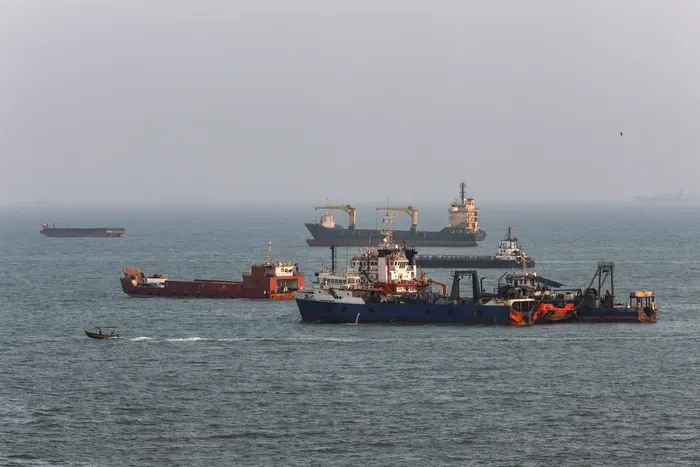
The Trump administration’s “economic D-Day” measures against Tehran came a day before Iran threatened on Aug. 23 to fine or confiscate tankers that the regime says have violated its rules for navigating through the Strait of Hormuz.
As part of Iran’s clampdown on commercial tankers in the strait, the Persian Gulf Strait Authority warned on Sunday that vessels engaging in ship-to-ship transfers or transshipments with ships restricted by the agency would be added to the list.
The newly established Iranian agency also warned that ships seeking removal from the list of “offending vessels” would need to submit a request and an explanation.
Iran and the United States signed an interim deal on June 17 aimed at ending the war that began with U.S. and Israeli attacks on Iran in late February, but the Islamabad memorandum of understanding seems to have failed.
The war of words continues despite Pakistan, the mediator, saying it made “significant progress” in the latest round of talks with Tehran, Pakistani officials said on Tuesday.
“The Iranian President candidly shared his Government’s perspective and concerns, and we had a very constructive exchange on the issues involved,” Pakistani Interior Minister Mohsin Naqvi, who accompanied army chief Asim Munir to Tehran, said in an Aug. 24 post on X.
“Significant progress was made, and the meeting concluded on a highly positive note.”
President Donald Trump told reporters on Aug. 21 that he believes Iran is ready to reach an agreement, but that any deal must include terms acceptable to the United States, which he has previously said means Tehran cannot be allowed to have a nuclear weapon.
“They would love to make a deal, but they’re not ready to make the right deal in my opinion,” the president said.
Reuters, Timothy Frudd, and Aldgra Fredly contributed to this report.
More Stories
RFK Jr. Announces American-Made Seafood Label at Midterm Rally in Florida
By Troy Myers Health and Human Services (HHS) Secretary Robert F. Kennedy Jr. has announced a new American-made label for...
France on Fire: Who Is Behind the Riots, Who Benefits From the Chaos—and Could a Fallen Republic Put Nuclear Weapons at Risk?
By Stephen Zogopoulos, Founder & Chief Executive Officer, USNN World News France Is Not Simply Protesting. The Republic Is Facing...
US to Tap Petroleum Reserve for 400,000 Barrels in Exchange to Shore Up Louisiana Refinery
By Kimberly Hayek Federal officials authorized the release of up to 400,000 barrels of crude oil from the Strategic Petroleum...
Trump Calls On Data Center Developers to Pay Communities a Dividend
By Chris Summers President Donald Trump has suggested that companies building data centers in the United States should offer local...
Why America Has a Housing Shortage Alongside an Abundance of Empty Homes
By Autumn Spredemann Homes sit empty across the United States while potential owners and renters face affordability challenges and housing...
Riots, Rates, and Risks—The Economic Roots of France’s Unrest
By Andrew Moran Unrest has gripped France as nationwide protests over the rising cost of living have swept across the...