
Science department scrapped, but business cheers Reynolds return

The abolition of an entire Whitehall department rarely counts as good news for the firms that depend on it. Yet the business world’s response to Andy Burnham’s decision to scrap the Department for Science, Innovation and Technology has been strikingly split: dismay at the loss of a respected science minister, relief at the return of a familiar face to the business brief.
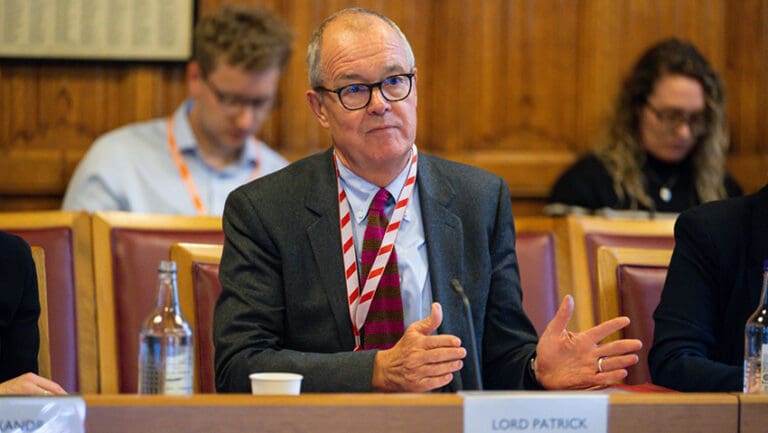
Lord Vallance of Balham has stepped down as science minister, and the department’s responsibilities have been folded into an enlarged Department for Business and Trade. In his place, Jonathan Reynolds returns as business secretary, ten months after being reshuffled out of the role.
For the thousands of smaller firms clustered in Britain’s growth sectors, from life sciences start-ups to advanced manufacturers, the reshuffle raises one immediate question: who in government now champions science?
Vallance, a former president of research and development at GSK and the government’s chief scientific adviser between 2018 and 2023, was prized for exactly that. “After nearly a decade in government I am stepping down as a minister, for personal reasons,” he said.
His exit lands at a delicate moment. The life sciences sector, heavy with the kind of high-growth SMEs the industrial strategy is meant to nurture, has spent two years fretting about Britain’s slide down the global life sciences investment rankings.
One senior investor put the concern bluntly: “It’s a shame that we have lost a highly competent and effective minister … If we claim to be a scientific superpower, and if we’re going to compete scientifically against the United States and China … then we need someone within government who’s going to be a champion for that.”
Richard Torbett, chief executive of the Association of the British Pharmaceutical Industry, said Vallance had been “instrumental in beginning to turn around international sentiment towards the UK as a life sciences destination”, adding that he “leaves big shoes to fill”. Vallance is also credited with helping launch the Health Data Research Service, the long-promised effort to open up NHS data to medical researchers.
Industry’s chief anxiety now is continuity. Firms are pressing the new government to honour an agreement to double spending on innovative medicines over the next decade in exchange for a three-year tariff exemption on pharmaceutical exports to the US, a deal seen as central to luring international investment. “Any rowing back on that would send an absolutely terrible signal internationally, just when sentiment is really turning around, and people are talking positively again about the UK,” one source warned.
Chris Hollowood, chief executive of the life sciences investor Syncona, captured the unease about being absorbed into a bigger department. Its backing “could be helpful”, he said, “but if we are just diluted among other priorities then that would be concerning”. Notably, the move to close the science department has already drawn a backlash from the tech sector.
If life sciences is nervous, the wider business lobby is more upbeat, largely because of who is now in charge. Reynolds oversaw the creation of the industrial strategy that manufacturers have broadly backed, and his return is read as a signal of intent.
Louise Hellem, chief economist at the CBI, said he “brings a clear understanding of the challenges facing business and will be able to hit the ground running, particularly when it comes to delivering the industrial strategy launched during his previous tenure”.
Stephen Phipson, chief executive of Make UK, set the bar for smaller manufacturers: “Success will be measured by whether manufacturers see lower costs, fewer barriers to trade and a more competitive environment in which to invest, make and export with confidence.”
Ben Fletcher of Logistics UK called the intervening year “a real wasted opportunity” and Reynolds’s recall “a hugely positive move”.
For SMEs, the message is mixed but clear enough. A pro-business signal from the top is welcome. What smaller firms in science and technology will watch for is whether their sector still has a voice once the departmental nameplate has come down.


More Stories
Burnham hands EV targets decision to Haigh over wife’s industry links
Andy Burnham has stepped aside from a decision on Britain’s electric car sales targets because of a potential conflict of...
Roobet Philippines Open Pool Championship Kicks Off in Quezon City
The venue is part of what makes this such a special event. Hosted in the atrium of the massive Gateway...
Europe’s Late Effort To Save Its Industry
Openness caused a demand for global supply chains and a shift of production to lower-cost countries as well. Europe wasn’t...
6 Best Sites to Buy LinkedIn Followers, Likes and Connections in UK
Even with valuable content, getting noticed can be difficult when your follower count is low and your posts receive little...
6 Best Sites to Buy YouTube Views, Subscribers and Likes in UK
That is why some creators and businesses choose to buy YouTube views, subscribers and likes. These services increase visible engagement,...
How much development capacity is sitting in your deposit?
New research from property finance platform Brickflow, published in full in its report “The UK’s Most Expensive Mistake”, suggests the...