
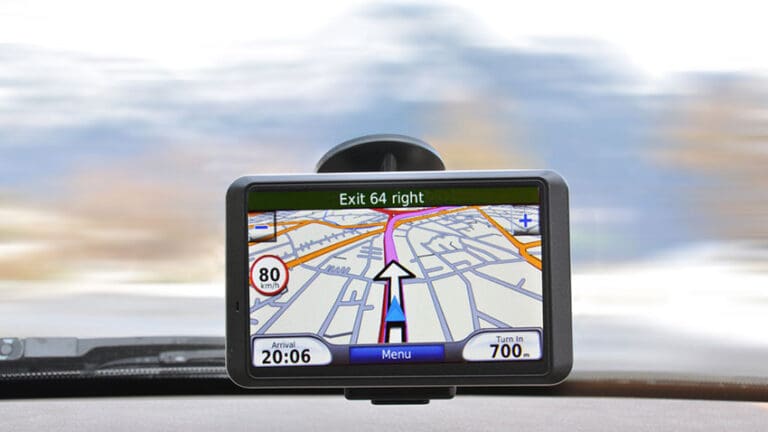
The sat-nav maker Google ‘killed’ now powers Microsoft and Uber

The sat-nav maker written off when Google made navigation free in 2009 is now the location technology inside Microsoft, Uber and Huawei, and its comeback offers one of the sharpest survival lessons any UK business owner will read this year.
TomTom’s rise had been extraordinary: revenue grew from €40 million to €1.8 billion in five years, and almost 10 million people owned one of its devices. Then Google launched free turn-by-turn navigation and the £499 gadget on the dashboard looked obsolete overnight.
The share price collapsed 97 per cent. Worse, months earlier the company had paid €2.9 billion, at 28 times EBITDA and largely funded with debt, for map maker Tele Atlas. Recovery looked impossible.
Yet that seemingly reckless acquisition turned out to be the one asset Google could not copy: one of only two digital maps of the world. TomTom stopped selling navigation devices and started licensing location technology instead. Nearly two decades on, its full year 2025 results show revenue of €555 million, gross margins of 88 per cent against roughly 50 per cent in the hardware era, its first operating profit since 2020 and €263 million of net cash with zero debt.
For smaller firms facing their own giant-shaped problem, the playbook breaks down into three moves.
Protect the capability, not the product.
TomTom’s founders bet that their maps, continuously improved by billions of GPS observations from those 10 million sat-navs, were the real business. They kept Tele Atlas chief executive Alain De Taeye, who led mapmaking for the next 18 years. And when revenue fell 60 per cent, they did not retrench: the founders put in €169 million of their own money and increased annual R&D almost tenfold to €347 million. They invested through the crisis, not after it. It is a lesson in conviction for any owner tempted to slash spending at the first sign of trouble, and a reminder that the most innovative firms treat technology investment as a route to survival, not a luxury.
Win by partnering with your rival’s enemies.
Uber, Microsoft and Huawei all chose TomTom precisely because it was not Google. Chief executive Harold Goddijn called TomTom the “Switzerland of navigation”, and neutrality became the advantage. Google even kept recruiting customers for its rival: developers defected after a 14x API price rise, Huawei arrived after the US ban. Google built the consumer market; TomTom became the infrastructure underneath everyone who did not want to depend on it. Plenty of British firms have found the same, which is why specialist businesses continue to outperform larger competitors in markets the giants supposedly own.
Change the economics before you restructure.
Revenue fell 60 per cent but gross margins nearly doubled to 88 per cent. The Orbis platform replaced quarterly map releases with a continuously updated AI system. Only then came the cuts, with 800 roles removed. Technology first, cost base second. Mike Schoofs sold off the sat-nav business, built the maps business, and in 2026 the architect of the commercial pivot became chief executive. As other firms embracing a strategic pivot have discovered, sequencing matters as much as the destination.
When Google made navigation free, TomTom made maps indispensable. The company everyone thought was finished is quietly showing everyone else the way.


More Stories
Burnham hands EV targets decision to Haigh over wife’s industry links
Andy Burnham has stepped aside from a decision on Britain’s electric car sales targets because of a potential conflict of...
Roobet Philippines Open Pool Championship Kicks Off in Quezon City
The venue is part of what makes this such a special event. Hosted in the atrium of the massive Gateway...
Europe’s Late Effort To Save Its Industry
Openness caused a demand for global supply chains and a shift of production to lower-cost countries as well. Europe wasn’t...
6 Best Sites to Buy LinkedIn Followers, Likes and Connections in UK
Even with valuable content, getting noticed can be difficult when your follower count is low and your posts receive little...
6 Best Sites to Buy YouTube Views, Subscribers and Likes in UK
That is why some creators and businesses choose to buy YouTube views, subscribers and likes. These services increase visible engagement,...
How much development capacity is sitting in your deposit?
New research from property finance platform Brickflow, published in full in its report “The UK’s Most Expensive Mistake”, suggests the...