
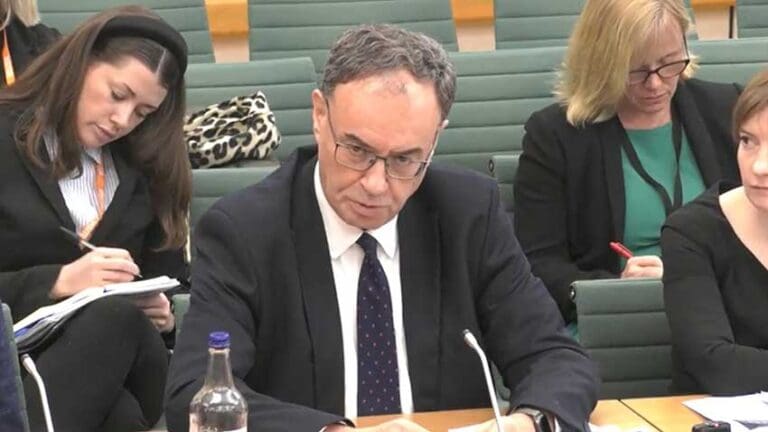
Cutting rates is ‘off the table’, Bailey warns as Iran war stokes inflation

Andrew Bailey has told business leaders that cutting interest rates is “off the table at the moment”, a clear signal that the Bank of England will keep the cost of borrowing on hold when its rate-setters meet at the end of the month.
The Governor said that while financial markets had spent the early part of the year betting on further reductions, the war in Iran had forced policymakers to press pause. Speaking at the European Central Bank’s annual forum in Sintra, Portugal, Mr Bailey put it bluntly: “There was an expectation that we would cut rates this year. That was off the table in March, and it’s off the table at the moment.”
For the millions of small and medium-sized firms that have spent the past 18 months waiting for cheaper credit, it is an unwelcome message. Markets now expect the Bank to sit tight on Bank Rate at 3.75 per cent for the remainder of the year, leaving overdrafts, asset finance and commercial mortgages pricier for longer.
Mr Bailey was at pains to stress that the pause is not a hawkish turn. He confirmed he had chosen not to back any increase so far this year, pointing to mounting evidence that both the economy and the jobs market are losing momentum.
“We’ve got a softening economy, so we’re seeing a softening labour market, we’re seeing some softening of activity,” he said. “We had that before the hostility broke out in the Gulf.”
That is the awkward bind facing Threadneedle Street. On the domestic evidence alone, the case for loosening policy is building. But the surge in oil and gas prices triggered by the conflict threatens to push inflation higher, and the Bank is unwilling to add fuel to that fire. By holding in March, Mr Bailey noted, the Bank had already taken “that loosening off the table”, with mortgage rates climbing by a full percentage point as a result.
The stance echoes the caution the Bank flagged earlier in the summer, when it warned of “elevated” global uncertainty after leaving rates on hold. It also chimes with the mood among firms themselves, with business confidence weakening as the Middle East conflict drags on.
The members of the Bank’s Monetary Policy Committee, who set rates, “will be looking at all the evidence again” when they convene on July 30, the Governor said. At their last meeting on June 18, they voted 7-2 in favour of holding at 3.75 per cent, a decision confirmed in the Bank’s own June monetary policy summary.
What is keeping policymakers awake is not the headline number but what economists call the second-round effects, the risk that a one-off energy spike becomes baked into wages and everyday prices. “We’re very focused on the risks of pass-through of the energy prices to indirect effects, and things like food prices and the second round effects,” Mr Bailey said. “We obviously don’t want inflation to become embedded.”
Inflation stood at 2.8 per cent in May, comfortably within touching distance of the 2 per cent target. But it is now forecast to climb back towards 4 per cent later this year as the Iran war feeds through to the cost of energy for households and firms alike. That trajectory would have been all but unthinkable in the spring, when markets were pricing in a steady procession of cuts. The shift has been dramatic enough that some analysts have gone as far as to suggest the Bank could raise rates as the oil shock from the Middle East war drives inflation fears.
There is a peculiarly British wrinkle in all this. Because the UK’s energy price cap resets only every three months, the impact of soaring wholesale gas prices on the inflation figures is delayed rather than immediate, a lag that makes the Bank’s job of reading the runes even harder.
In May, the regulator Ofgem raised the cap on annual household energy bills by £221 to £1,862 following the surge in oil and gas prices. That new price cap took effect on July 1 and runs until September 30, meaning the full inflationary hit is still working its way through the system.
For SME owners, the practical takeaway is a hard one: the cheaper borrowing many had penciled into their 2026 cash-flow plans is not coming any time soon, and rising energy costs will squeeze margins on both sides of the ledger. The 30 July decision is unlikely to bring relief. On current form, the best businesses can hope for is that the Bank does not blink the other way.


More Stories
Burnham hands EV targets decision to Haigh over wife’s industry links
Andy Burnham has stepped aside from a decision on Britain’s electric car sales targets because of a potential conflict of...
Roobet Philippines Open Pool Championship Kicks Off in Quezon City
The venue is part of what makes this such a special event. Hosted in the atrium of the massive Gateway...
Europe’s Late Effort To Save Its Industry
Openness caused a demand for global supply chains and a shift of production to lower-cost countries as well. Europe wasn’t...
6 Best Sites to Buy LinkedIn Followers, Likes and Connections in UK
Even with valuable content, getting noticed can be difficult when your follower count is low and your posts receive little...
6 Best Sites to Buy YouTube Views, Subscribers and Likes in UK
That is why some creators and businesses choose to buy YouTube views, subscribers and likes. These services increase visible engagement,...
How much development capacity is sitting in your deposit?
New research from property finance platform Brickflow, published in full in its report “The UK’s Most Expensive Mistake”, suggests the...