
Judge Orders Month-Long Pause on Process for Alberta Separation Referendum Petition

By Olivia Gomm
An Alberta judge has granted a one-month stay on the validation process of a petition to trigger a referendum on the province separating from Canada, after hearing from multiple First Nations who argued the process violates treaty rights.
Justice Shaina Leonard of the Court of King’s Bench in Edmonton said in a written decision issued April 10 that the referendum petition’s organizers can continue to collect signatures, but the results of the petition can’t be announced or proceeded with until an overall decision is made in the court case.
The Sturgeon Lake Cree Nation, the Athabasca Chipewyan First Nation, and the Blackfoot Confederacy are challenging the constitutionality of Alberta’s citizen-initiated referendum process, saying its use by those who wish to separate from the province without government consultation with indigenous leaders is a violation of treaty rights.
Lawyers for the First Nations and for the provincial and federal governments were in the Edmonton court last week for hearings on the case.
The First Nations argued that there would be serious harm and damage to the treaty relationship between First Nations and the Crown without a pause on the referendum process.
Leonard said in her decision to pause that she was satisfied with the First Nations’ arguments, and noted she could potentially decide the province has a duty to consult with indigenous leaders before referendum petitions are issued.
Should the court determine that Elections Alberta’s decision to issue the petition was “unreasonable, and ought not have been made,” or that provisions of the citizen-initiated referendum process are “unconstitutional,” it could be “too late for those determinations to have any practical meaning,” she said, adding that the alleged harm is “irreparable and ongoing.”
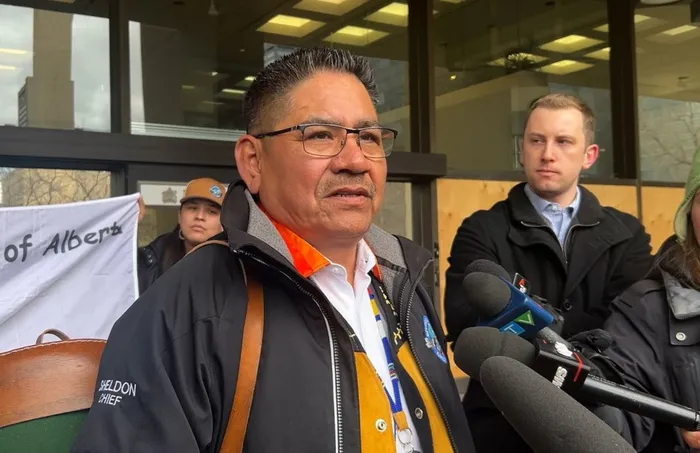
The Athabasca Chipewyan First Nation welcomed Leonard’s decision in an April 10 statement.
“We are standing up for our Treaties, for our people and for the land that is all under threat through this referendum effort,” Chief Allan Adam said. “We are doing this for all Albertans, especially children and youth, who deserve to grow up in a country that respects the rule of law and recognizes the supremacy of the constitution.”
Jeff Rath, a lawyer for the group behind the referendum petition campaign Stay Free Alberta, told media that the April 10 decision doesn’t have much effect on their efforts.
The group has until May 2 to collect the required 177,732 signatures for the petition to qualify as a referendum.
Rath told The Epoch Times in late March that the group has already collected enough signatures to meet the threshold.
Leonard said her final ruling will be issued no later than a week after May 2.
Rath said he was surprised Leonard issued a decision less than 24 hours after the hearings ended, and noted he expects the decision will motivate those in the referendum movement.
Alberta Premier Danielle Smith’s government has said the question will be put to a vote if the group’s petition is successful in gathering enough signatures and follows the legal process. She has previously noted that she does not support separating from Canada, but supports the right of Albertans to voice their opinions on the issue.
Once the group submits the petition, Elections Alberta can’t verify the names, announce the petition results, or refer the petition to the provincial government to potentially call a referendum until after Leonard issues her final ruling on the question of constitutionality.
First Nations Position
The Sturgeon Lake Cree Nation submitted a statement of claim in January against the Crown, the federal attorney general, and Alberta’s chief electoral officer, alleging all three parties are failing to uphold Treaty 8 rights.
Treaty 8 was signed in 1899 by the Crown and various Cree, Dene, Dane-zaa and Métis peoples, and is the largest land agreement of the Numbered Treaties in Canada, encompassing more than 800,000 square kilometres of land.
Sturgeon Lake Cree Nation argues that if Alberta were to claim sovereignty over the territory encompassed by Treaty 8 and the associated laws that govern it, it would breach indigenous peoples’ treaty with the Crown.
The First Nation also takes issue with Alberta’s Bill 14, which reduced the requirements for citizen-initiated petitions to request referendums, accusing the provincial government of passing the legislation so it could “knowingly and recklessly” contradict the First Nation’s right to consent to the province’s separation.
The First Nation has called on the Court of King’s Bench to suspend the petition, urged the province to revoke sections of Bill 14, and is seeking $250,000 in compensation to address the First Nation’s legal expenses.
Stay Free Alberta has said the petition will allow “all eligible Albertans to have a say in the future of our province.” It has also promised that Alberta, as an independent nation, would demonstrate greater respect for indigenous rights compared to Canada, and would ensure First Nations are included in all negotiations.
Jennifer Cowan and The Canadian Press contributed to this report.

More Stories
US to Blockade Strait of Hormuz After US–Iran Talks End Without Deal, Trump Says
By Jacki Thrapp The U.S. Navy will begin blockading the Strait of Hormuz after peace talks with Iran ended without...
US Property Taxes Grow 3 Percent on Average in 2025, Outpacing Inflation
By Rob Sabo Property taxes are rising across the United States and, on average, have outpaced inflation. Homeowners in 2025...
Shane Lowry Makes Golf History With His 2nd Masters Hole-in-One
By Ross Kelly There are millions of casual golfers around the world who dream some day of recording an ace...
Treasury, IRS Propose Rules for 1 Percent Remittance Tax on Some Money Sent to Foreign Countries
By Naveen Athrappully The Internal Revenue Service and the Department of the Treasury proposed regulations on Friday regarding the new...
Hezbollah Leader Says Group Would Continue to Fight Israel After Strikes
By Jack Phillips The leader of Lebanese terrorist organization Hezbollah has said that his group would continue to fight Israel,...
IBM to Pay $17 Million to Settle Allegations of Discrimination
By Jacki Thrapp IBM will pay millions of dollars to resolve allegations that it failed to comply with anti-discrimination requirements...