
Trump Says US ‘Loading up the Ships’ Ahead of Iran Talks, Signals Military Option If Diplomacy Fails

By Tom Ozimek
President Donald Trump said the United States is preparing military options if negotiations with Iran fail to produce a deal, as delegations from both countries arrived in Pakistan to hold high-stakes talks that could lead to peace—or a resumption of hostilities.
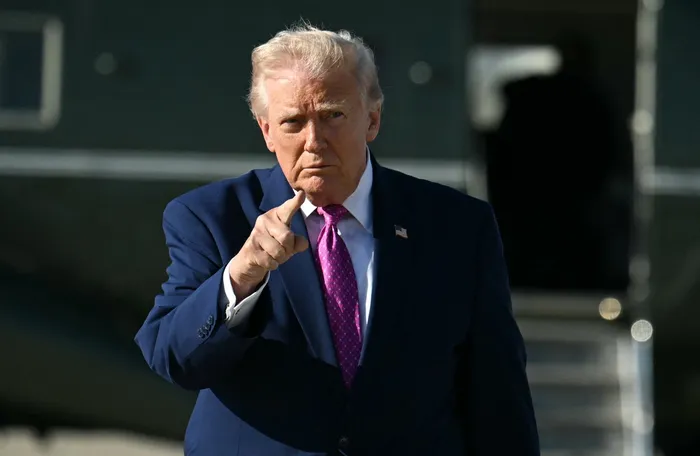
“We’re loading up the ships with the best ammunition, the best weapons ever made,” Trump told the New York Post in an April 10 phone interview. “And if we don’t have a deal, we will be using them—and we will be using them very effectively.”
The remarks came hours before Vice President JD Vance departed for Islamabad, where U.S. and Iranian delegations are set to begin indirect negotiations aimed at ending more than a month of conflict and potentially turning a fragile ceasefire into a lasting truce.
“We’re going to find out in about 24 hours,” Trump said. “We’re going to know soon.”
Talks Begin Under Military Shadow
The negotiations, mediated by Pakistan, are expected to focus on core disputes over Iran’s nuclear program, control of the Strait of Hormuz, and the scope of the ceasefire, among other issues.
Vance is leading the U.S. delegation alongside special envoy Steve Witkoff and adviser Jared Kushner. Both the U.S. and Iranian teams held separate meetings with Pakistani Prime Minister Shehbaz Sharif ahead of the talks, which are expected to begin later in the day.
Sharif’s office said Pakistan remains committed to facilitating a lasting resolution to the conflict, while U.S. officials have expressed cautious optimism.
“The Prime Minister expressed the hope that these talks would serve as a stepping stone toward durable peace in the region,” Sharif’s office said in a statement on social media, while sharing a video showing Pakistani officials greeting Vance ahead of meetings.
Vance told reporters as he departed Washington on Friday that he thinks the outcome is “going to be positive” but warned that if Iran negotiates in bad faith, there would be consequences.
“If they’re going to try and play us, then they’re going to find that the negotiating team is not that receptive,” he said.
Trump told the New York Post on Friday that they have a “reset going” on relations with Iran, though he cautioned that deception on the part of Iranian officials about key issues like nuclear enrichment could lead the talks to collapse.
“You’re dealing against people that we don’t know whether or not they tell the truth,” Trump said. “To our face, they’re getting rid of all nuclear weapons, everything’s gone. And then they go out to the press and say, ‘No, we’d like to enrich.’ So we’ll find out.”
Retired Gen. Jack Keane recently said that Trump is well aware of past Iranian deception and is confident that the president “will not make a bad deal.”
Nuclear Demands, Hormuz at Center of Dispute
Trump has made clear that eliminating Iran’s nuclear capabilities remains Washington’s top priority, saying Tehran must halt uranium enrichment and hand over existing stockpiles under international supervision.
The talks are also expected to address the Strait of Hormuz, a vital global shipping lane through which roughly one-fifth of the world’s traded oil typically passes.
Iran’s effective closure of the strait since the start of the conflict has disrupted global energy markets, driving oil prices sharply higher and contributing to inflation pressures in the United States.
Trump has said that he considers Iran’s overall leverage in the talks limited, saying Tehran has “no cards” beyond attempting to restrict maritime traffic.
“The only reason they are alive today is to negotiate,” the president wrote in a recent social media post, accusing Iran of using the waterway for extortion.
Iran Signals Distrust, Sets Conditions
Foreign Minister Abbas Araghchi said Tehran is approaching the negotiations with “complete distrust,” citing what he alleged as repeated U.S. breaches of prior commitments, according to Iranian state-run Press TV.
Iran is represented at the Islamabad talks by Araghchi and Parliament Speaker Mohammad Bagher Ghalibaf.
Ghalibaf has outlined preconditions for negotiations, including a ceasefire in Lebanon and the release of frozen Iranian assets—demands that have complicated the diplomatic process.
Iran’s embassy in South Africa said in a post on X early Saturday that Tehran’s preconditions to start talks “have been accepted,” though it provided no further details.
Tehran has also insisted that any broader agreement include an end to Israeli military operations against Hezbollah terrorists in Lebanon, a position rejected by Washington and Israel, which view the Lebanon front as separate from the current truce.
At the same time, the United States has agreed to mediate ceasefire talks between Lebanon and Israel, with initial contacts already made and a follow-up meeting scheduled in Washington next week.
Trump’s latest warning about possible re-escalation if the talks fall through comes as a 14-day ceasefire, brokered by Pakistan and announced April 7, remains in place but under strain.


More Stories
IBM to Pay $17 Million to Settle Allegations of Discrimination
By Jacki Thrapp IBM will pay millions of dollars to resolve allegations that it failed to comply with anti-discrimination requirements...
Artemis II Mission Ends With Splashdown Off San Diego
By T.J. Muscaro HOUSTON—Humanity’s first adventure to the moon in more than 50 years is complete. Artemis II, NASA’s 10-day...
Trump Warns Iran Has ‘No Cards’ Except Strait of Hormuz in Peace Talks
By Jack Phillips President Donald Trump on Friday said that the Iranian regime has very few negotiating options ahead of...
State Department Settles Lawsuit Alleging It Censored Conservative Outlets Under Biden
By Jacki Thrapp The Department of Justice (DOJ) settled a lawsuit that accused the Biden administration of censoring speech by...
Supreme Court Upholds Reversal of Death Declaration in Case of Man Found to Be Alive
By The Canadian Press The Supreme Court of Canada has affirmed a judge’s decision to annul the declaration of a...
US Annual Inflation Shoots Up to 3.3 Percent, Highest Level Since May 2024
By Andrew Moran A spike in energy prices sent the annual U.S. inflation rate to its highest level since May...