
NHTSA Closes Tesla Smart Summon Probe but Bigger Self-Driving Questions Remain

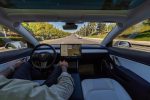
Tesla received a bit of positive news this week as the National Highway Traffic Safety Administration officially closed its investigation into the company’s Actually Smart Summon feature. The probe covered nearly 2.6 million vehicles and focused on Tesla’s remote driving function, which allows owners to move their cars over short distances using a smartphone app in places like parking lots and private property. After reviewing the issue, NHTSA determined the feature was tied mainly to low-speed incidents involving minor property damage rather than serious crashes.
According to the agency, there were around 100 reported crashes linked to Smart Summon, but none involved injuries, fatalities, airbag deployments, or vehicles being towed away. Most of the reported incidents involved Teslas striking obstacles such as parked cars, garage doors, or gates, often early in a Summon session when visibility or driver awareness of the surroundings was more limited. Based on that pattern, regulators concluded the frequency and severity of the incidents did not justify further action.
Tesla also appears to have helped its case through a series of software updates aimed at improving the system’s performance. Those updates were designed to sharpen obstacle detection, identify when cameras may be blocked, and improve how the vehicle responds to dynamic objects like gates. NHTSA also pointed to changes intended to reduce issues caused by weather-related interference such as snow or condensation affecting camera visibility.
While the closure of this probe is certainly a favorable development for Tesla, it does not mean the company is free from regulatory pressure. NHTSA is still closely examining Tesla’s Full Self-Driving system, and that investigation has become much more serious. Last month, the agency moved that review into an engineering analysis covering roughly 3.2 million vehicles, a step that often comes before a potential recall. Regulators have also raised concerns about whether Tesla’s system can contribute to behavior that violates traffic safety laws.
That is what makes this latest development more of a limited win than a sweeping victory. Smart Summon may have avoided deeper regulatory consequences, but Tesla’s larger self-driving ambitions remain under intense scrutiny. For now, the company can point to software improvements and a closed probe as a positive sign, but the more important battle over Full Self-Driving and real-world safety is still far from over.

More Stories
Porsche Teases New 911 Variant for April 14 and It Could Be the Purist Pick of the Lineup
Porsche has once again found a way to keep the 911 conversation interesting, and this latest teaser already has enthusiasts...
Jay Leno’s 2026 Corvette ZR1X Makes a Strong Case as the Ultimate Performance Bargain
Jay Leno has driven just about everything worth driving, so when he takes delivery of a new car and starts...
Ultimate Ford GT40: Volume 2 Delves Deeper into the Legend
Porter Press is back with a new chapter in its epic journey through GT40 history. Ultimate Ford GT40: Volume 2...
BMW Isn’t Ready to Let the Manual Die Just Yet
For as much as the auto industry likes to talk about the future, there is still something deeply satisfying about...
Next-Gen Nissan GT-R Could Return as a Hybrid V6 Hero With a Surprisingly Attainable Price
The Nissan GT-R may be gone for the moment, but it certainly does not sound forgotten. In fact, after Car...
Senators Push to Keep Chinese Automakers Out of the U.S. Market
The political fight over Chinese automakers just took another turn, and this one goes right to the White House. Three...