
Iran Says It Will Retaliate If Civilian Infrastructure Is Targeted Amid Trump Deadline

By Jack Phillips
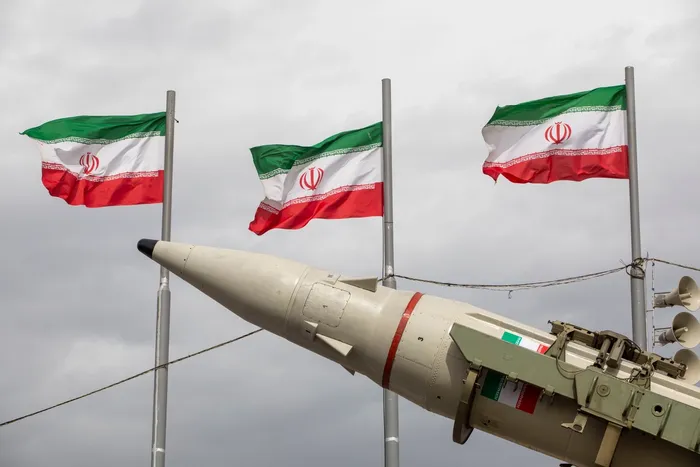
Iranian officials on Sunday said the country would carry out more forceful attacks on targets if the United States and Israel target the country’s civilian infrastructure in an apparent response to warnings issued by President Donald Trump over the weekend.
Trump, in several warnings on Saturday and Sunday, said that the Iranian regime must reopen the Strait of Hormuz or the U.S. military would launch attacks on the country’s civilian infrastructure. Last month, he gave Tehran several ultimatums on reopening the strait, with his latest deadline for the regime falling on 9 p.m. ET Monday.
On Sunday, Trump warned that “Tuesday will be Power Plant Day, and Bridge Day, all wrapped up in one, in Iran. There will be nothing like it!!!” He demanded that the regime open up the strait or “you’ll be living in Hell – JUST WATCH,” according to a post he made on Truth Social.
Trump extended his previous deadlines for reopening the Hormuz Strait after reporting progress toward ending the war. Since the start of the conflict, the strait has been effectively shut down, which has driven up oil prices worldwide.
But Iran’s Islamic Revolutionary Guards Corps (IRGC) said that any future attacks on its infrastructure would launch more severe retaliatory strikes, according to an article published by state-run PressTV on Sunday.
“If attacks on civilian facilities are repeated, the next phase of the operation will be more intense and broader in scope,” the IRGC warned via PressTV, without elaborating.
On Sunday morning, Iran’s parliamentary speaker, Mohammad-Bagher Ghalibaf, appeared to respond to Trump’s latest message on Truth Social, saying that “your reckless moves are dragging the United States into a living HELL for every single family, and our whole region is going to burn.”
“The only real solution is respecting the rights of the Iranian people and ending this dangerous game,” he wrote in a post on X.
Trump’s Monday deadline centers on growing alarm over Iran’s grip on the Strait of Hormuz, which is critical for shipments of oil and gas from the Persian Gulf to Europe and Asia. It’s also key for delivering humanitarian supplies. Some ships have paid Iran for passage.
Iran has threatened to attack civilian infrastructure in nearby countries in the region, claiming it is being used to fuel U.S.–Israeli military operations. Last week, the regime warned it would attack American tech companies who are doing business in the Middle East, including Google, Meta, Microsoft, Amazon, and others.
Oman’s Foreign Ministry said that deputy foreign ministers and experts from Iran and Oman met to discuss proposals to ensure “smooth transit” through the strait. Oman has often served as a mediator between the U.S. government and the Iranian regime.
Egypt said that Foreign Minister Badr Abdelatty had spoken by phone with U.S. envoy Steve Witkoff and Iranian Foreign Minister Abbas Araghchi, as well as with Turkish and Pakistani counterparts who are helping to mediate.
Concrete and rebar dangle from a damaged B1 bridge, a day after it was destroyed by an airstrike, west of Tehran in Karaj, Iran, on April 3, 2026. Majid Saeedi/Getty Images
Pakistan’s Foreign Ministry said it had conveyed to Araghchi that Islamabad supports “all efforts aimed at de-escalation.” Islamabad has said that it would soon host talks between the United States and Iran.
The threats come as Trump announced that a U.S. service member who was missing since Iran shot down a fighter jet on April 3 has been rescued after a U.S. search-and-rescue operation following the crash of the F-15E Strike Eaglejet. Iran had promised a reward for anyone who found the pilot. A second crew member was located earlier.
The jet was the first U.S. military aircraft to have crashed in Iranian territory since the conflict started in late February. In March, Kuwaiti officials said that several U.S. military aircraft were shot down in a friendly fire incident.
The Associated Press contributed to this report.

More Stories
How Career-Focused College Scholarships for Students Help Today’s Graduates Afford College and Hit the Workforce Job-Ready
College is a big investment, and students want more than a diploma. They want a fair price and a clear...
Trump Threatens to Target Iran’s Bridges, Power Plants on April 7 if Strait of Hormuz Not Reopened
By Jacki Thrapp U.S. President Donald Trump has threatened to target Iran’s power plants and bridges on April 7 if...
Artemis II Day 4: Manual Flight in Deep Space, Lunar Flyby Preparations, Easter Message
By T.J. Muscaro HOUSTON—NASA astronaut Christina Koch and Canadian Space Agency astronaut Jeremy Hansen have become the first people in...
Mega Mergers Return to Food Industry in 1st Quarter Amid Pressure for Lower Prices
By Panos Mourdoukoutas The first quarter of 2026 marked a renewed wave of megamergers in the food industry, as companies...
California-Based Family Members of Qasem Soleimani Arrested, Green Cards Revoked
By Jacki Thrapp Two family members of assassinated Islamic Revolutionary Guard Corps Major General Qasem Soleimani were arrested by federal...
‘WE GOT HIM!’: Trump Says US Forces Rescue 2nd Airman Downed in Iran
By Ryan Morgan U.S. forces have successfully rescued a second U.S. airman whose F-15 Strike Eagle fighter jet was shot...