
NASA’s Mike Fincke identifies himself as the ailing astronaut who prompted space station evacuation

By MARCIA DUNN
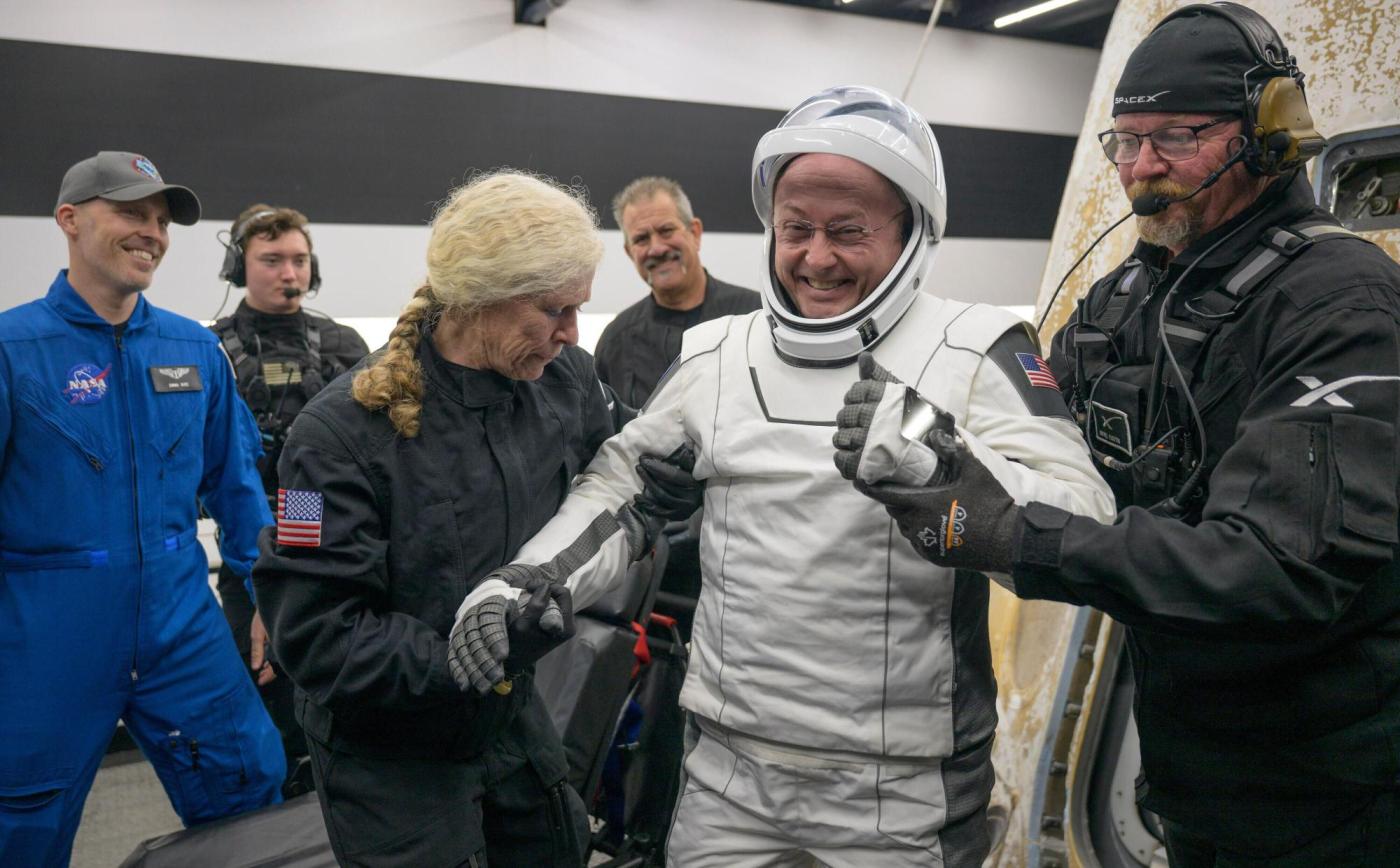
NASA’s Mike Fincke identified himself Wednesday as the astronaut whose medical condition prompted the space agency’s first medical evacuation.
Related Articles
NASA moves its Artemis II moon rocket off the launch pad for more repairs
NASA will return its moon rocket to the hangar for more repairs before astronauts strap in
NASA delays astronaut moon mission again after new rocket problem
NASA boss blasts Boeing and space agency managers for Starliner’s botched astronaut flight
NASA conducts second rocket fueling test that will decide when Artemis astronauts head to the moon
In a written statement, the 58-year-old spaceflight veteran revealed he was the ailing crew member last month aboard the International Space Station. He did not say what was wrong with him but explained that his condition quickly stabilized thanks to his crewmates and flight surgeons on the ground.
Fincke said he’s doing well now.
“Spaceflight is an incredible privilege, and sometimes it reminds us just how human we are,” he said in the statement.
Fincke launched with three others on a SpaceX flight last summer. Their mission came to an early end on Jan. 15, a week after he experienced what he called a “medical event that required immediate attention” by his fellow astronauts. The health concern also forced the cancellation of a planned spacewalk by Fincke and another NASA astronaut.
Following their splashdown in the Pacific, all four astronauts were taken to a San Diego hospital. They flew home to Houston the next day.
With the sick astronaut’s identity still a secret, Fincke said at a news conference a week after returning that the space station’s ultrasound machine came in handy during the medical crisis.
He elaborated Wednesday, stressing that his situation was not an emergency but that everyone wanted “to take advantage of advanced medical imaging not available on the space station.”
Fincke, a retired Air Force colonel who became an astronaut in 1996, has logged 549 days in space over four missions.
The Associated Press Health and Science Department receives support from the Howard Hughes Medical Institute’s Department of Science Education and the Robert Wood Johnson Foundation. The AP is solely responsible for all content.

More Stories
Red Bull paid Christian Horner £33.5m for loss of office, filings show
Red Bull Racing paid Christian Horner £33.5m in compensation for loss of office after his departure as team principal and...
Arad Moaf: The Entrepreneur Connecting Education, Technology and Business Growth Across MENA
As the founder of Rastad, Moaf works across education, commercial partnerships and digital product design. His career began in financial...
EU seeks to target US Big Tech without angering Trump – FT
Brussels is reportedly considering a broader corporate tax to avoid singling out Apple, Meta, and Google The European Union is...
UK reaches 17 million mental health sick days in 2026, analysis finds
The UK reaches 17 million working days lost to mental ill-health in 2026 today, according to analysis by Simplyhealth, the...
Why You Should Seek Treatment: Health Problems Don’t Take A Vacation
Pain, anxiety and ongoing sleep problems don’t just go away between 9-5. You can be at your desk, checking emails,...
Royal Mail to cut up to 2,500 head office jobs by the end of 2027
Royal Mail plans to cut up to 2,500 head office and support jobs by the end of 2027, the company...