
Boston city councilors decry snowstorm response, push for mayor to provide relief

Boston City Councilor Ed Flynn criticized the dangerous conditions that have followed last week’s massive snowstorm in a letter to the mayor, while two other councilors are pushing for solutions to help clear the mess hindering city access.
Flynn said he’s received more calls and messages from residents and businesses than he has in previous snowstorms. All contained the same plea, to “find areas to improve” the city’s snow removal response, the councilor said in a letter he sent last Friday to Mayor Michelle Wu and Interim Chief of Streets Nick Gove.
“Specifically, residents and businesses emphasized that when we implement a parking ban during snow emergencies, it is critical that those routes be cleared as close as possible to the curb so that when the ban ends, residents are then able to return and park their cars along those routes,” Flynn wrote.
“When we previously had a difficult storm in 2018, the city notified the community that additional snow removal needed to occur along some of these routes, and used snow removal equipment to allow for additional travel and parking space on L Street,” the councilor said.
Flynn added that “many residents have echoed calls for a similar response to the winter of 2015, where many two-way streets were turned one-way for weeks.”
He pointed out certain areas of concern that included Tremont Street in the South End, where residents have reported difficulty with safely driving through a cramped roadway and bus stop islands filled with snow.
In the Back Bay, Flynn said he’s been contacted by residents and business owners about the poor conditions on Huntington Avenue, which, in one instance, prevented an ambulance from reaching a building in the area.
Ambulance workers were forced to walk a block from Exeter Street with a stretcher to provide assistance, the councilor wrote.
He highlighted concerns that have been raised by seniors, people with disabilities and young families trying to get around with strollers.
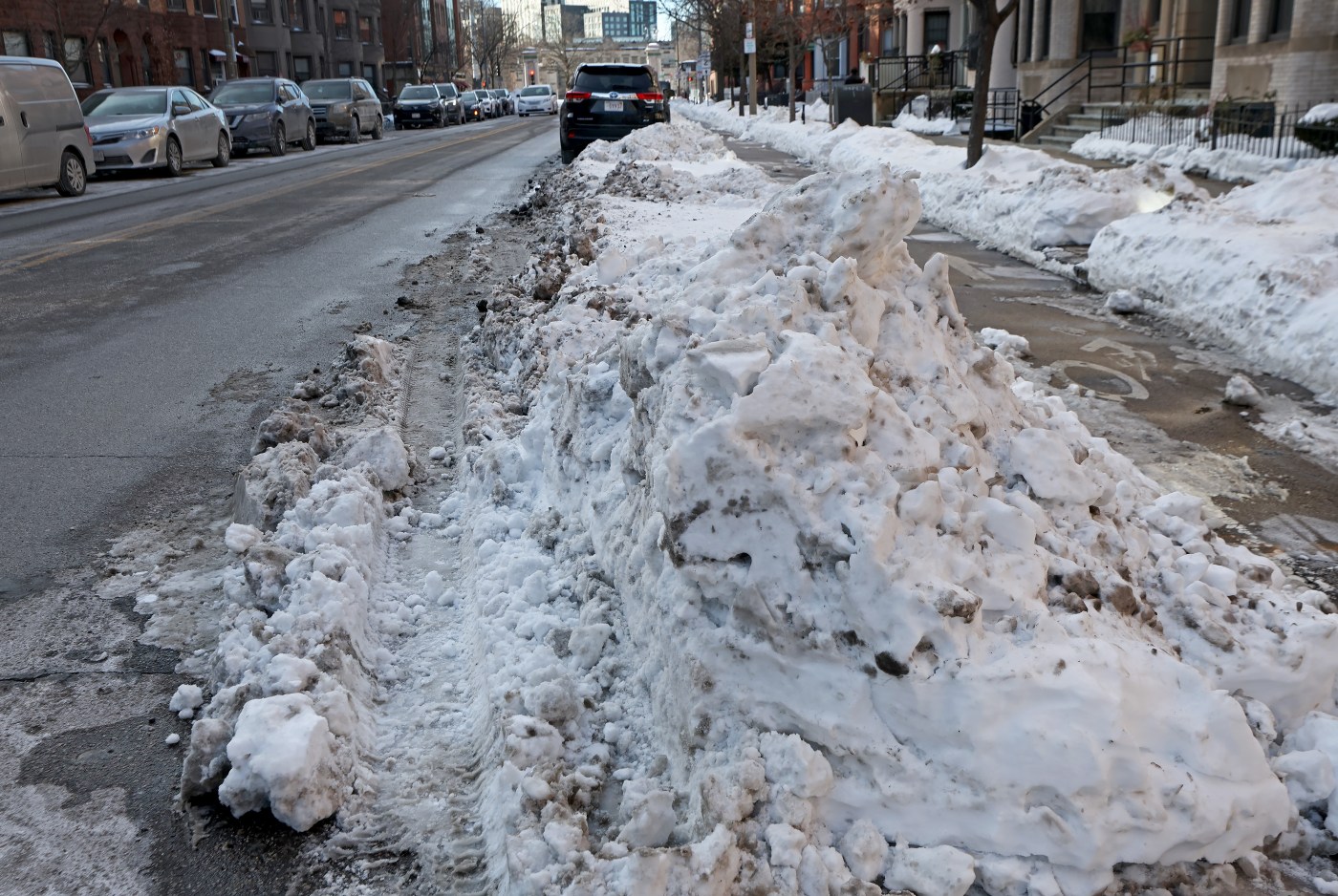
Flynn pushed for Boston to mimic a strategy that’s been implemented by New York City to clear massive snowbanks that have remained after last week’s storm dumped two feet of snow. There’s been little to no melting, given that the blizzard was followed by a week of arctic temperatures.
Flynn called on the mayor and chief of streets to consider purchasing snow melting machines, citing reports of New York City using hot tubs to melt snow at a rate of 60 to 120 tons per hour. He said eight of those melting tubs are in use today, and the strategy has been deployed in Manhattan for nearly 20 years.
“On account of the concerns I’ve heard on public safety, accessibility, and quality of life, I believe it is critical that we deliver these enhanced basic city services to support both our neighbors and Boston’s economy as well,” Flynn wrote.
Flynn is not the only councilor weighing in on the city’s snow removal challenges.
Councilors Enrique Pepén and Brian Worrell both plan to introduce hearing orders at Wednesday’s meeting to review ways to better help residents dig themselves out after heavy snowfall events.
“Residents work hard to clear their sidewalks and driveways as the city’s public works department works hard to clear miles of city road, leading to public and private events colliding at the curb, with covered sidewalks and blocked driveways immediately following and days after the storm,” Pepén’s order states.
Pepén wrote that other cities with more frequent snowfall have incorporated more efficient snow removal options than simply seeking to clear snow, “as a means to manage the height and expanse of snowbanks,” which he said has been a “major concern” in Boston following last week’s two-day storm.
“Many residents, particularly those who are elderly or have disabilities may struggle to clear snow from their sidewalks which puts these neighbors at risk of fines and leaves parts of public sidewalks uncleared, with the only options of relief being helpful neighbors or costly private snow clearing companies,” Pepén wrote.
Related Articles
Boston cuts permitting fees, requirements for small businesses amid economic downturn
Boston City Council takes another stab at moving to elected School Committee
Battenfeld: Wintertime in Wutopia — Snow-clogged streets, sidewalks plague Boston
Boston City Council term begins with chaos, insults and a demand for an apology
Boston Police ignored all 57 immigration detainer requests from ICE last year
He is seeking a hearing to explore programs that can provide relief to residents who have difficulty clearing snow on their own.
As of last Friday, the city had issued 839 violations for improper snow removal, per an update from the city’s public works department.
Worrell’s order points out the city is responsible for clearing the roadway while property owners are tasked with clearing their sidewalks. Many senior and disabled property owners don’t have the physical ability to remove snow as required, “and can be stuck in their house for days after a storm,” the councilor wrote.
“Other cities such as Chicago and Baltimore utilize a Snow Corps, which matches volunteers with seniors and disabled persons,” Worrell’s order states. “The city might be well served by hiring temporary seasonal employees to help shovel and sand key spots in neighborhoods, allowing them to be deployed depending upon the severity of the storm.”
Worrell’s order calls for a hearing to discuss the creation of a pilot Snow Corps program in Boston, along with a supplemental sidewalk clearance program “during winter storms above a certain level of severity and snow accumulation.”
Boston, MA – Snow clogged Westland street.(Nancy Lane/Boston Herald)


More Stories
Google Cloud outage in London hits Revolut, Lloyds and DPD
A power failure at a Google data centre in London disrupted Google Cloud services across the company’s London region this...
British firms set to win £330m of contracts in Guinea and Benin
British companies are set to win more than £330m of export contracts on nine infrastructure projects in Guinea and Benin,...
Unemployment falls to 4.7 per cent, lifting bets on November rate rise
The UK unemployment rate fell to 4.7 per cent in the three months to August, the Office for National Statistics...
Oxfordshire targets 20 unicorns and 30,000 innovation jobs by 2035
Oxfordshire has set out a 10-year plan to create 20 unicorn companies, attract more than £1bn a year in venture...
Start Up Loans names 14 ambassadors as lending passes £1.4bn
Businesses funded by the government-backed Start Up Loans programme have helped create or support more than 249,000 jobs across the...
The 55p Mileage Rate: What Employers and Staff Need to Know About Claiming the Difference
That does not mean every employer must raise its reimbursement rate. It does mean that employers should understand the tax...