
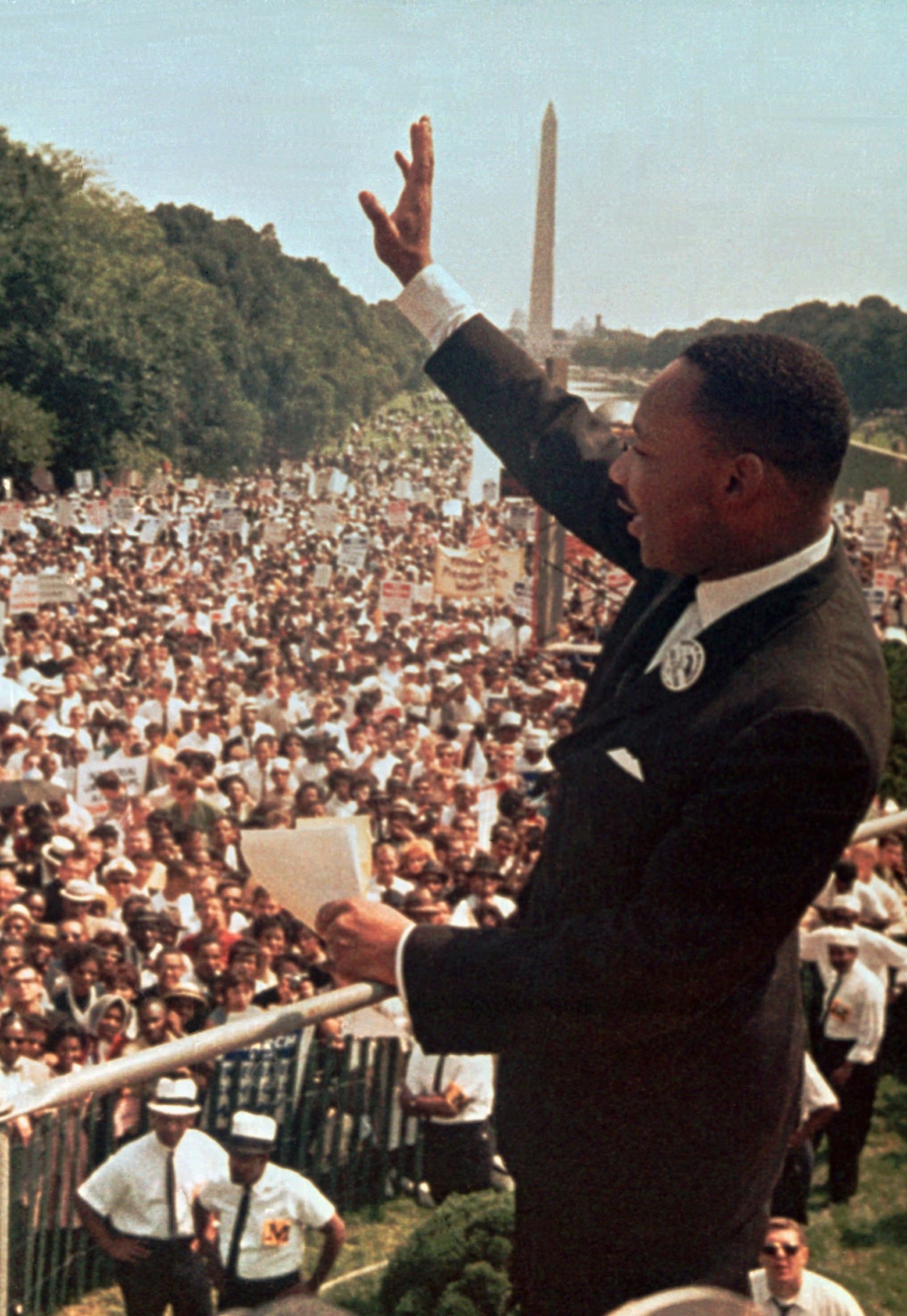
Gaskin: This MLK Day, honor all areas of Black life

Dr. Martin Luther King Jr.’s birthday is not a commemoration; it is a summons. In “Why We Can’t Wait,” King warns that justice delayed corrodes democracy. Civil rights were never a demand — they were an insistence on equal protection under law. But for King, civil rights were not an endpoint; they were the foundation of a moral vision encompassing education, economic justice, faith, dignity, culture, and responsibility. That vision is the moral spine of Black America’s unfinished work.
To honor King, we compress his legacy — and the Black freedom struggle — into civil rights. King spoke to human flourishing: how people are educated, how communities sustain themselves, how faith shapes courage, how history is told, and how hope is preserved. This MLK Day, we should widen our lens. These are areas of Black life that shaped the movement King led, sustained the communities that supported it, and define the work. King’s vision was not issue-based but holistic — any one domain of Black life denied dignity weakens freedom itself.
Education is the first battleground of freedom. In “The Mis-Education of the Negro,” Carter G. Woodson exposes how distorted schooling reproduces subordination. That intellectual diagnosis meets constitutional force in Brown v. Board of Education, argued by Thurgood Marshall, which affirms that separate schooling is incompatible with equal citizenship. True education, Woodson argues, is liberation —training citizens to think critically, historically, and independently.
Faith sustains the movement when laws fail it. In “Jesus and the Disinherited,” Howard Thurman reclaims Christianity not as comfort for the powerful but as survival wisdom for the oppressed. For King, nonviolence was not a tactic for the streets but a discipline for shaping the soul of a people.
Economic power is inseparable from political freedom. In “The Philosophy and Opinions of Marcus Garvey,” Garvey argues that economic self-reliance is the foundation for Black dignity and collective power. That principle takes organized form in the “Brotherhood of Sleeping Car Porters,” led by A. Philip Randolph, which proves that collective bargaining and disciplined organizing convert dignity into durable gains. This economic dimension of King’s vision is remembered last, despite being among his final and most urgent concerns.
Racism wounds the psyche. In “Black Skin, White Masks,” Frantz Fanon names the damage of colonialism and racial hierarchy. Healing requires truth-telling as much as policy reform.
The shadow of slavery structures opportunity. In “What to the Slave Is the Fourth of July?,” Frederick Douglass reminds the nation that freedom proclaimed without freedom practiced is hypocrisy.
Culture has spoken where law fell silent. In 1939, when Marian Anderson sang “My Country, ’Tis of Thee” on the steps of the Lincoln Memorial after being barred from Constitution Hall, her voice exposed the nation’s contradiction. With “Strange Fruit,” Billie Holiday forced America to confront the brutality of racial terror that law refused to name. With “Mississippi Goddam,” Nina Simone transformed grief and rage into indictment. Art carries truth across generations.
Families and communities are the movement’s infrastructure. In “The Content of Our Character,” Shelby Steele forces engagement with responsibility, cohesion, and moral agency.
Protest is a democratic right, not a disruption. “The Autobiography of Malcolm X,” told by Malcolm X, insists that dignity sometimes demands confrontation. Movements require multiple voices to move a nation.
Violence and crime demand honest analysis, not slogans. In “The New Jim Crow,” Michelle Alexander shows how mass incarceration criminalizes poverty and race, and undermines safety.
Accountability must cross party lines. In “Race Matters,” Cornel West challenges moral complacency wherever it resides. Justice is not partisan; it is principled.
Historically Black Colleges and Universities have been engines of leadership. The “1619 Project,” led by Nikole Hannah-Jones, reignites public engagement with Black historical centrality — a mission long carried by HBCUs.
Wealth stability matters. In “Race and Economics,” Walter E. Williams presses hard questions about markets, policy, and agency — questions a movement must face.
With “Bring the Pain,” Chris Rock uses satire to puncture stereotypes. In “Do the Right Thing,” Spike Lee exposes how media, space, and power shape perception and conflict, insisting that representation carries moral consequence. And in “Changes,” Tupac Shakur gives voice to communities misrepresented or ignored, turning lived experience into an indictment of the narratives America tells about itself.
Progress requires perseverance. In “Up from Slavery,” Booker T. Washington testifies that discipline and patience carve space where none existed.
Justice demands reform. In “Just Mercy,” Bryan Stevenson restores the human face erased by punishment systems and insists that mercy is a civic virtue.
Black women have always led. In “Ain’t I a Woman?,” Sojourner Truth shatters the false choice between race and gender justice long before the term intersectionality exists. A century later, at the 1964 Democratic National Convention, Fannie Lou Hamer’s address — often remembered as “I’m Sick and Tired of Being Sick and Tired” — forces the nation to confront the moral cost of exclusion, proving again that Black women’s leadership speaks truth when power refuses to listen.
History must be taught accurately. In “The Souls of Black Folk,” W. E. B. Du Bois insists that double consciousness is not confusion — it is clarity born of survival.
Hope endures. In “I Have a Dream,” Martin Luther King Jr. framed hope as a moral vision, and the March on Washington and the Million Man March, marked the decision to take steps toward that dream. That call echoes in “A More Perfect Union,” where Barack Obama frames America as unfinished, and in “The Hill We Climb,” where Amanda Gorman names hope not as naïveté but as a disciplined act of courage.
On this MLK Day, remembrance is insufficient. To honor King is to take responsibility for the conditions he named.
Ed Gaskin is Executive Director of Greater Grove Hall Main Streets and founder of Sunday Celebrations


More Stories
Today in History: January 19, Indira Gandhi becomes first prime minister of an independent India
Today is Monday, Jan. 19, the 19th day of 2026. There are 346 days left in the year. Today in...
El primer ministro británico tacha la amenaza de aranceles de Trump de “totalmente errónea”
Associated Press LONDRES (AP) — El primer ministro británico tacha la amenaza de aranceles de Trump de “totalmente errónea.”
Starmer condena la “errónea” amenaza arancelaria de Trump y la idea de una guerra comercial
Associated Press LONDRES (AP) — El primer ministro británico, Keir Starmer, afirmó el lunes que la amenaza de Donald Trump...
From roundtable to the camera: The Traitors’ Brian Davidson celebrates record-breaking year for Studio Snap
Fresh from his nerve-shredding run on BBC hit The Traitors, Brian Davidson has swapped the infamous roundtable for the photographer’s...
Amanda Seyfried makes her move in ‘The Testament of Ann Lee’
NEW YORK – Certainly the strangest if most original musical to arrive in many years, “The Testament of Ann Lee”...
Letters to the editor
Martin Luther King, Jr. In 1983, President Ronald Reagan signed a bill making the third Monday in January a federal...