
Gaskin: Expand SNAP benefits to include vitamins

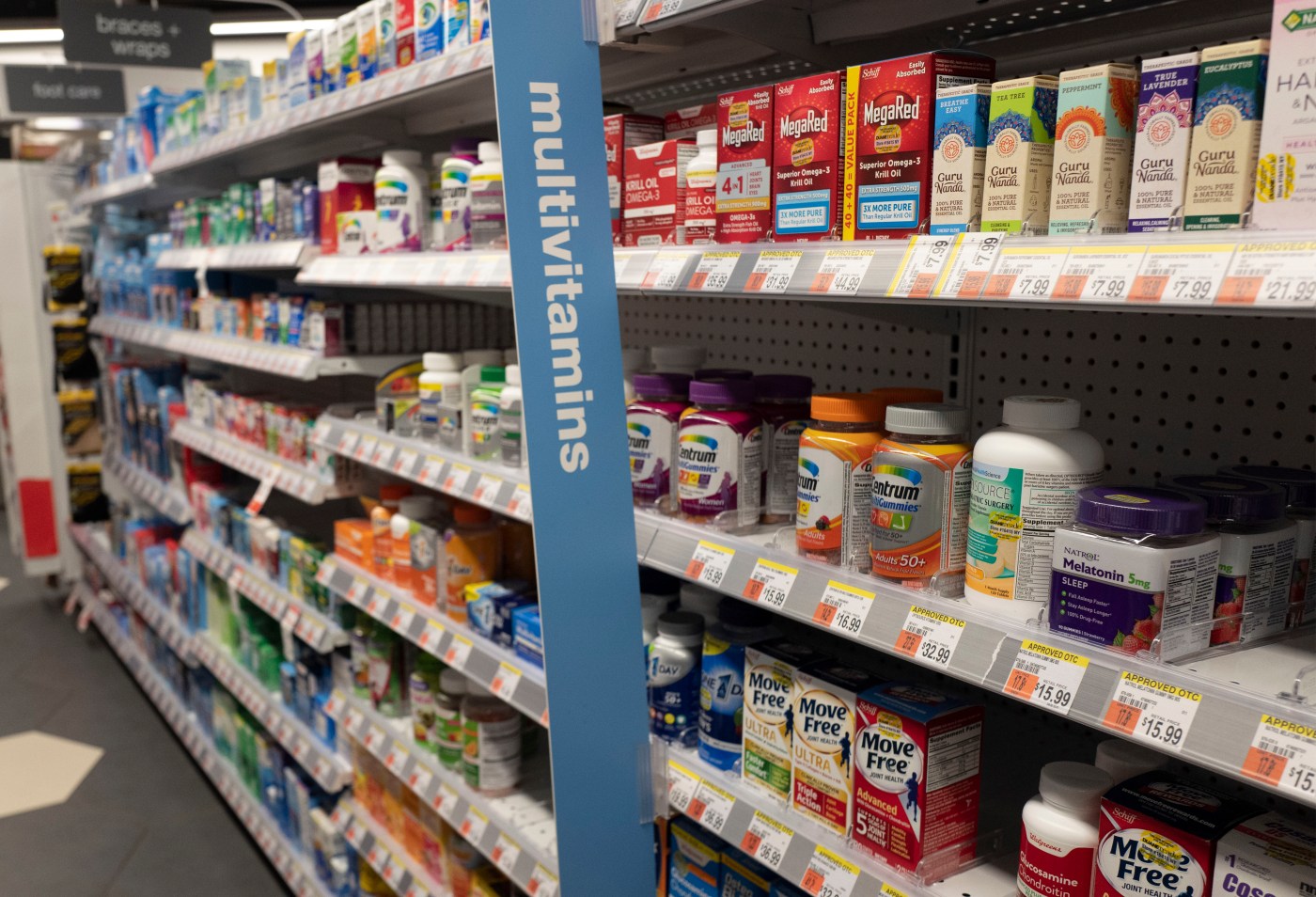
Twelve states have now received federal approval for waivers under the Supplemental Nutrition Assistance Program (SNAP) to restrict purchases of “non-nutritious” items such as soda, candy, and other sugary drinks. It’s a sign of growing momentum to align public assistance with public health. But while states move to stop subsidizing empty calories, another, more constructive step deserves attention: expanding SNAP to include essential vitamins — particularly multivitamins and prenatal supplements that help close nutritional gaps for families most at risk.
SNAP was created to reduce hunger, not necessarily to improve health. Yet food insecurity today rarely means a lack of calories— it means a lack of nutrients. Millions of Americans rely on cheap, ultra-processed foods high in sugar and fat but low in iron, vitamin D, calcium, and folate. These deficiencies drive fatigue, poor immunity, anemia, and adverse pregnancy outcomes. Expanding SNAP to include basic vitamins would be a small but powerful correction — one that helps transform the program from a safety net into a springboard for long-term well-being.
Public health experts have long documented that micronutrient deficiencies disproportionately affect low-income populations. Vitamin D deficiency, for instance, is nearly twice as common among households receiving food assistance. Prenatal vitamins containing folic acid dramatically reduce neural tube defects in infants, yet many low-income mothers cannot afford them once WIC benefits end. In these cases, supplements are not luxury goods; they are cost-effective public health tools.
The Centers for Disease Control and Prevention estimate that fortifying grain products with folic acid already prevents more than 1,300 neural tube defects annually, saving more than $600 million per year in lifetime medical costs. Even a modest increase in prenatal vitamin access among SNAP participants could prevent additional cases, saving millions more. The math is straightforward: a bottle of generic prenatal vitamins costs about $5 per month, pennies compared to the cost of neonatal intensive care or lifelong disability treatment.
SNAP serves roughly 41.7 million people per month, across about 22 million households. If just one-quarter of these households used benefits to purchase a single bottle of multivitamins monthly — priced between $4 and $10 — the annual cost would fall between $263 million and $658 million. Even if uptake reached 75%, total costs would likely remain below $2 billion a year.
To put that in perspective, SNAP’s total budget for FY 2024 was nearly $100 billion. In other words, adding vitamins would increase spending by less than 2% — a small fraction of overall program costs, and potentially far less if limited to pregnant women and children.
Policymakers could limit coverage to basic multivitamins and prenatal vitamins, excluding bodybuilding supplements or unverified “mega-dose” products. Eligibility could mirror existing WIC categories: pregnant people, postpartum mothers, and children under five. States might also cap vitamin purchases at $5–$10 per household per month, ensuring predictable budget exposure.
Such measures would contain costs and protect program integrity while still addressing the most urgent gaps in micronutrient intake. Oversight could rely on USP-verified or equivalent quality standards to prevent fraud or low-quality products from entering the supply chain.
The potential public-health dividends extend far beyond pregnancy outcomes. SNAP participants experience higher rates of anemia, obesity, and diabetes — all conditions influenced by nutrient imbalance. Vitamins are not a cure-all, but they can be a bridge: a simple way to supplement diets in communities where access to fresh produce is limited.
Politically, pairing restrictions on soda and candy with a positive expansion to vitamins could shift SNAP debates from punitive to preventive. Rather than simply telling families what not to buy, the program would offer a tangible new benefit that promotes health. It reframes SNAP as part of the “Food as Medicine” movement, emphasizing nutrition security, not just calorie sufficiency.
This dual approach — restricting sugary drinks while covering vitamins — would also send a strong cultural signal: that public dollars should nourish, not harm. For policymakers, it offers a way to balance health priorities with political optics, building support across party lines and among healthcare providers.
Critics will argue that vitamins are not food and that expanding SNAP beyond groceries risks “mission creep.” But that boundary is already shifting. SNAP-Ed, Double Up Food Bucks, and medically tailored meals all blur the line between nutrition and health care. The same USDA that approves soda restrictions could easily authorize vitamin inclusion through existing waiver mechanisms.
Others note that randomized trials show limited benefits from general multivitamin use in preventing cancer or heart disease. That’s true — but irrelevant to the populations SNAP serves. For people facing chronic food insecurity, deficiencies are real and measurable. The question is not whether vitamins outperform spinach — it’s whether they provide a safety net when spinach is out of reach.
A prudent next step would be a 12- to 24-month state pilot, perhaps in one of the 12 states already restricting sugary drinks under USDA waivers. The pilot could allow limited vitamin purchases, track uptake, and measure outcomes such as anemia rates, prenatal supplement use, and Medicaid claims for deficiency-related illnesses.
If results show even modest improvements, scaling nationally would be justified. If not, policymakers would have tested an innovative idea without committing major resources.
Expanding SNAP to include vitamins is not a radical overhaul; it’s an incremental modernization that reflects what science already knows and what equity demands. Food insecurity is evolving, and nutrition policy must evolve with it.
Ed Gaskin is Executive Director of Greater Grove Hall Main Streets and founder of Sunday Celebrations

More Stories
EU nations forced to pay for von der Leyen’s Covid deal
A Belgian court has ordered Poland and Romania to buy $2.2 billion worth of Covid-19 vaccines from Pfizer and BioNTech...
Europeans must pay more for medicine – German pharma giant
Profits have fallen since US President Donald Trump pushed to lower prices for Americans German pharma giant Bayer has warned...
Panic buying drains French gas stations
Hundreds of sites have run dry across the country after price caps triggered a surge in demand amid Middle East...
Ratcliffe backs tory plan to scrap carbon taxes amid industry pressure
Jim Ratcliffe has thrown his support behind Conservative proposals to scrap carbon taxes, intensifying the debate over the cost of...
Bank of England warns Iran war could trigger financial crisis risks
The Bank of England has warned that escalating tensions in the Middle East could push the UK towards a financial...
SpaceX files for record-breaking IPO with $1.75tn valuation target
SpaceX is preparing for what could become the largest stock market debut in history after confidentially filing for an initial...