
Tim Walz orders audit of Medicaid billing as fraud prosecutions continue

Gov. Tim Walz has ordered a third-party audit for 14 Medicaid-funded state programs deemed by the Minnesota Department of Human Services to be at a high risk for fraud.
The pause in payments will help the state detect “suspicious billing activity and scrutinize the use of public funds,” the governor’s office said Wednesday. The new layer of review means payments could be delayed up to 90 days.
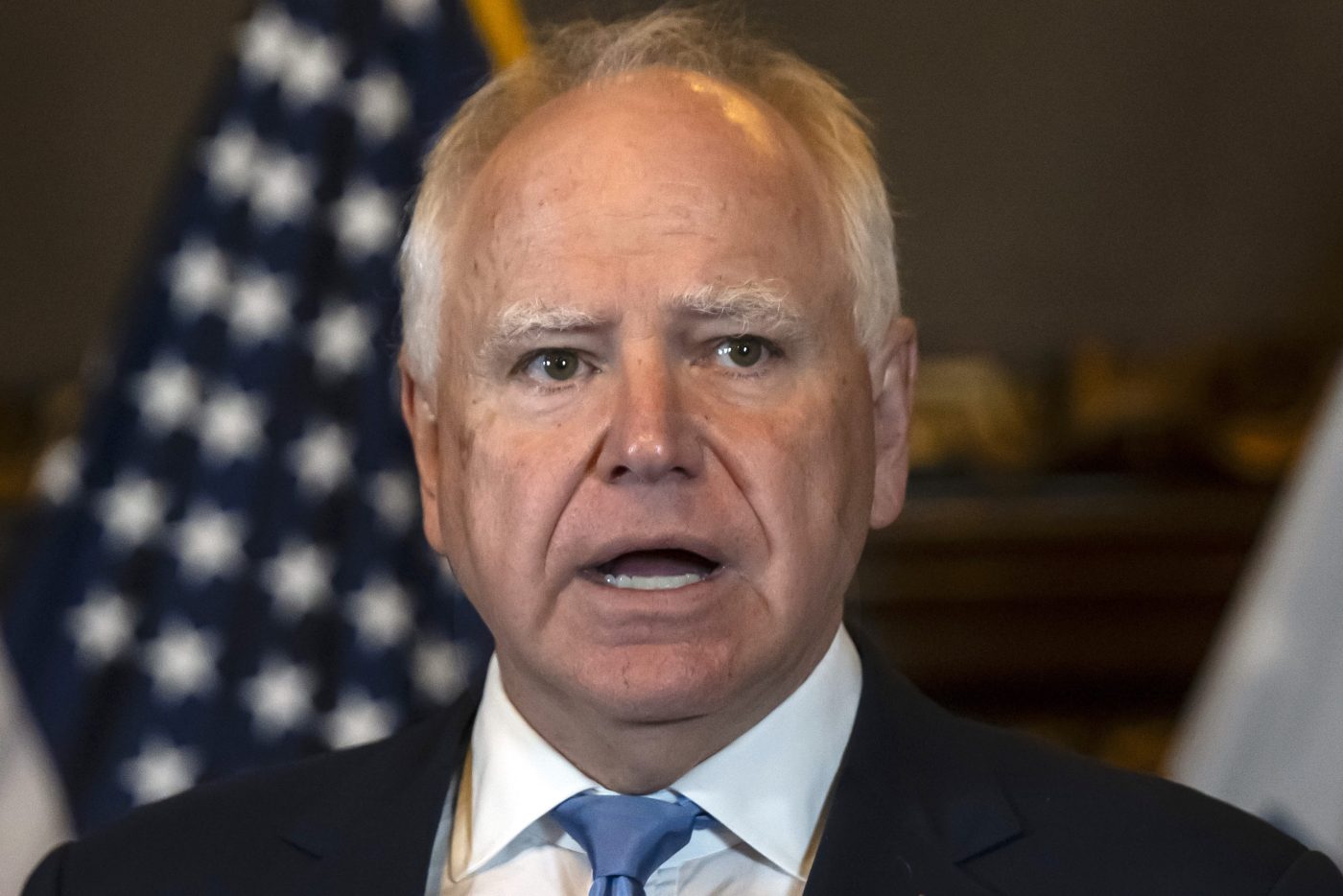
Gov. Tim Walz speaks during a news conference at the state Capitol building in St. Paul on May 15, 2025. (John Autey / Pioneer Press)
Programs affected by the audit include housing stabilization services and autism services for youth — two programs where federal prosecutors recently announced fraud charges against providers claiming reimbursements from the state.
Minnesota has hired the healthcare company Optum to look for signs of possible fraud, including missing documents, unusually high billing, and other inconsistencies showing a claim didn’t qualify for reimbursement.
“We cannot effectively deliver programs and services if they don’t have the backing of the public’s trust,” Walz said in a news release. “In order to restore that trust we are pumping the brakes on 14 programs that were created to help the most disadvantaged among us, yet have become the target of criminal activity.”
High-risk programs
The Department of Human Services flagged 14 programs as high-risk based on evidence of fraudulent activity, suspicious patterns and general vulnerabilities. They are also subject to stricter oversight, such as “enhanced fingerprint background studies,” initial screening visits and unannounced visits.
When the third-party audit detects a problem, a claim will be subject to further review by the Office of Inspector General at the agency. Walz’s office said that could lead to longer waits for reimbursements.
The 14 programs are: Early Intensive Developmental and Behavioral Intervention Services for Autism; Integrated Community Supports; Nonemergency Medical Transportation; Peer Recovery Services; Adult Rehabilitative Mental Health Services; Adult Day Services; Personal Care Assistance/Community First Services and Supports; Recuperative Care; Individualized Home Supports; Adult Companion Services; Night Supervision; Assertive Community Treatment; Intensive Residential Treatment Services; and Housing Stabilization Services.
The third-party audit contract is funded by money authorized during the 2025 legislative session, according to the governor’s office.
Concerns over delayed billing
In response to the audit, the Association of Residential Resources in Minnesota, a group representing more than 200 disability services organizations, called billing delays an “existential threat” to care.
“We understand the need for audits, accountability and financial oversight,” group CEO Sue Schettle said in a statement. “But the timing and scope of this action could unintentionally harm the very people these programs were designed to protect. The state must find a way to identify and stop fraud without stopping support.”
While the 2026 election is still more than a year away, fraud has already emerged as a central issue. Walz has come under increasing pressure to do more to address the problem, as potential Republican challengers make it a centerpiece of their campaigns.
Related Articles
Federal health officials push effort to spur cheaper biotech drugs
Louisiana and Virginia take steps toward redistricting in a growing battle for US House power
Democratic congressional candidate Kat Abughazaleh indicted over role in ICE protests
Trump’s decision to send aircraft carrier to South America will leave Mideast and Europe with none
Hegseth welcomes Japan’s arms spending increase, says US-Japan alliance key to deter China
Among those candidates is Rep. Kristin Robbins, R-Maple Grove, who last week unveiled her plan to address fraud in government agencies. Robbins is also the chair of the Republican-created House Fraud Prevention and State Oversight Committee.
“I am glad to see Governor Walz is finally taking action to audit these programs after years of ignoring credible allegations of fraud,” she said in a statement on the third-party audit. “I called for a full federal audit months ago and am glad he has decided to take this seriously.”
Robbins said she would do more than Walz has done to hold agencies and fraudsters accountable, including establishing an Office of Inspector General with oversight and investigative powers over all agencies, requiring a full financial audit and performance review of vulnerable state programs.
Fraud in MN
Former acting U.S. Attorney Joseph Thompson has said fraud in Minnesota could top $1 billion in recent years. The cases often involve nonprofits that falsely claim to offer services and then seek reimbursement from the state.
In September, federal prosecutors announced multiple charges in two separate instances of alleged Medicaid fraud — one in a state housing stabilization program and the other in a children’s autism program.
Thompson has said more cases are likely to emerge, meaning fraud will continue to loom over the 2026 election. He said in September the state is “drowning in fraud” and that the state’s system of “trust but verify” no longer works.
Massive schemes, such as those tied to the nonprofit Feeding Our Future, where fraudsters stole over $250 million in pandemic-era school meal aid, are just one chunk of the theft, according to federal prosecutors.
In September, federal prosecutors announced multiple charges in two separate instances of alleged Medicaid fraud: one in a state housing stabilization program and the other in a children’s autism program.
Thompson has said the recent work on Medicaid fraud grew out of the Feeding Our Future investigation.
Efforts to address fraud
Walz has said he has taken action to address fraud. On Sept. 16, days before the housing-related charges were announced, he issued an executive order directing agencies to “intensify” fraud detection efforts. Earlier this year, he created a new anti-fraud division in the state’s Bureau of Criminal Apprehension.
Related Articles
Capitol security: Threats to MN officials increase in 2025
St. Paul Public Schools using taxpayer funds on special levy. But is it advocacy?
Feds: St. Paul man put $45K hit on Pam Bondi in TikTok post
How did the St. Paul DFL, which is on hiatus, back two ballot questions?
Making Twin Cities visit, Kristi Noem criticizes Minnesota leaders
Walz also has pointed to large-scale federal prosecutions as a sign that people are being held accountable for the theft. So far, more than 50 of the 75 defendants connected to Feeding Our Future have been convicted.
In a statement, Republican House Speaker Lisa Demuth, R-Cold Spring, and House Floor Leader Harry Niska, R-Ramsey, said the number of programs now under scrutiny shows the extent of the fraud problem in Minnesota.
“Minnesotans have watched scandal after scandal unfold under Governor Walz,” the House GOP leaders said. “But the fact that there are more than a dozen programs under suspicion proves that Walz’s fraud crisis is far worse, and far more widespread, than anyone was led to believe by the administration.


More Stories
Un segundo vuelo de deportados iraníes sale de EEUU con 55 personas, dice Irán
Por NASSER KARIMI y JON GAMBRELL TEHERÁN, Irán (AP) — Un segundo vuelo con iraníes deportados ha salido de Estados...
Zooey Deschanel, Charlie Cox get woof of romance in ‘Merv’
A romantic comedy teaming Zooey Deschanel and Charlie Cox, Wednesday’s “Merv” is not just the film’s title but its cuddly...
Schoen: How rough will 2026 be for Republicans?
Republicans’ win in a closely-watched special House election in Tennessee can’t mask what is shaping up to be an increasingly...
Letters to the editor
City Hall security Several city councilors reportedly were upset over a security breach in the building last week when a...
Editorial: Solving Boston’s tax burden is Wu’s great white whale
Next year’s predicted 13% tax increase on single-family homeowners in Boston is appalling and unacceptable. It’s also the reality of...
Making the most of December to get organized
Dear Reader: If you’re mentally checked out and yet have the gift of time at work, how should you leverage...