
Cleveland-Cliffs to search for rare earths in Minnesota

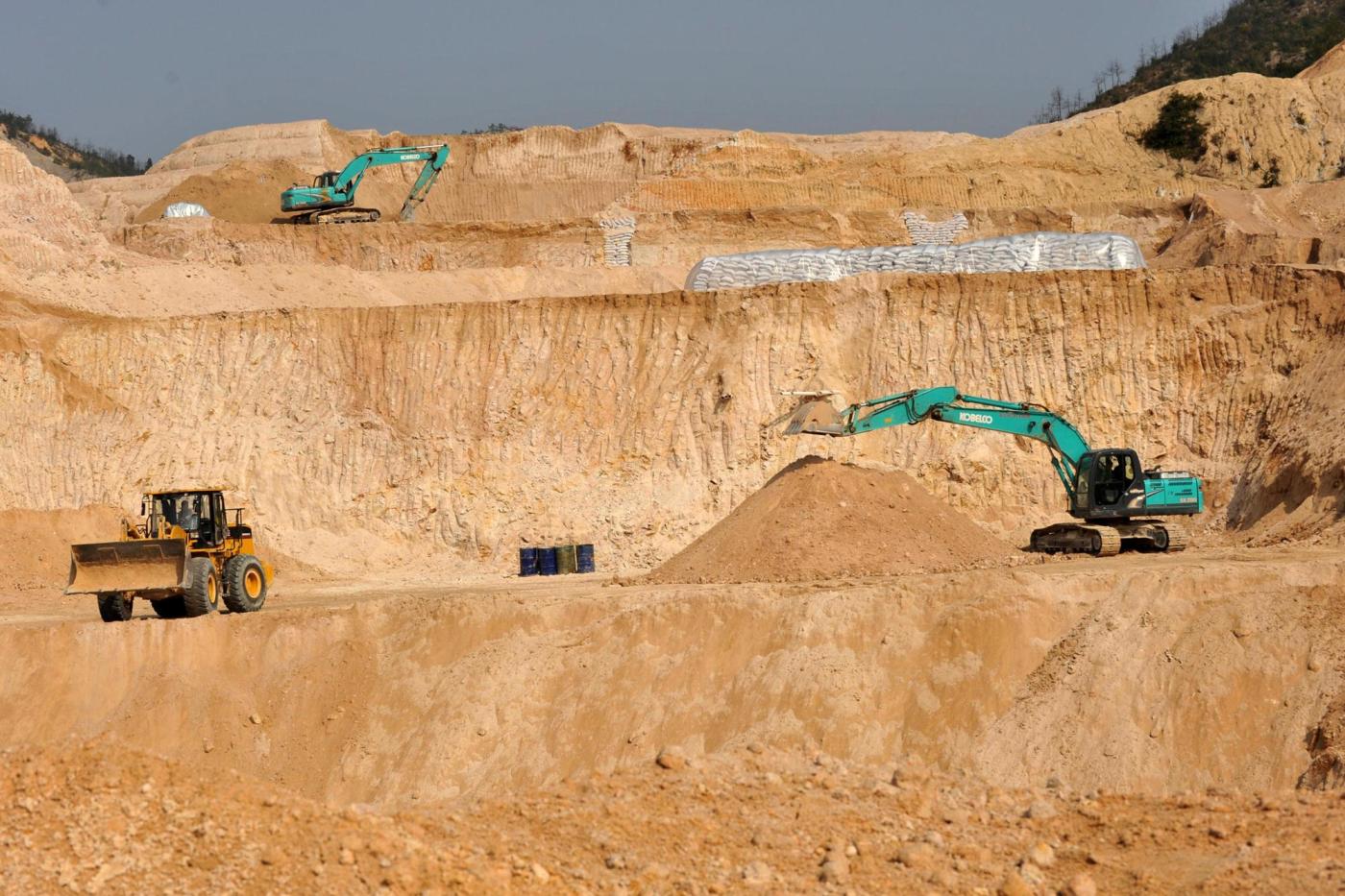
An iron mining and steel production company said it is eyeing the potential for mining rare earth elements in northern Minnesota.
In a call with investors Monday morning, Cleveland-Cliffs CEO Lourenco Goncalves said his company had identified two sites — one in Minnesota and the other in Michigan’s Upper Peninsula — already controlled by the company “where geological surveys show evidence of rare earth mineralization.”
“We continue to assess our potential on both sites,” Goncalves said. “Advancing this initiative would position Cleveland-Cliffs squarely within the nation’s pursuit of critical material self-sufficiency. We believe America’s industrial foundation must never depend on China or any other foreign source for essential minerals.”
Goncalves said the focus first would be on the site in Michigan’s Upper Peninsula. He said Minnesota was “not very friendly to us” but would still study the site.
Cliffs did not specify where the sites were and did not immediately respond to follow-up questions from the Duluth News Tribune on Monday. Goncalves apparent criticism of Minnesota presumably refers to its environmental regulation of the taconite industry, including an ongoing dispute over the state’s wild rice sulfate standard.
In the call, the company said it reviewed its taconite tailings basins and ore bodies for signs of rare earth minerals.
The Minnesota Department of Natural Resources, which regulates mining and mining exploration in the state, said it was aware of Cliffs’ public comments.
“Cleveland-Cliffs has not shared any related data or findings with the DNR,” DNR spokesperson Erik Evans said in an email Monday. “Because of this, we can’t comment on any specifics at the current time.”
In Minnesota, Cliffs owns and operates United Taconite in Eveleth and Forbes, Minorca in Virginia and Northshore Mining in Babbitt and Silver Bay. It also owns the majority of, and manages, Hibbing Taconite.
And in Michigan, Cliffs owns and operates the Tilden Mine near Ishpeming and the adjacent Empire Mine, which has been idled since 2016.
Rare earth minerals are a set of 17 metallic elements used in products like catalytic converters, magnets, electronics, fighter jet and missile guidance systems and other electronics.
The minerals have drawn renewed attention after China, which controls much of the rare earth supply chain, said it would restrict exports in response to President Donald Trump’s tariffs.
Rare earth elements do not include iron, which has been mined in the state for more than 140 years, or certain nonferrous minerals found in deposits in Minnesota like copper, nickel, platinum, titanium and manganese.
Samples, however, have shown signs of rare earth mineralization in the state.
Whether it’s enough to economically mine is another question.
Goncalves said Cliffs is working with geologists to determine “whether this could become commercially viable.”
“We have the opportunity to develop the mine,” Goncalves said. “Assuming that all these original studies will play out as we expect.”
The company also announced it had signed a memorandum of understanding with an unnamed global steel producer that “wants to leverage our footprint in the United States to enable a smooth onboarding for their downstream industrial clients, moving production from their country of origin to the United States,” Goncalves said, but stopped short of providing additional details.
On Monday, Cliffs’ stock price rose more than 21% to $16.18 during trading.
Related Articles
Iron Range man, 76, found dead in lake after canoe overturned
Iron Range elected official pleads guilty to vandalizing power line


More Stories
Barclays bets on the high street once more with new branches and the return of the bank manager
Barclays is charting a decisive U-turn on the high street, with plans to open new branches across the country and...
Amazon bets on Whole Foods to salvage its troubled UK grocery ambitions
Amazon is dusting itself off for another tilt at Britain’s fiercely competitive grocery sector, this time by converting its abandoned...
OpenAI’s flagship UK data centre hits the buffers in blow to Starmer’s AI ambitions
OpenAI’s much-trumpeted plans to build a major data centre in the north-east of England have ground to a halt, dealing...
Explosion Proof PTZ Cameras — Full 360° Intelligence in Explosive Zones
In a standard office building, a blind spot in your surveillance coverage is an inconvenience. In an oil refinery, a...
The nightmare oil price nobody’s talking about
Real world oil prices are far higher than the figures seen on TV news reports When the first US and...
EU nations forced to pay for von der Leyen’s Covid deal
A Belgian court has ordered Poland and Romania to buy $2.2 billion worth of Covid-19 vaccines from Pfizer and BioNTech...