
St. Paul’s mayor took over Pioneer Press newsroom 100 years ago

Is it harder to run a city or a newspaper?
After serving as guest editor of a single issue of the Pioneer Press in October 1925, former St. Paul Mayor Arthur E. Nelson might have told you it was the newspaper.
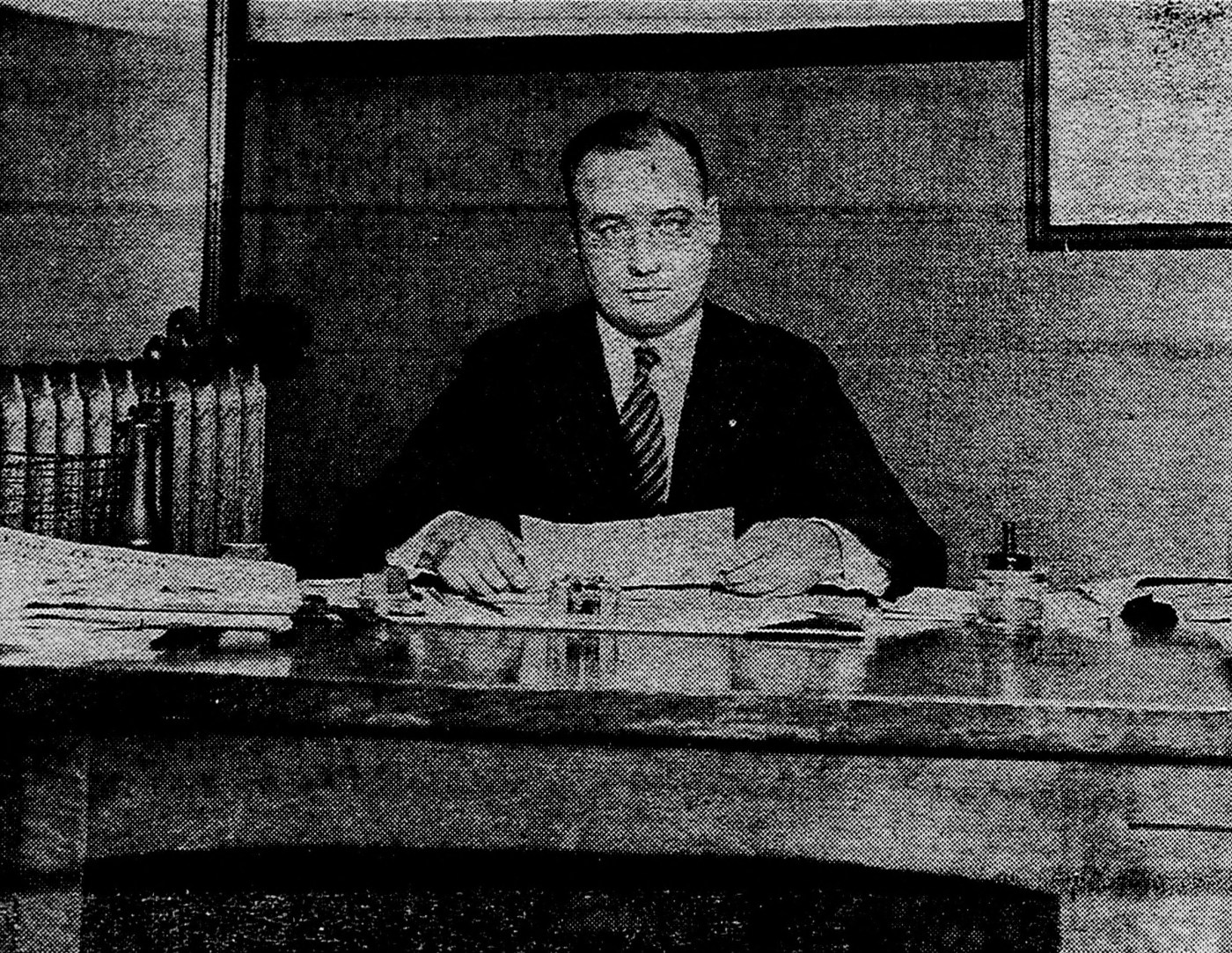
At the invitation of the publisher, “Hizzoner” took an active hand in shaping the content and layout of the Sunday paper, banishing crime coverage to a single inside page and peppering its news columns with laudatory features about the Saintly City.
“I realize that a newspaper is among the most important institutions in any community, and I am free to confess that editing one of them is about the hardest thing I have ever tried to do,” Nelson wrote in a front-page editorial.
In today’s fractured media ecosystem, where a firehose of content bombards us from innumerable sources on dozens of platforms, it’s difficult to appreciate just how much local newspapers dominated Americans’ information diets 100 years ago. Or how shocking it was for one to be handed over to a public official.
The mayor’s turn as guest editor made headlines in dozens of other publications — across the state and around the country.
In Minnesota, the Elk River Star News gushed that Nelson’s essay defending Prohibition was “one of the best editorials on the subject we have read in a long time,” while the Staples World criticized his “overdoing of the St. Paul booster material.”
A newspaper in Georgia was disappointed that “the mayor looked at the newspaper as a mayor, and not as a newspaper man.”
“He could not quit being mayor for one day and he could not avoid trying to warp the newspaper to the mayor’s point of view,” its editorial board wrote.
Editor for a day
Nelson, a lawyer by trade and St. Paul’s former city attorney, was just 30 years old when he was first elected mayor in 1922. He served a pair of two-year terms before declining to run again in 1926.
The Pioneer Press editorial board supported Nelson’s candidacy in both of his mayoral races, but it’s not clear exactly what prompted the state’s oldest paper to turn over its newsroom to the city’s youngest-ever mayor.
St. Paul Mayor Arthur E. Nelson, right, who was serving as guest editor of the Pioneer Press, visits the newspaper’s composing room in Oct. 1925. Nelson was invited by the newspaper’s masthead to serve as editor for a day, overseeing production of a Sunday issue of the Pioneer Press newspaper. (Pioneer Press files)
A front-page announcement a month earlier said only that he had “accepted an invitation” from the newspaper’s top brass to serve as guest editor for the St. Paul Sunday Pioneer Press of Oct. 18, 1925.
“The editors, reporters, feature writers, artists and special correspondents of the St. Paul Dispatch and Pioneer Press have all been placed at the Mayor’s disposal,” it continued.
The newspaper boasted that this was believed to be “the first time in the history of American journalism that the mayor of any great city … has undertaken the editorial direction of a metropolitan newspaper.”
By early October, Nelson had already begun assigning stories, declaring that he planned “to minimize, so far as possible, reports of crimes and of immorality.” Perhaps not surprisingly, the paper’s conspicuous treatment of crime news in his city ranked among the mayor’s chief objections to business as usual in the newsroom.
Mike Burbach, the current editor of the Pioneer Press, said that although crime coverage has become much less sensational in the intervening century, it remains a source of complaints — not just from elected officials, but also from members of the public.
“We pay attention to how we cover crime,” he said. “There is no question that crime is news, and that people want to know about it. All you have to do is look at the measurements of what people read. We’re not casual about it, however.”
Mixed reviews
When Nelson’s edition of the Pioneer Press finally landed on St. Paulites’ doorsteps, they had to turn to page 10 to find out what the city’s cops and criminals had been up to.
Police Chief Ed Murnane was among several readers who publicly praised the move. Ramsey County Sheriff John Wagener disagreed.
That wasn’t the mayor’s only change to the paper. Although the Pioneer Press editorial page had always taken a dim view of Prohibition, under Nelson its columns staunchly supported the Volstead Act, which outlawed alcohol in the U.S.
Sprinkled throughout the issue were glowing headlines about Nelson’s city that would make many mayors blush.
“St. Paul unique among great cities in outdoor sports opportunities,” “Capital is commercial center of whole area,” and “St. Paul heartily supports music and city theater should be successful,” to cite just a few.
Nelson earned a rebuke from local labor leaders with a front-page article and editorial that took aim at the city’s teachers union, arguing that it failed to represent its members’ interests.
“Long before the mayor became a factor in our civic life, the teachers’ union was accomplishing much good for St. Paul,” scolded William Mahoney, the editor of the city’s Union Advocate newspaper who would later serve a term as mayor himself.
Nelson’s mixed reviews from subscribers — and from other newspaper editors — aren’t a surprise to Burbach. Editing a newspaper has always been a subjective business, he said.
“It’s all arguable,” Burbach said. “Every bit of it. Which makes the whole exercise they did 100 years ago so interesting.”
Related Articles
Minnesota Historical Society launches online Pioneer Press archive
Photo gallery: After 67 years in St. Paul, USS Ward gun moving to museum
A century of the Minnesota State Fair in photos
St. Paul celebrated end of WWII with impromptu parades, prayer services
Downtown St. Paul’s Hotel Jewell destroyed by fire 75 years ago



More Stories
From Scotland Yard Commander to Global Security Entrepreneur: Dr Ali Dizaei’s Leadership Story
There are career journeys that follow a straight line, predictable, uniform, and comfortable. And then there are journeys shaped by...
The Naughty AI President: A New Age of Governance
In the race to build better systems of governance, humanity has always chased an impossible ideal: the perfect ruler. Rational,...
Sends shares Q1 2026 business update and product progress
Sends reported Q1 2026 updates sharing news on digital cards, app redesign, ClearBank integration, and fintech industry recognition. Sends, a...
Government doubles down on gaming with £30m funding package as sector eyes global growth
The government has fired the starting gun on a £30 million funding offensive aimed at Britain’s video games sector, urging...
Rising energy costs from Middle East conflict set to leave UK households £480 worse off this year
Rising energy costs triggered by the escalating Middle East conflict are on course to strip nearly £500 from the finances...
UK firms risk being left behind as AI adoption gap widens, warns PwC
British businesses are in danger of being left stranded in the middle of the pack on artificial intelligence, with a...