
Thomas Friedman: Mr. Trump, move fast and break things for peace in the Middle East

“You create your own reality. Truth is a malleable thing.”
— Roy Cohn to Donald Trump in the film “The Apprentice.”
Listening to President Donald Trump telling Israelis and Arabs on Monday that they were at “the historic dawn of a new Middle East” was like watching Trump selling his bankers on a plan to build the biggest, most beautiful, most amazing hotel in the world on a toxic waste dump. On the one hand, you tell yourself: This man must be crazy. Doesn’t he know the history of this place? You can’t build a hotel there! And on the other hand, a voice in the back of your head whispers: What if he can bring it off?
Trump’s ability to combine bullying, flattering and exaggerating is truly a sight to behold, and it was on full display Monday in his addresses to the Israeli parliament and then to more than 20 world leaders at a gathering in Sharm el-Sheikh, Egypt. I will give Trump this: No traditional diplomat or foreign policy professor would have advised the president to take such risks — to declare that we are on the road to Middle East peace and that he, Donald Trump, will chair the “Board of Peace” that will deliver it. But Trump went to business school, not the School of Foreign Service, and he clearly believes that he can cajole, muscle and bluster this conflict to a happy ending.
Since that strategy brought Trump both multiple bankruptcies in real estate and two terms as president in politics, I am not going to bet against him or for him. I am just going to give him this free advice: Mr. President, to get this deal done you need to move fast and break things.
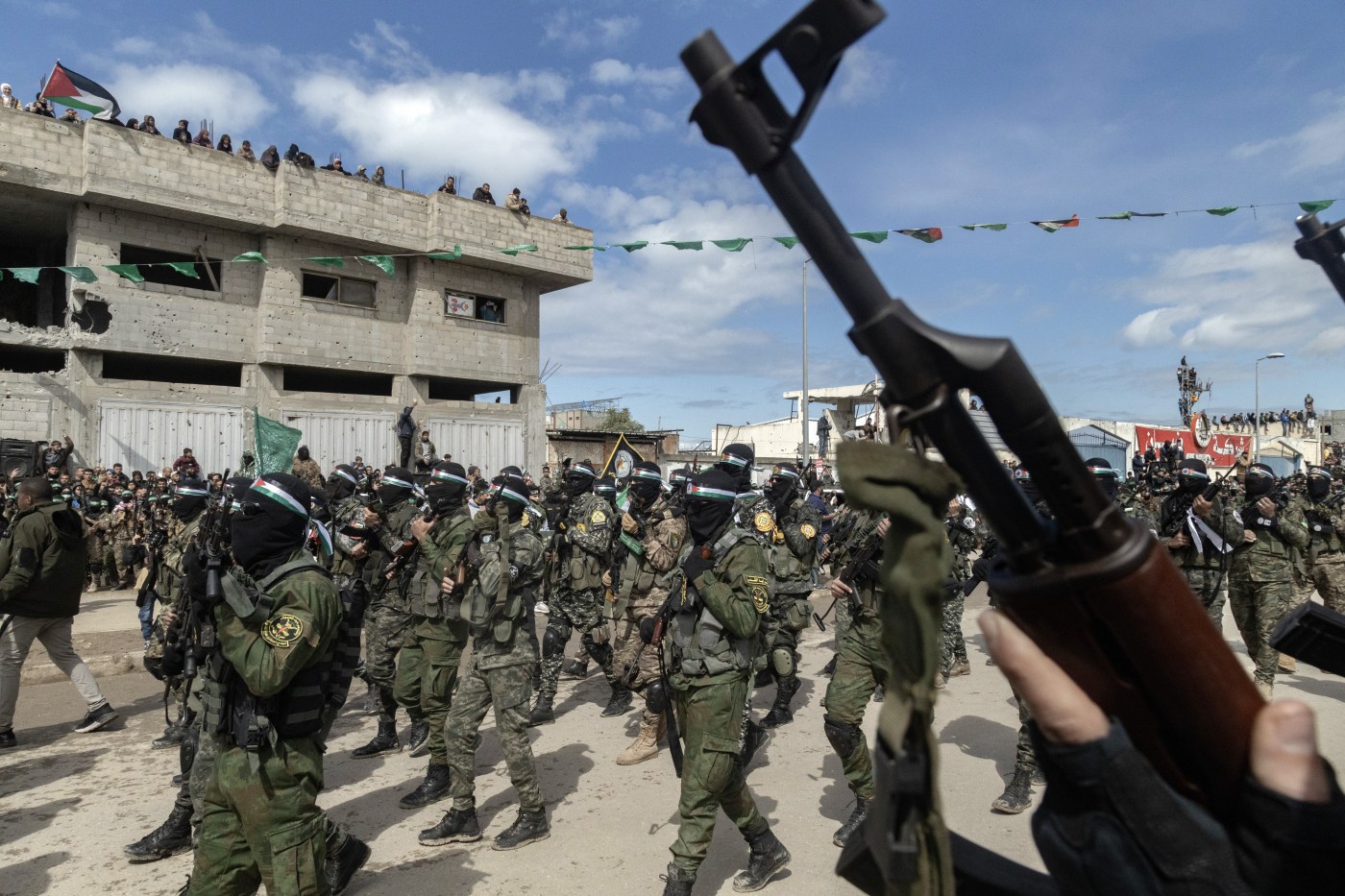
So far, I don’t see it. I realize it is early, but right now I don’t even see the baby steps to the next phase. I see no U.N. resolution on the table creating the Arab/international peacekeeping force to oversee Hamas’ disarmament and security in the Gaza Strip until a proper Palestinian security force can be created. I see no money on the table for the billions that will be needed for reconstruction, and I have no idea who is supposed to appoint and manage the Cabinet of Palestinian technocrats who are supposed to run Gaza instead of Hamas, which is already using its interior ministry and police forces to reassert control in Gaza.
The Trump administration, which is notoriously thin in national security, does not even have a confirmed assistant secretary of state for Near Eastern affairs. Secretary of State Marco Rubio is already doing his job as well as that of national security adviser, and Steve Witkoff and Jared Kushner, who carried the ball this far on the peace deal, both have their own businesses to run.
As a journalist, if I wanted to know what is going to happen next and how, I have no clue whom to call. This is a prescription for trouble.
Because, Mr. President, what got you to this great hostage release, prisoner exchange and ceasefire will not get you to a wider Middle East peace — unless you lay down the law with both Prime Minister Benjamin Netanyahu of Israel and Hamas’ overseers: Turkey, Egypt and Qatar. You don’t have a second to rest. As someone who wants you to succeed, I have to remind you: As hard as the first stage was, you have not even seen hard yet.
You need to say to Netanyahu: “I had to twist your arm to get you this far. Thanks for coming. I even tried to get you a pardon in your corruption cases. But I need to know right now — Are you with me or against me for the next phase? Are you going to move to the center of Israeli politics and create a coalition that can work with a reformed Palestinian Authority to replace Hamas and govern in both Gaza and the West Bank? Or are you going to continue to play the game that you have played with American presidents since 1996 — and try to tacitly keep Hamas alive in Gaza and weaken the Palestinian Authority in the West Bank in order to tell me that Israel has no partner for peace?”
And to Qatar, Turkey and Egypt, and whichever Arab countries are ready to send troops into Gaza, Trump needs to say something similar, “Are you going to force Hamas to disarm and pave the way for the return of Palestinian Authority leadership to Gaza or play footsie with Hamas as it tries to reassert control there?”
While Hamas has signaled that it is willing to hand over civilian rule in Gaza to a different Palestinian entity, the group has never publicly confirmed that it would disarm, although it apparently said so privately. “They said they’re going to disarm and if they don’t disarm, we will disarm them,” Trump said Monday, adding that he believed it would happen in a “reasonable time.” If Hamas fails to disarm, that will give Netanyahu an excuse to restart the war and avoid all the political land mines that the next phases present him.
Let me put this another way: If Trump wants to translate his 20-point plan into regional peace, he has to start by once and for all breaking the twisted, codependent relationship between Netanyahu and Hamas — who have helped to keep each other politically viable for over two decades.
This story goes back to Israel’s 1996 election that followed the assassination of Prime Minister Yitzhak Rabin by an Israeli extremist opposed to the Oslo Accords. Initial polls gave Rabin’s successor, Shimon Peres, a wide lead. Hamas, though, was determined to scuttle Oslo, which Peres helped to deliver, from going forward. Netanyahu also vigorously opposed Oslo so Hamas wanted him to win. To tacitly discredit Peres and help Netanyahu’s chances, Hamas embarked on a murderous suicide bombing campaign.
It worked. The killing of more than 60 Israelis in nine days propelled Netanyahu, the hard-liner, to defeat Peres, the dove, and win the election.
This codependency also explains why Netanyahu was responsible for facilitating Qatar’s assistance of hundreds of millions of dollars to Hamas — in bags of bills — to keep it viable in Gaza all these years. At the same time, Netanyahu did — and still does — everything possible to weaken the Palestinian Authority, which cooperates every day with Israeli security services to keep the West Bank from blowing up.
The Bibi-Hamas codependency has to stop for there to be any peace.
There is no possibility — none whatsoever — of Trump’s advancing this ceasefire to a wider peace without Hamas being replaced, as soon as feasible, by a reformed Palestinian Authority and without Netanyahu establishing a more centrist ruling coalition or Israeli voters replacing Netanyahu.
Trump did not do himself any favors when he came out with his crazy idea in February to empty Gaza of its Palestinian residents and build a French-style Riviera there.
“Trump did not understand that one of the deepest fantasies of both Israelis and Palestinians is that the other, one day, will disappear,” Israeli writer Ari Shavit said. “When Trump suggested in February emptying Gaza of Gazans, he made the Israeli right think their dreams were going to come true — that Gaza would be annexed, and the West Bank would be next.”
Now eight months later, Trump has come to Jerusalem and told the same Israelis that there will be no annexation of Gaza or the West Bank. “It is an amazing transformation,” said Shavit. “And it is driving Bibi’s allies on the messianic right to a corner. The same Trump that unleashed insanity in February is now forcing Israel to face reality: The Palestinians are here to stay and we must find a way to live with them.”
Sooner or later — and I believe it will be sooner — Trump will realize that if he wants the Gaza peace to succeed and spread, he needs to get a reformed Palestinian Authority into Gaza as soon as possible.
The PA ran the strip before being ousted by Hamas in June 2007, and it did so under a legal, economic and trade framework painstakingly negotiated over two years by Israelis and Palestinians in the Oslo Accords. That framework just needs to be dusted off. Trying instead to reinvent governance in Gaza from scratch now is a mistake; it will take months, at least, to organize, and Hamas will take advantage of the vacuum.
The only reason that the PA was being kept out of the picture was to satisfy Netanyahu’s political desire not to ever have a unified Palestinian leadership in the West Bank and Gaza.
But Netanyahu’s political needs are not aligned with U.S. interests to get to a permanent peace — and never have been. Trump needed to satisfy Netanyahu’s political needs to get to this point, but now Trump needs to steamroll over them to put in place the next stage.
Will he? I was intrigued by the fact that at the Sharm el-Sheikh summit, Trump huddled with the president of the Palestinian Authority, Mahmoud Abbas. The New York Times reported: “As the two men posed for the camera at the end of their hushed chat, Mr. Trump took Mr. Abbas’ hand, patting it twice as the Palestinian leader smiled. Mr. Trump gave a thumbs-up sign and presented his own big smile.” Good for the president.
The only long-term solution — in my view — is a Palestinian state in Gaza and the West Bank whose borders are negotiated with Israel. That state, though, must be run by a reformed PA — with the ongoing support of an Arab/international peacekeeping force that would guarantee this Palestinian state never threatens Israel, and the support of an international “Board of Peace” that would guarantee its economic success.
The only way to get there is if Hamas is quickly disarmed, if the Palestinian Authority is quickly reformed and integrated into Gaza and if Netanyahu either finds some new Israeli governing partners in the center or goes into the wilderness.
None of them, in their present incarnations, are partners for long-term peace. May their transformations or disappearances happen quickly.
Thomas Friedman writes a column for the New York Times.


More Stories
Easter and Eid collision sends British lamb prices to a record high
Supermarket shoppers face paying more than £16 per kilo for a leg as overlapping religious festivals, shrinking flocks and buoyant...
Vince calls on Miliband to halt North Sea oil exports as Iran war rattles supply
One of the Labour Party’s most prominent financial backers has called on Ed Miliband to slam the brakes on North...
Reform UK becomes first British political party to launch its own podcast
Reform UK is venturing into podcasting with a weekly show that will offer listeners behind-the-scenes access to Nigel Farage and...
Labour’s tax uncertainty is pushing Britain’s wealthiest towards the exit
The majority of Britain’s ultra-wealthy individuals are actively weighing up whether to leave the country, driven not so much by...
Barclays bets on the high street once more with new branches and the return of the bank manager
Barclays is charting a decisive U-turn on the high street, with plans to open new branches across the country and...
Amazon bets on Whole Foods to salvage its troubled UK grocery ambitions
Amazon is dusting itself off for another tilt at Britain’s fiercely competitive grocery sector, this time by converting its abandoned...