
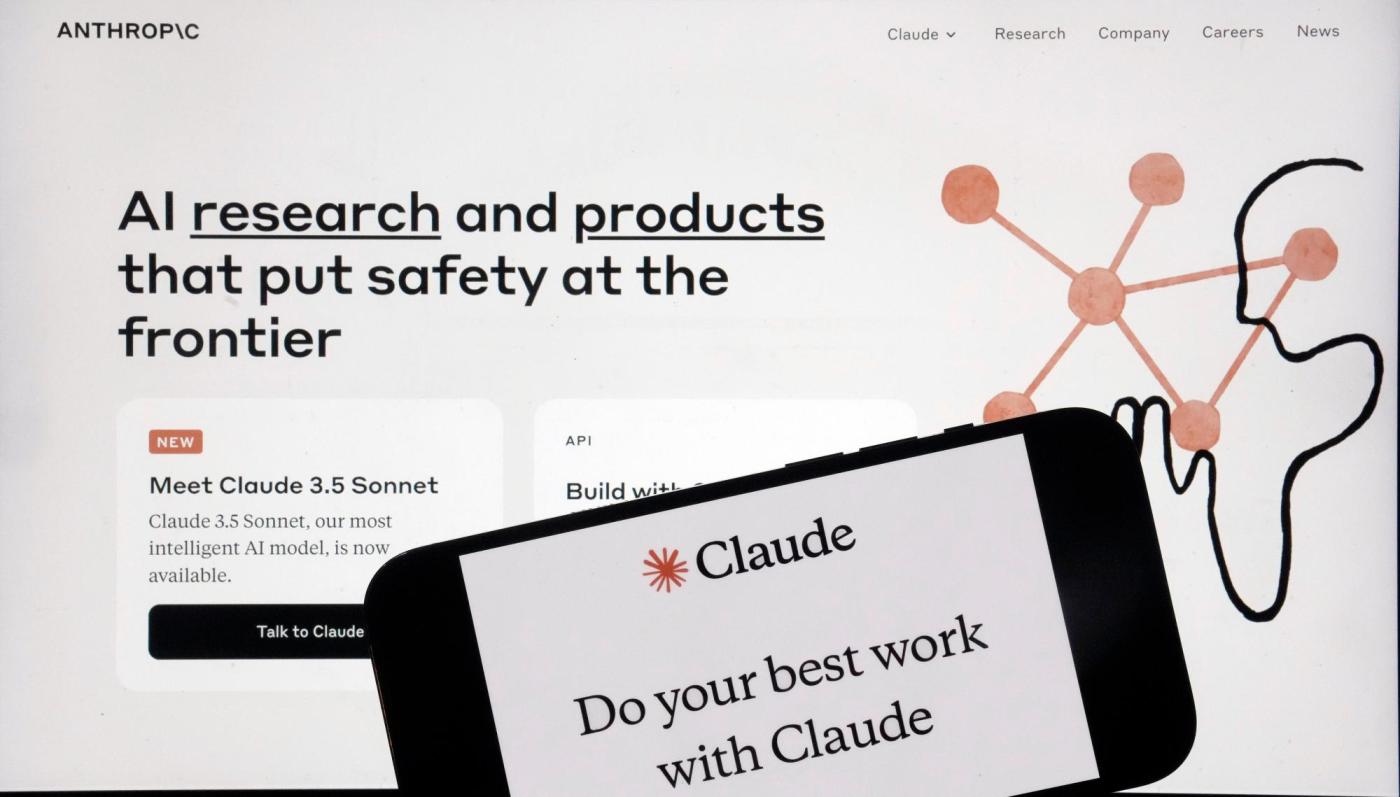
Book authors settle copyright lawsuit with AI company Anthropic

SAN FRANCISCO (AP) — A group of book authors has reached a settlement agreement with artificial intelligence company Anthropic after suing the chatbot maker for copyright infringement.
Related Articles
Trump family crypto empire expands with Crypto.com partnership
CSX railroad’s merger prospects derail as BNSF and CPKC make clear they aren’t interested in a deal
Trump’s bid to support coal could cost ratepayers billions, report finds
August consumer confidence dips in US with jobs, tariffs and high prices driving most unease
What shoppers can do to limit charges once the US ends a tariff exemption for goods under $800
Both sides of the case have “negotiated a proposed class settlement,” according to a federal appeals court filing Tuesday that said the terms will be finalized next week.
Anthropic declined comment Tuesday. A lawyer for the authors, Justin Nelson, said the “historic settlement will benefit all class members.”
In a major test case for the AI industry, a federal judge ruled in June that Anthropic didn’t break the law by training its chatbot Claude on millions of copyrighted books.
But the company was still on the hook and was scheduled go to trial over how it acquired those books by downloading them from online “shadow libraries” of pirated copies.
U.S. District Judge William Alsup of San Francisco said in his June ruling that the AI system’s distilling from thousands of written works to be able to produce its own passages of text qualified as “fair use” under U.S. copyright law because it was “quintessentially transformative.”
“Like any reader aspiring to be a writer, Anthropic’s (AI large language models) trained upon works not to race ahead and replicate or supplant them — but to turn a hard corner and create something different,” Alsup wrote.
A trio of writers — Andrea Bartz, Charles Graeber and Kirk Wallace Johnson — alleged in their lawsuit last year that Anthropic’s practices amounted to “large-scale theft,” and that the San Francisco-based company “seeks to profit from strip-mining the human expression and ingenuity behind each one of those works.”


More Stories
Europe to face fuel shortage – Shell CEO
The Iran war is set to hit diesel and gasoline supplies starting next month, Wael Sawan has warned European countries...
Russian oil at premium over Middle East war – Bloomberg
Indian refiners have reportedly payed above benchmark prices for about 60 million barrels for April delivery Indian refiners have sharply...
ScottishPower secures £600m backing for major UK subsea power link
ScottishPower has secured £600 million in financing from the National Wealth Fund to support the development of a major subsea...
Revolut posts record £1.7bn profit as it eyes UK credit card launch
Revolut has reported record pre-tax profits of £1.7 billion for 2025, up 57 per cent year-on-year, as the fast-growing fintech...
UK factory costs surge at fastest rate since black wednesday amid energy shock
UK factory costs have surged at their fastest rate since the aftermath of the Black Wednesday, as rising energy prices...
Blackrock chief warns $150 oil could trigger global recession
The head of the world’s largest asset manager has warned that a sustained surge in oil prices to $150 a...