
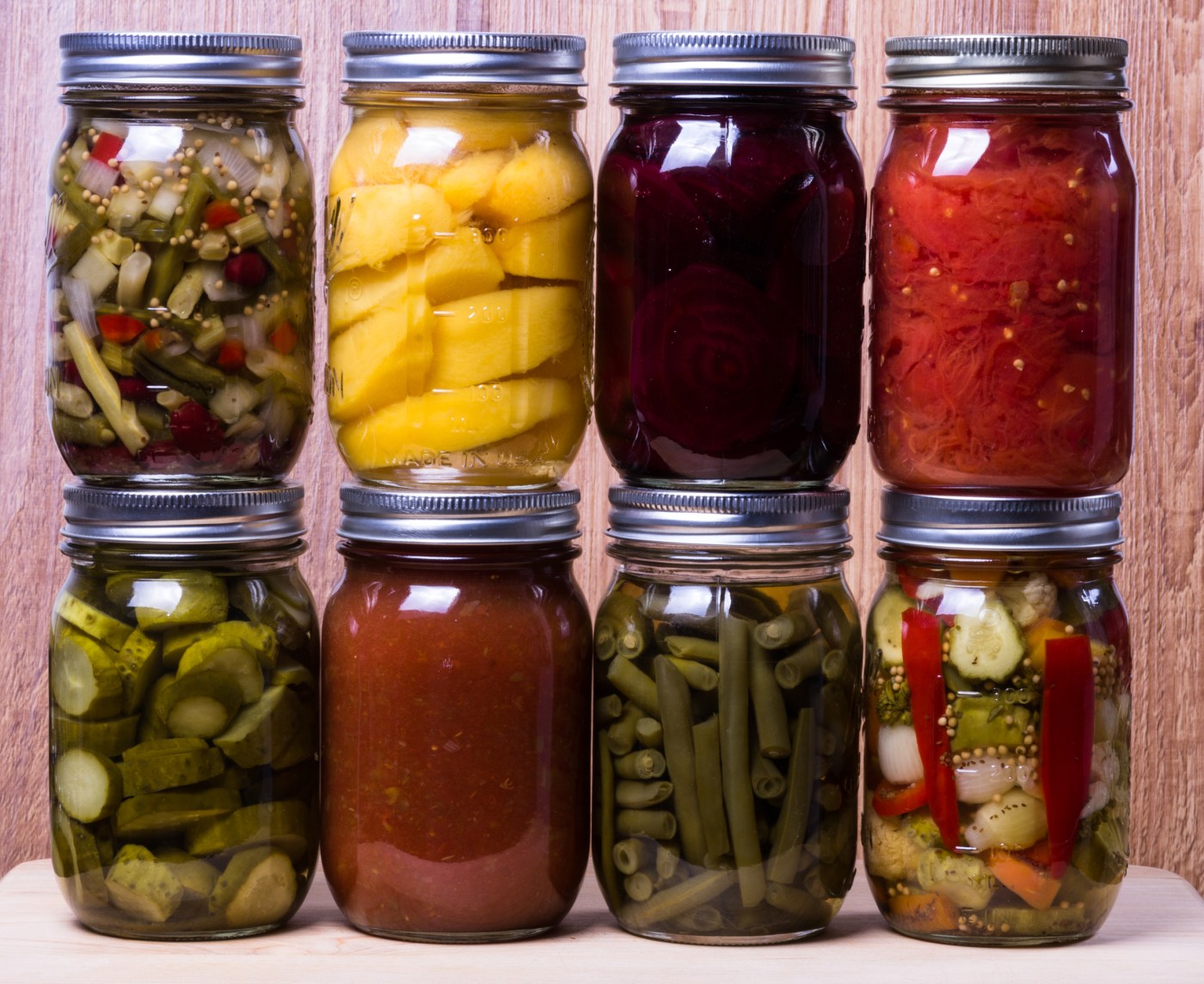
Preserve the fresh flavors of summer

Food preservation is having a literary moment, and the timing couldn’t be better.
To help you make the most of summer’s bounty, we plucked recipes from two of several new cookbooks: “Preserving the Seasons” by Holly Capelle (Simon Element, $29.99) and “The Pickle Jar” from Nick Vadasz (Hamlyn, $24.99).
In no time, both will have you canning, fermenting, pickling, dehydrating or freezing the best produce of the season. Each also provides detailed instructions and tips for both beginner and seasoned cooks, and recipes that will appease adventurous eaters and pickle purists alike. Here’s a sampling.
This is a magical mix of luscious fruit, aromatic herbs and fiery spice. The key to success here is to ferment for just a day or so before transferring to the relative safety of the fridge. Fruit, with its naturally high sugar content, runs the risk of rapidly sending your lacto-fermentation on a one-way ticket to an alcoholic cocktail. Make small batches to mitigate the risk of spoilage and wastage. I use this salsa to liven up tacos and tostadas, or serve it ice cold as a spicy fruit or seafood cocktail. From “The Pickle Jar,” from Nick Vadasz (Hamlyn, 2025).
TAG GOES HERE
Pineapple, Strawberry and Cucumber Salsa
INGREDIENTS
10 ½ oz. (about 1 ¾ c.) fresh pineapple chunks, quartered if large
7 oz. (about 1 ½ c.) strawberries, hulled and quartered
½ English cucumber, quartered lengthways and diced
1 ½ tsp. fine sea salt
Juice of 1 lime
1 tbsp. gochugaru (Korean red pepper flakes)
1 thumb-sized piece of fresh ginger root, scrubbed and finely chopped
1 clove garlic, crushed
1 red chile, finely chopped
1 handful of mint, chopped
1 handful of cilantro, chopped
DIRECTIONS
Put the pineapple, strawberries and cucumber in a large mixing bowl with the salt and mix gently with your hands.
Add the lime, gochugaru, ginger, garlic, chile, mint and cilantro and mix again well with your hands.
Cover the bowl loosely with a clean tea towel and leave the fruit and cucumber mix to macerate for 20 minutes or so.
Pack into thoroughly cleaned 8- or 16-ounce lidded food storage containers. Leave to ferment at room temperature for a day or so, checking and tasting regularly for just a hint of fizz before storing in the fridge until needed, where it will keep for a week or so. Makes about 2 ½ cups.
You can use home-canned, store-bought canned or fresh tomatoes here. Roasting the tomatoes makes the sauce next-level good. This sauce is also delicious on pizza and pasta or as a dipping sauce for homemade focaccia. From “Preserving the Seasons” by Holly Capelle (Simon Element, 2025).
TAG GOES HERE
Roasted Marinara Sauce
INGREDIENTS
2 (28-oz.) cans whole tomatoes, 2 quarts home-canned tomatoes or 2 lb. ripe fresh tomatoes, cut into quarters lengthwise
4 cloves garlic, smashed under a knife and peeled
3 tbsp. extra-virgin olive oil, divided
1 tsp. kosher salt, plus more as needed
½ tsp. freshly ground black pepper, plus more as needed
1 large yellow onion, chopped
1 tbsp. sugar, plus more as needed
1 tbsp. chopped fresh basil or 1 tsp. dried
1 tbsp. chopped fresh oregano or 1 tsp. dried
DIRECTIONS
Preheat the oven to 400 degrees.
Spread the tomatoes in a 9- by 13-inch baking dish. (If using canned tomatoes, reserve the juices for use later in the recipe.) Add the garlic. Drizzle with 2 tablespoons of the oil. Sprinkle with the salt and pepper. Roast, stirring occasionally, until the tomatoes have shrunk and the edges are beginning to char, 1 to 1¼ hours.
Remove the roasted garlic cloves; let cool until easy to handle and then coarsely chop.
Heat the remaining 1 tablespoon of oil in a large saucepan over medium heat. Add the onion and a pinch of salt and pepper.
Cook, stirring occasionally, until softened, about 3 minutes. Add the roasted garlic and cook for 1 minute. Carefully transfer the roasted tomatoes and their juices, as well as any reserved juices, to the pot. Bring to a simmer. Remove from the heat. Using an immersion blender, purée.
Return to low heat and stir in the sugar, basil and oregano. Cover and simmer over low heat, stirring often, to blend the flavors, about 10 minutes. Taste and add more salt, pepper and sugar to taste. Serve hot. Leftovers can be cooled, covered and refrigerated for up to 1 week or frozen for up to 3 months. Makes 4 cups.
This is a hot, spicy, super-quick chile relish that works well in Mexican dishes, though you’ll be tempted to add it to almost everything you eat. Make sure to chop all the veggies small enough to allow them to blend easily and evenly. From “The Pickle Jar,” by Nick Vadasz (Hamlyn, 2025).
TAG GOES HERE
Jalapeño Relish
INGREDIENTS
For the relish:
8 to 12 mixed red and green chiles, chopped
2 green peppers, cored, deseeded and chopped
2 small onions, chopped
4 cloves garlic, peeled but kept whole
1 bunch of cilantro, roughly chopped
For the brine and seasoning:
7 tbsp. (3 ½ oz.) apple cider vinegar
2 tbsp. olive oil
½ tsp. cumin seeds
½ tsp. coriander seeds
½ tsp. ground turmeric
1 ½ tsp. fine natural sea salt
1 tbsp. sugar
DIRECTIONS
Put all the ingredients for the relish in the large bowl of a food processor and pulse until you have a fine texture – you might need to do this in batches, depending on the size of your machine.
Empty the relish into a large mixing bowl, add all the ingredients for the brine and seasoning and mix well to combine. Taste for salt, adding more if needed.
Transfer the relish to a lidded food storage container. Use right away, and store the remainder in the fridge, where it will keep for a month. Makes about 2 ½ cups.
Tribune News Service
Roasted Marinara Sauce is delicious on pizza and pasta or as a dipping sauce for homemade focaccia. (Photo Metro Creative Service)


More Stories
Omán dice que un petrolero fue atacado ante su puerto de Jasab en el estrecho de Ormuz, hay 4 marinos heridos
DUBÁI, Emiratos Árabes Unidos (AP) — Omán dice que un petrolero fue atacado ante su puerto de Jasab en el...
Sex and desperation meet in dark comedy ‘DTF St. Louis’
HBO’s “DTF St. Louis” looks at middle-age angst through the mutating, interlocking relationships of three people and a murder. Jason...
Today in History: March 1, Peace Corps established
Today is Sunday, March 1, the 60th day of 2026. There are 305 days left in the year. Today in...
Today in History: March 1, Peace Corps established
Today is Sunday, March 1, the 60th day of 2026. There are 305 days left in the year. Today in...
2 men arrested after allegedly seeking sex with 15-year-old in Lowell sting
LOWELL — A multi-agency law enforcement sting that police say was aimed at “reducing the demand of child commercial sexual...
Una enorme explosión remece la capital de Irán, el ejército israelí dice estar atacando el “corazón” de la ciudad
DUBÁI, Emiratos Árabes Unidos (AP) — Una enorme explosión remece la capital de Irán, el ejército israelí dice estar atacando...